Lifetime Citizen Portal Access — AI Briefings, Alerts & Unlimited Follows
MPD budget plans to hire but keeps overtime high; community witnesses pressed on force conduct and federal interventions
Loading...
Summary
At a long Committee hearing on June 10, Chief Pamela Smith defended Mayor Bowserproposed FY26 funding increases for MPD while community witnesses and advocacy groups raised concerns about reinstatements, MPDassistance to federal actions and whether funds should be redirected to non‑police prevention programs.
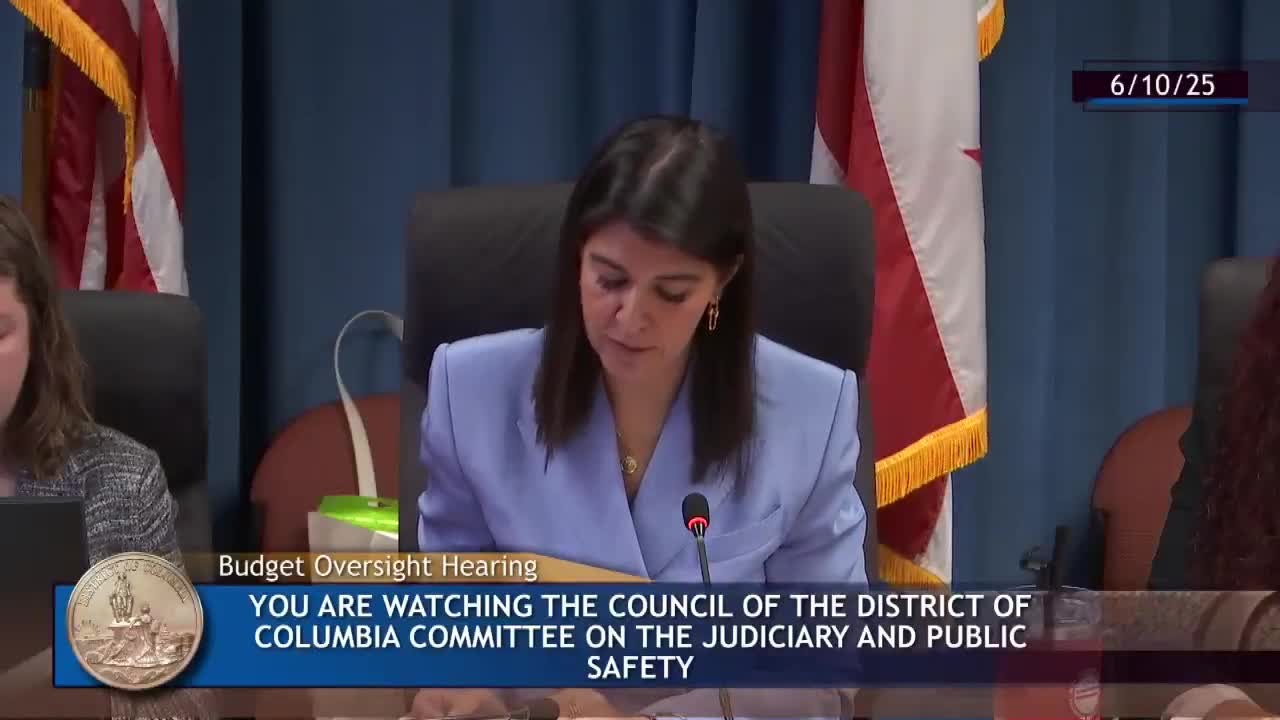
Council members and dozens of public witnesses spent hours on June 10 examining Mayor Muriel Bowser's FY26 public‑safety budget proposals for the Metropolitan Police Department. The mayor's plan would increase MPD operating funds by roughly 5% and add investments for hiring, equipment and technology; MPD leadership said those additions are needed to replace aging gear and expand camera and license‑plate reader coverage.
Chief Pamela Smith told the Committee the FY26 draft would fund a projected 3,244 sworn officers by September 2026 but acknowledged hiring remains difficult. Chief Smith and MPD union and leadership witnesses said the department is at a 50‑year low in sworn strength (about 3,187 sworn at the time of testimony) and that attrition and slow pipelines make staffing and overtime hard to normalize. The mayor's FY26 budget includes a roughly $30 million increase for MPD to hire more officers and buy equipment and a proposed $39 million projected overtime allocation (committee discussion showed actual overtime spending in FY25 had far outstripped the original FY25 overtime budget).
MPD described several capital and technology investments in the FY26 plan: expansion of CCTV (closed‑circuit camera) coverage (the budget supports dozens more cameras and a replacement cycle), license‑plate readers, drones (five indoor and six outdoor), and fleet replacements, plus a proposal to restore a mounted (horse) unit.
Community witnesses and advocacy organizations criticized parts of MPD practice and raised legal and trust questions. Several witnesses described MPD assistance to federal or private actions that they characterized as inappropriate: multiple speakers criticized MPD assistance to the March 17 takeover at the U.S. Institute of Peace (USIP) and cited a D.C. district judge's ruling that the takeover was unlawful. Witnesses also criticized the department's rapid reinstatement of officers pardoned by the president and said those decisions harmed community trust. MPD leadership said disciplinary and investigative processes were followed and provided a short status: one officer (Zabowski) retired after reinstatement; another (Sutton) was reinstated to a non‑patrol assignment and subject to training and administrative processes.
Several witnesses and council members pushed MPD and the committee to invest more in prevention programs (violence interruption, housing, mental health and youth programming) rather than expand policing alone. MPD leadership said many of the proposals (cameras, LPRs, improved real‑time centers) serve as force multipliers and that investments are designed to help officers be more effective while the department continues outreach and summer youth engagement programs.
Committee Chair Brooke Pinto and other council members pressed MPD to produce more detailed hiring and overtime scenario plans and asked follow‑ups on detective staffing and case closure metrics. MPD agreed to provide more details. The committee did not take an immediate vote; council budget markups were scheduled in the days after the hearing.
Ending: The hearing highlighted the tension between calls for more investment in prevention and requests to ensure a better staffed, better resourced police department; the Council's final FY26 decisions will reconcile those priorities.