Lifetime Citizen Portal Access — AI Briefings, Alerts & Unlimited Follows
Department of Ecology meets with commissioners on forest-practices rule, Mount St. Helens sediment and flood risk; vote on riparian rule set for Nov. 12
Loading...
Summary
Department of Ecology staff briefed the Cowlitz County commissioners on a pending Forest Practices Board rule package that would expand buffers on some non‑fish‑bearing streams, described the board’s Nov. 12 vote, and discussed Mount St. Helens sediment, the collaborative watershed response and potential flood-hazard planning.
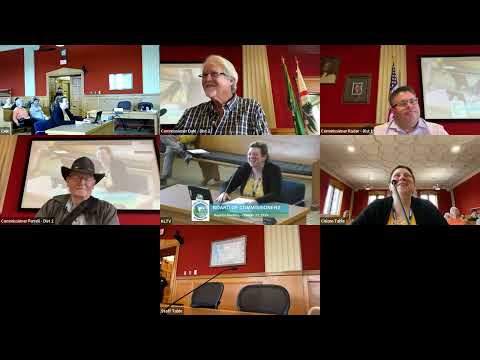
Department of Ecology regional staff met with the Cowlitz County Board of Commissioners for a workshop focused on a pending Forest Practices Board rule package, the county’s sediment and flood risks related to Mount St. Helens, and local planning tools the county could use to coordinate hazard response.
Ecology staff said the Forest Practices Board will vote on a rule change Nov. 12 that renumbers or expands buffer protections on some non‑fish‑bearing streams; county officials and members of the timber community warned the measure could amount to a significant restriction on private forestlands. Jason (county prosecutor) and several commissioners asked Ecology about the origins of the rule and where the prioritization came from; Ecology representatives said the board has collected several years of information, that the department’s central region director is the board representative and that Ecology’s materials and analyses are available for review.
Timber owners and other members of the public described the proposal as a potential “taking” of productive private forestland and told commissioners they had not seen quantitative evidence that expanded non‑fish‑stream buffers would measurably lower downstream summer temperatures in a way that benefitted salmon stocks. John Keighley, a small-woodlands owner, said the proposed change would affect plantation timber and called it “a huge taking of private property” in the county.
Ecology staffers and commissioners discussed where the department’s advocacy sits with the board; Ecology said agency staff will relay local concerns to its director and that attendees should submit public comments. Ecology identified the November 12 Forest Practices Board vote as the near-term decision point.
The conversation moved to Mount St. Helens sediment and flood risk. Ecology and county officials discussed the settlement-retention dams, sediment transport from the upper watershed, and the potential for liquefaction or dam failure in a large earthquake or eruption. Commissioners emphasized public-safety concerns and called for urgency and intergovernmental coordination; Ecology staff recommended pursuing an integrated comprehensive flood-hazard management plan as a tool to coordinate actions, programming and federal funding applications. Staff said that plan had been close to approval and volunteered to coordinate a follow-up meeting with county planning staff to seek a path forward.
Why it matters: Changes to the Forest Practices Board rules could affect private forest owners, county landowners and long-term forest management on a sizeable share of county timberlands. The Mount St. Helens sediment issue affects flood capacity and public safety in downstream communities; county officials see an integrated planning approach as a way to clarify priorities for state and federal funding.
What’s next: Ecology staff asked interested parties to file comments before the board vote on Nov. 12; county staff and Ecology agreed to coordinate further on the comprehensive flood-hazard management plan and on providing local input to the Forest Practices Board.