Lifetime Citizen Portal Access — AI Briefings, Alerts & Unlimited Follows
Health panel reviews bill to expand mandatory newborn screening; Department of Health says it does not endorse measure
Loading...
Summary
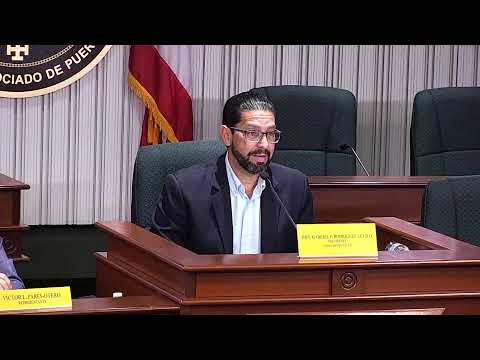
SAN JUAN, Puerto Rico — The House Commission of Health on May 20, 2025 heard testimony on House Bill 251, a proposal to expand the list of conditions screened for at birth under Law 84 (1987).
SAN JUAN, Puerto Rico — The House Commission of Health on May 20, 2025 heard testimony on House Bill 251, a proposal to expand the list of conditions screened for at birth under Law 84 (1987). The Department of Health told the commission it does not endorse the bill and urged that additions to the newborn screening panel be made through the government’s Hereditary Diseases Council and scientific review rather than by statute.
The Department of Health’s memorial and testimony, read during the hearing, argued the council established by Law 84 and existing regulation provides the appropriate process for evaluating and adding conditions to Puerto Rico’s screening panel. “El departamento de salud no endosa el proyecto de de la cámara 2 51,” the department’s policy advisor said during the reading of the memorial. The department asked the commission for time to review amendments the bill’s author proposes and for additional data on costs and clinical feasibility.
Why it matters: The bill would make additional genetic and metabolic conditions mandatory for neonatal screening. Some candidate conditions cited at the hearing — notably certain leukodystrophies — require treatment within a narrow window after birth to be effective, raising questions about whether Puerto Rico’s laboratory and specialist capacity, and funding, are in place to follow through on positive results.
Key details from witnesses and members
- Current panel and near-term additions: Department witnesses said Puerto Rico currently screens for 11 conditions. Ángela Adams, interim director of the Section for Children with Special Medical Needs in the Department of Health, said two conditions discussed in the bill — adrenoleukodystrophy (ALD) and spinal muscular atrophy (SMA) — are “ya están a punto de caramelo,” indicating the laboratory and council process are near final steps for implementation. The department also reported work toward a pilot for Pompe disease testing.
- Hard-to-implement conditions: The department highlighted conditions that pose operational and cost challenges. Officials said globoid leukodystrophy (Krabbe disease) has an estimated incidence of about 1 in 100,000 births worldwide, may require treatment within about 20 days of birth, and that only seven U.S. states have implemented routine screening because of the difficulty of building the treatment infrastructure.
- Cost and staffing: Witnesses provided cost estimates for one condition discussed in committee: annual reagent costs of about $100,000, machine maintenance of about $136,000 and the need to hire an additional medical technologist to run the tests. The department said funding currently comes from a mix of federal funds and the Recinto de Ciencias Médicas budget but acknowledged fiscal constraints.
- Laboratory flow and volumes: By law, neonatal blood-spot samples are routed to the Recinto de Ciencias Médicas laboratory for testing. Department staff noted the island currently records roughly 18,000 births per year (they contrasted this with earlier years, when birth totals were higher), and that all newborn screening specimens go to the Recinto laboratory.
- Specialist availability and follow-up care: Department witnesses said Puerto Rico has a limited number of clinical geneticists (the department mentioned about five) and that specialist shortages could affect the ability to provide timely follow-up care for infants with positive results. For some conditions, the department noted, treatment capacity is not available on-island and families would need rapid transfer elsewhere for effective therapy.
Public testimony and member remarks
- Representative Víctor Parejo Otero, a commission member, shared a personal account of losing a newborn in 1991 and framed the bill as potentially preventing similar tragedies by improving early detection and follow-up.
Committee directions and next steps
- The bill’s author, Representative Pérez Cordero, was excused from the hearing but told the commission he would submit proposed amendments; the commission chair said the office would share those with Department of Health staff for review.
- The commission requested the Department of Health produce the studies referenced in testimony, provide available surveillance statistics on diagnosed cases, and run a short economic analysis estimating the incremental cost of adding the two most-discussed conditions (Krabbe disease and MPS I). Committee members asked for those materials within five business days.
- No vote was taken at the hearing. The commission closed the record and said it would consider the department’s responses and the author’s amendments before further action. Committee business was closed at 11:02 a.m.
Sources: Testimony and memorial from the Department of Health; hearing remarks by Ángela Adams, Elisa Muñoz and Luis Reyes (Department of Health staff); Representative Víctor Parejo Otero; House Commission of Health hearing record, May 20, 2025.