Get Full Government Meeting Transcripts, Videos, & Alerts Forever!
Get email alerts on the Parks And Recreation topic
No spam. Unsubscribe anytime.
Residents, recreation groups urge Wake County to protect Lake Crabtree trails amid RDU plans
Summary
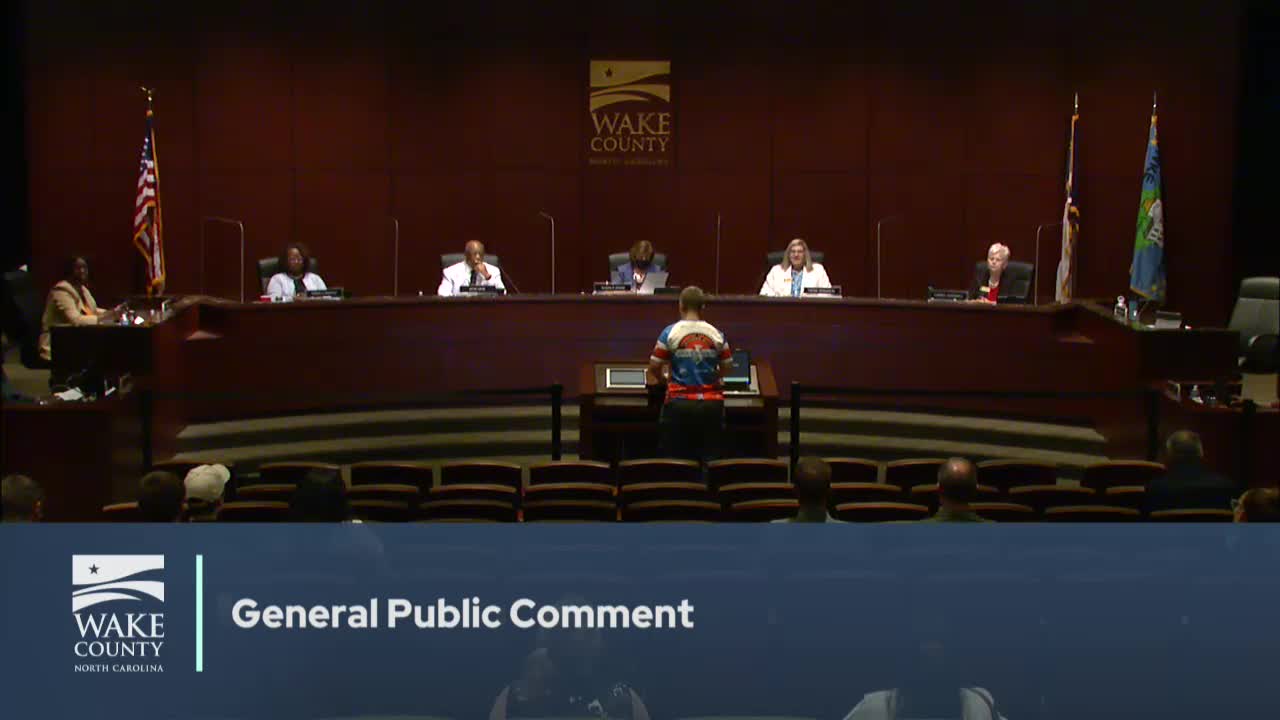
Dozens of residents, youth coaches and trail volunteers at the May 19 Wake County Board of Commissioners meeting urged commissioners to intervene to preserve Lake Crabtree County Park’s singletrack trails as development plans by the RDU Airport Authority advance.
Dozens of residents, trail volunteers and youth coaches told the Wake County Board of Commissioners on May 19 that Lake Crabtree County Park’s multi‑use trails are an irreplaceable community resource that the county should protect as the RDU Airport Authority advances development plans.
The speakers, who addressed the board during the meeting’s general public comment period, said the park’s singletrack trails support youth mountain‑biking teams, regional events and years of volunteer maintenance. Elise Fried, team director of the Southern Wake Composite youth mountain‑biking team, said, “Lake Crabtree County Park is valuable to our student athletes,” and that losing the trails would end opportunities for students from across Wake County.
The concern was echoed by community members who described the park as centrally located and uniquely suited to beginners and advanced riders alike. Aaron Federhoff, an employee of The Bicycle Chain and a community volunteer, said the trails are “probably the most important trail system of the triangle” and warned that their loss would harm local businesses and youth participation in the sport.
Jim Harmon, owner and race director of Roadless Races, said the trails are “a rare and irreplaceable public asset” built and maintained by decades of volunteer effort and park staff. Dave Anderson, speaking as a member of Torque (Triangle Off Road Cyclists), estimated that rebuilding trails to the current standard would cost “between a half million and a million dollars” if volunteers and park staff were no longer able to keep them.
Several speakers urged county officials to use their authority over zoning and leases to limit or shape development. Jean Spooner referenced past county zoning actions dating to the early 1980s and urged commissioners to enforce zoning, seek a fair‑market‑value exception for recreation, and prevent artificial segmentation of the park to avoid federal aviation regulations. Hua (Hua Wang), a constituent, told the board he had collected physical letters and said “over 90 people” had submitted direct messages and that “over 2,000 letters” had been sent to the county and state officials urging preservation.
Speakers repeatedly named the RDU Airport Authority as the entity proposing development on or near park lands and urged Wake County — which owns roughly one quarter of the park land, according to comments made during the meeting — to press its appointees to the airport authority and to consider options such as month‑to‑month leases, land purchase or land swaps to secure long‑term protection.
The public comment period also included ideas for revenue‑generating uses that would preserve recreation, including proposals for additional sports fields, a lakeside pavilion and improved greenway connections. John Daikley suggested facilities and greenway bridges to increase revenue and connectivity.
The board did not vote on any ordinance, land‑use action or formal directive regarding Lake Crabtree during the meeting. Chair Evans and county staff accepted the comments for the public record; county staff later reported there were 38 written comments submitted for the meeting (28 about Lake Crabtree and 11 about schools). The commissioners did not announce any immediate formal action on the park at the May 19 session.
Community advocates said they will continue outreach at upcoming hearings and in communications with county and airport authority officials.