Lifetime Citizen Portal Access — AI Briefings, Alerts & Unlimited Follows
Narberth contractors outline four-year plan to replace bridge over Amtrak tracks; residents press for traffic and safety measures
Loading...
Summary
Contractors and designers presented a staged plan to replace the Narberth bridge spanning Amtrak tracks, describing a multiyear construction schedule, nighttime work windows, utility relocations and pedestrian arrangements. Residents urged the borough and PennDOT to require traffic calming, clearer communications and long-term maintenance plans.
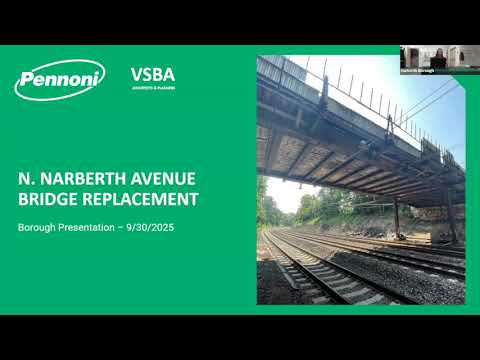
Contractors and engineers at a community meeting in Narberth described a staged replacement of the borough bridge that spans Amtrak tracks, laying out a schedule that they said would begin in weeks and conclude under the current contract by July 24, 2029.
The project team, led in design by Jesse Formley of Pinoni Associates and in construction by Amadou “Moe” Gary of TPD, told residents the work will include utility relocations, installation of new catenary portals for the railroad, raising the bridge deck to increase clearance, and construction of widened sidewalks on both sides of the new structure.
Why it matters: the bridge has been closed to vehicles since 2019 and its replacement will restore a key pedestrian and vehicle link in the borough while reshaping local traffic patterns, affecting nearby residents, businesses and school routes.
The contractors described the work and the project timeline. “Starting in a couple weeks... we’ll be out installing the detour signs,” said Amadou Gary, TPD construction manager, describing the first construction stage and the posted detour routing through nearby streets. He said the project went to bid with openings on May 8, a construction notice given July 18 and a required completion date of July 24, 2029.
The design and construction teams said most work that directly affects Amtrak tracks will occur at night when trains are not running, generally between midnight and about 4 a.m., including demolition of the existing superstructure and the placement of new steel beams. The teams said utilities that currently cross the bridge will be relocated; the contractors named Amtrak, SEPTA, PennDOT, the Federal Highway Administration and utility providers Comcast, Verizon and PECO as principal stakeholders.
Design and dimensions: the proposed superstructure footprint was described as about 70 feet long by about 43 feet wide, with two vehicular lanes and sidewalks on both sides. The finished travel lanes were described as roughly 13 feet to match the geometry of the approaches. During construction, the project team said pedestrian access will be maintained with a minimum 5-foot-wide path; several presenters and residents later noted the finished sidewalks are planned to be about 7.5 feet where space allows.
Barrier, clearance and loads: the design team said the project will not install a continuous vehicle–pedestrian barrier along the curb. “The short answer is there will not be,” said Jesse Formley, the project design lead, describing how reviewers concluded a barrier could create unsafe short run-out conditions at the approach intersections. The team also said they obtained a design exception from Amtrak on vertical clearance and that the replacement will not meet Amtrak’s full standard vertical clearance; they did not give a specific numerical clearance in the meeting.
Night work, staging and traffic: presenters illustrated staged construction that will keep at least one pedestrian passage open and maintain local driveway access. Gary described detour signs and daily monitoring of signage. The team described storing some equipment and staging material on the west side near the tracks where possible, and said large cranes, excavators and drilling rigs will be used at times.
Residency concerns and requests: several residents urged the borough and PennDOT to require traffic-calming measures before the bridge reopens. Linnea, a resident who said she walks to nearby Marion Elementary with young children, said, “I don’t wanna be walking over that bridge if my kids are gonna have cars bombing over them at 40 miles an hour,” and asked for assurances about speed enforcement, stop signs or other calming measures. Other speakers asked about drainage, deck waterproofing, rust prevention and long-term maintenance; the contractors said maintenance of the bridge will be the borough’s responsibility and recommended following PennDOT maintenance guidance, including periodic deck washing.
Safety and materials: presenters said structural elements will use weathering steel and that exposed ends will be painted to control runoff staining; they said barriers and substructure elements will be designed to meet impact requirements for vehicular collisions where applicable. One audience member asked whether the new alignment would allow double-stack freight on the rail line; the design team said the bridge raising improves clearance but noted they received a partial design exception from Amtrak and did not state that double-stack clearance would be achieved.
Communications: the project team said the borough contact, referred to in the meeting as Maggie, will receive notifications about nighttime work, phase changes and other disruptions for neighborhood outreach. The team also said they plan to publish project updates on a public project page and encouraged residents to report dust or other issues during construction.
Next steps and outstanding items: the contractors said they will continue coordination with Amtrak, SEPTA, PennDOT and the utility companies and will provide residents with more specific night-work dates as those windows are scheduled. Residents pressed for earlier action on traffic-calming measures on the bridge approaches and for clearer, timely neighborhood notices before disruptive nighttime operations.
Residents and officials closed the meeting with the project team promising to provide updates on timing for night operations and to work with the borough on communications as construction proceeds.