Lifetime Citizen Portal Access — AI Briefings, Alerts & Unlimited Follows
UN says Awaza conference will spotlight 32 landlocked developing countries
Loading...
Summary
The United Nations will host the Third United Nations Conference on Landlocked Developing Countries (LLDC3) in Awaza, Turkmenistan, August 5–8, with a pre‑conference day on August 4, organizers said at a UN press briefing.
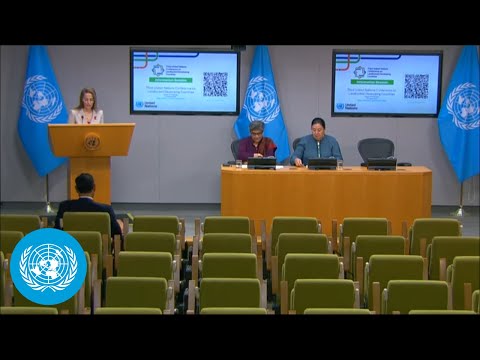
The United Nations will host the Third United Nations Conference on Landlocked Developing Countries (LLDC3) in Awaza, Turkmenistan, August 5–8, with a pre-conference day on August 4, organizers said at a UN press briefing. Rabab Fatima, Under‑Secretary‑General and High Representative for Least Developed Countries, Landlocked Developing Countries and Small Island Developing States, and Aksultan Atayeva, Turkmenistan’s permanent representative to the UN and host of the conference, outlined logistics, priorities and the conference’s expected deliverables.
At the briefing, Fatima called LLDC3 “a once in a decade opportunity” to mobilize international support and move the group’s development agenda forward. “The LLDC story is about the people of the LLDCs,” she said, urging media to amplify the needs of more than half a billion people who live in the 32 landlocked developing countries.
The conference is anchored in a Programme of Action for the decade 2024–2034 that, organizers said, was adopted by the General Assembly by consensus in December. Organizers identified five strategic priority areas and five flagship deliverables that will be promoted during the meeting, including regional agricultural research hubs, infrastructure investment and finance facilities, a UN secretary‑general high‑level panel on freedom of transit, and the launch of an LLDC Global Business Network to connect businesses across landlocked, transit and partner countries.
Fatima emphasized economic isolation as a core development barrier: she told reporters the LLDCs face trade costs “up to 74%” higher than coastal neighbors, that exports take twice as long, and that the 32 LLDCs account for roughly 1.2% of global merchandise trade despite making up about 7% of the world’s population. She also noted digital divides, saying about 39% of people in the LLDCs have Internet access.
Organizers described a multi‑stakeholder program that will include plenary sessions, five parallel high‑level roundtables aligned with the programme’s priorities, and dedicated stakeholder forums for the private sector, parliamentarians, civil society and youth. A ministerial day on South‑South cooperation, a women leaders meeting and cultural events were also listed in the program. Aksultan Atayeva said the host government has equipped the venue with high‑speed internet, interpretation booths, media zones and bilateral meeting rooms, and that registered participants will receive free visas; she described hotel renovations, shuttle and airport services, on‑site medical support and catering.
Organizers said media support will include a conference mobile app with schedules and participant information, a media center with internet access and regular press briefings; they said UN Web TV will carry live feeds. Media accreditation was said to remain open through July 17 (organizers did not specify the year in the briefing).
Fatima and other speakers described mechanisms intended to sustain momentum after the meeting: an annual stocktaking during the UN General Assembly’s high‑level week, a secretary‑general’s biennial report on implementation, regional biennial meetings with economic commissions, a five‑year midterm review and an effort to build a results framework for monitoring and evaluation. Fatima said the LLDCs had also requested and secured for the first time formal recognition as a negotiating group in the UN climate process and that the group will participate at the next Conference of the Parties (COP) as a negotiating block.
Journalists asked whether LLDC3 would place special emphasis on Africa, which hosts half of the LLDCs; Fatima said African representation would be prominent and that the conference will showcase regional good practices and corridor models. On freedom of transit, Fatima and Atayeva said the pandemic illustrated how border closures and transit disruptions can threaten food security in landlocked countries and that the high‑level panel on freedom of transit should produce recommendations to improve application of existing international rules.
Organizers urged newsrooms to report on the human impacts—farmers unable to reach markets, entrepreneurs constrained by border delays and children lacking digital access—and invited media to Awaza. May Yaqoob, head of advocacy and outreach (OHRLLS), provided a contact email for accreditation and further information.