Get Full Government Meeting Transcripts, Videos, & Alerts Forever!
Get email alerts on the Global Health Funding topic
No spam. Unsubscribe anytime.
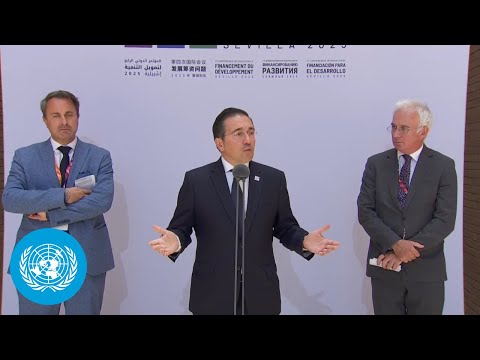
Spain, Luxembourg and Norway announce new pledges to Global Fund at Seville finance-for-development meeting
Summary
At a finance-for-development event in Seville, Spain’s Foreign Minister José Manuel Albares announced that Spain will contribute €145,000,000 to the Global Fund to Fight AIDS, Tuberculosis and Malaria.
At a finance-for-development event in Seville, Spain’s Foreign Minister José Manuel Albares announced that Spain will contribute €145,000,000 to the Global Fund to Fight AIDS, Tuberculosis and Malaria.
The announcement came alongside pledges from Luxembourg and Norway and remarks from Peter Sands, executive director of the Global Fund. Luxembourg’s speaker said Luxembourg would pledge €13.8 million for 2026–28. A Norwegian government representative said Norway would pledge 2,000,000,000 Norwegian kroner (about $200 million) for the next three years; that speaker also said Norway’s combined pledges to the Global Fund and Gavi would total roughly $1 billion (exact time frame for the combined figure was not specified in the remarks).
Why this matters: the Global Fund is conducting its eighth replenishment later this year; early commitments from donor countries are presented by fund officials as essential to sustain programs that treat and prevent HIV, tuberculosis and malaria. Peter Sands said the Global Fund has saved more than 65 million lives since 2002 and that combined death rates across HIV, tuberculosis and malaria are about 63% lower than when the fund began. He said early pledges are “absolutely vital” to enable the fund to pursue its goals, including an estimate the Global Fund has provided that further funding could help save another 23,000,000 lives over the next three years.
Spain’s remarks emphasized multilateralism and development aid. José Manuel Albares thanked partners and framed the contribution as support for global health systems, saying that investments can help eliminate AIDS, tuberculosis and malaria and that multilateral cooperation is the right response to global health threats.
Luxembourg’s speaker framed the pledge as a response to declines in development funding in some countries and framed foreign assistance as both a moral choice and an investment in global stability. He said Luxembourg’s pledge represents an increase compared with prior levels.
The Norwegian speaker said Norway would sustain a substantial pledge to the Global Fund and signaled parallel commitments to Gavi, the vaccine alliance. That speaker urged further reform and coordination of international health architecture and highlighted gender equality and protection of women and girls as priorities in Norway’s approach to international health funding.
Peter Sands described the pledges as a practical demonstration of commitment to multilateralism and to helping the poorest and most marginalized. He noted challenges that could slow progress — including climate change, conflict and resistance to malaria tools — and urged continued, predictable donor support.
No formal votes or legally binding agreements were recorded during the remarks; the announcements were presented as national pledges and early commitments ahead of the Global Fund replenishment process.
The event included a photography moment after the speakers’ remarks.