Get email alerts on the Bond 2022 Progress topic
No spam. Unsubscribe anytime.
Spring ISD trustees receive Bond 2022 progress overview and project-tracking document
Summary
Chief of District Operations Mark Miranda presented a comprehensive Bond 2022 progress book that tracks timelines, contracts, completed work and a facility assessment. The district said the bond program is about 2 years and 4 months into execution and staff plan quarterly updates and an online version of the report.
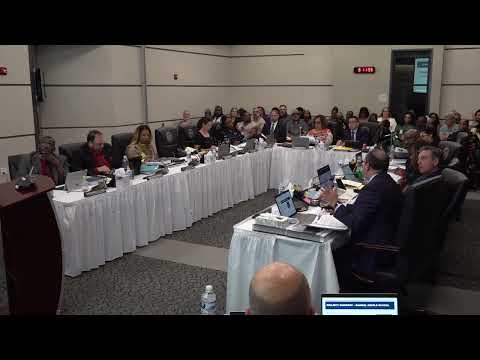
Mark Miranda, Spring ISD’s chief of district operations, introduced a comprehensive “Bond 2022 progress overview” document and slide packet Wednesday, describing its contents and the district’s approach to tracking bond projects and related finances.
Miranda said the document is intended as a foundational, transparent resource for trustees and the public, compiling steering-committee materials, board updates, financial summaries, vendor contracts and project timelines. He asked trustees for suggestions to change the layout or to add information and said the district plans to publish an online “flip book” version while continuing quarterly updates.
Major timeline and contract details provided
- Bond passage and financing: The bond passed in November 2022; the first bond sale occurred in February 2023, Miranda said. Initial vendor and architect contracts were approved by the board in August–September 2023.
- Program duration and work packages: Miranda said typical ISD bond programs run about five years; Spring ISD staff describe the Bond 2022 program as approximately two years and four months into active work (measured from the first funds availability). Projects are grouped by category (safety and security, roofs, technology) rather than delivered campus by campus, a strategy staff said is intended to achieve economies of scale.
- Facility assessment and costs: Miranda told trustees the district’s facility assessment lists many campus deficiencies; if the district addressed every deficiency at all priority levels it would total about $1.4 billion. He said the district focused bond resources on priority 1 and 2 items and handed trustees a jump drive with the full facility-assessment raw data because the report is too large to print.
- Project tracking and warranties: Project statuses in the packet identify completed items and estimated completion windows (fall, spring, summer), and staff said larger projects (Spring High, EPIC) include more detailed phase timelines. The district said it maintains project warranties, conducts warranty walks before warranty expiration and has a MoCA system to update facility data and project status; board members will receive logins.
Public access and next steps
Miranda said the packet’s steering-committee materials and much of the appendix are already online, and the district plans to post a condensed flip-book version on the bond website. He said staff will produce quarterly updates and that trustees and principals will receive ongoing communications about project schedules.
Trustee follow-up questions and clarifications
Trustees asked how principals and end users receive project information and how the district enforces quality; Miranda said the district, architects and vendors perform inspections and that the district has exercised warranty remedies on some painting and other work. Board members requested clearer principal communications and suggested staff consider whether principals should have direct MoCA access. Miranda said the district could formalize a ticketing or intake process for campus feedback.
AI generated
The text on this page is AI generated. Summaries, highlights, analysis, and video transcripts are all produced from the original source material.
AI can make mistakes, so if you spot one, and we will fix it for everyone.
Note: the source content is unaltered by us. Any content source we link to, be it a video, an audio recording, or a document, is presented exactly as its publisher released it. That publisher is usually a government body, sometimes an individual official or another organisation.