Lifetime Citizen Portal Access — AI Briefings, Alerts & Unlimited Follows
Design Review Board gives favorable advisory opinion on 65 Fila Street area-variance request amid tree and lot-coverage concerns
Loading...
Summary
Saratoga Springs Design Review Board voted to give a favorable advisory opinion to the Zoning Board of Appeals on a proposed second‑floor addition and two‑story garage at 65 Fila Street, after neighbors raised concerns about lot coverage, precedent and potential loss of mature trees.
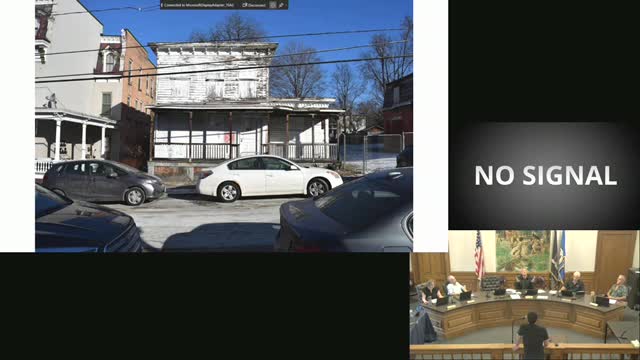
The Saratoga Springs Design Review Board on June 26 offered a favorable advisory opinion to the Zoning Board of Appeals on an application for an area variance at 65 Fila Street that would allow a second‑story bedroom addition to the main house and a detached two‑story garage with a small office above.
The board’s recommendation came after a lengthy public discussion about lot coverage, drainage, on‑site parking and the potential impact of construction on mature trees behind the property. The application asks for relief from the city’s lot‑coverage standard; the applicant’s presentation said the lot would exceed the 40% coverage limit, reaching about 42%.
The advisory opinion matters because the Zoning Board of Appeals must decide whether to grant the variance that would allow the applicant to build the proposed garage and second‑floor addition. The DRB’s role was limited to advising the ZBA about mass, scale, compatibility with neighboring properties and feasible alternatives for the addition.
Architect Matthew Herff of Frost Herff Architects described the project and the history of the property, saying the rear addition had always been part of a phased plan for the house and that the proposed location for the garage sits down a slope and “we've really maximized it. We've pushed as far back as it possibly can go.” He also told the board the applicant plans to raise the slab slightly to reduce stormwater intrusion and is exploring permeable driveway options.
Neighbors and members of the Saratoga Springs Preservation Foundation spoke at length. Lesley Labon, who identified herself as a homeowner immediately behind the site, summarized her concern simply: “It's excessive lot coverage.” Andy Williams, another immediate neighbor, said he supported renovating the main house but opposed the proposed 24‑by‑24 two‑story garage, saying: “It's not 24 by 24 with a second story and an office.” Preservation Foundation representatives and nearby owners provided letters supporting the house’s rehabilitation and noting the dense historic pattern of rear‑lot development in the neighborhood.
Board members repeatedly returned to three themes: (1) whether the addition could be located over an existing east‑wing portion of the house (board members generally said no, that would harm historic fabric), (2) whether the detached garage’s mass and height were compatible with the downtown core (several members said it is, given the site’s slope and nearby examples), and (3) the tree and drainage impacts on adjoining property (neighbors said some important trees are on adjacent parcels and could be harmed by grading and a foundation placed close to the property line).
After discussion the DRB voted to forward a favorable advisory opinion to the ZBA on mass, scale, height and compatibility. The board emphasized the advisory nature of the opinion and noted that final approvals and any further architectural review would be contingent on whatever variances the ZBA ultimately grants; if the ZBA approves the variance, the project would return to the DRB for formal design review.
The ZBA will now consider the variance for lot coverage and the DRB’s advisory comments. If the ZBA grants relief, the applicant must still supply survey‑level siting information and detailed construction documentation to the DRB and, at that time, the board said it would expect to review any modified siting intended to protect adjacent trees or reduce lot coverage.
Votes at the meeting on 65 Fila Street were recorded as an advisory favorable opinion to the Zoning Board of Appeals; the DRB’s motion language described attention to mass, scale, height and neighborhood character and noted the procedural correction that the form called the recipient the "planning board" but the correct recipient is the Zoning Board of Appeals.
Ending: The ZBA’s decision on the requested variances will determine whether the project returns to the Design Review Board for final architectural review and detailed conditions.