Lifetime Citizen Portal Access — AI Briefings, Alerts & Unlimited Follows
Leawood council authorizes design-build study to add pedestrian protections on 83rd Street
Loading...
Summary
After hours of public comment about near misses and a child hit on 83rd Street, the Leawood City Council unanimously authorized Public Works to pursue a design-build option to widen sidewalks, add buffer space and evaluate more protective crossings while keeping the 2026 construction timeline possible.
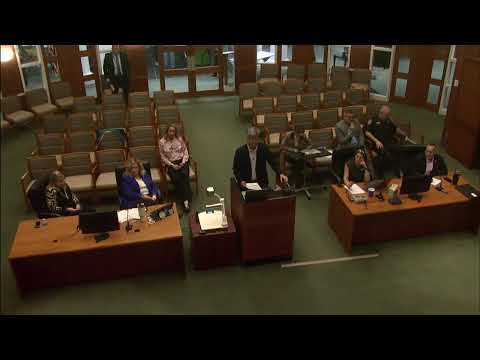
Leawood’s City Council on Nov. 17 unanimously authorized the city’s Public Works Department to pursue a design-build option aimed at adding pedestrian safety features to a planned 83rd Street reconstruction project.
The move follows more than an hour of public comment from neighborhood parents and residents who described repeated near misses, uneven sidewalks and one child hit on the corridor north of 83rd. Resident speakers asked for stronger crossings, wider sidewalks and physical barriers where sidewalks run adjacent to fast-moving traffic.
Public Works Director David Lay reviewed the city’s existing $5.3 million plan — a complete curb, gutter and pavement replacement with new ADA ramps, limited sections of an 8-foot trail and painted bike lanes — and presented an alternative that would narrow the roadway from 32 to 29 feet to gain room for continuous 5-foot sidewalks with a buffer between curb and walk. The design-build option would require some storm-sewer and grading changes; city staff said they could return a cost comparison at the council’s first January meeting while still aiming to begin construction in April 2026 if approved.
Lay told council that federal standards require rectangular rapid-flashing beacons (RRFBs) to be flashing yellow; the city will add vertical signage and pavement-mounted signs to improve driver awareness at RRFB locations. He said a HAWK signal — a red/yield pedestrian signal — requires much higher pedestrian counts (a MUTCD warrant) than exist at many intermediate locations, but staff will continue coordinating with Prairie Village where a school zone crosses the boundary.
Parents asked the council for interim measures if full reconstruction cannot be completed in 2026, including temporary hot crosswalk equipment, crossing guards and short-term repairs to uneven sidewalks. Lay said adding an RRFB at Winonga could be done on a temporary basis for about $40,000 and then relocated as part of the longer project.
Council members across the dais praised staff for responding quickly to neighborhood concerns and urged a cautious but proactive approach. Councilmember Villa urged doing the “29-foot street with the wider 5-foot sidewalks through the entirety of this stretch” if feasible. Councilmember Sonkel and others said narrowing the street would have a traffic-calming effect. Several members asked staff to pursue temporary safety devices while the design-build pricing and scope are finalized.
Councilmember Fila moved and Sunkel seconded a motion to authorize the Public Works director to pursue the design-build option with Superior Bowen, obtain cost estimates and return to council in January; the motion passed unanimously.
Next steps: Public Works will work with the design-build contractor to produce comparative cost estimates (current design vs. design-build), present the findings in January, and continue coordination with Prairie Village and the school district on localized safety measures.