Lifetime Citizen Portal Access — AI Briefings, Alerts & Unlimited Follows
UNSMIL says Libya’s truce remains fragile, outlines consultations toward a roadmap for elections
Loading...
Summary
Hannah Serwa Tete told the UN Security Council that a fragile truce in Tripoli following May clashes has reduced violence but remains unpredictable; UNSMIL convened consultations and the Berlin follow-up committee met June 20, and the mission plans to present a time‑bound roadmap toward elections.
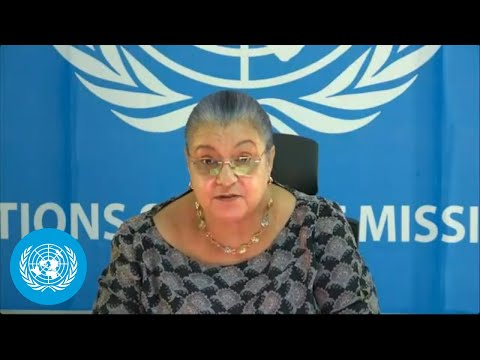
Hannah Serwa Tete, representative of the United Nations Support Mission in Libya (UNSMIL), told the UN Security Council on June 20 that the ceasefire in Tripoli remains fragile after armed clashes in May and that UNSMIL is carrying out nationwide consultations and coordinating international partners to produce a time‑bound roadmap toward elections.
Tete said an international follow‑up meeting on Libya convened in Berlin on June 20 under German auspices and that 19 member states and three regional organizations attended; participants urged stronger measures to sustain the truce and agreed to coordinate support for the UN‑facilitated political process. “Cohesive international support is indispensable,” Tete said.
The briefing summarized security and political developments since mid‑May: UNSMIL engaged with the Government of National Unity, political and security actors, tribal leaders, civil society and member states after the clashes; the presidential council, with UNSMIL support, established a truce committee on May 18 and a temporary security and military arrangements committee on June 4 to monitor and implement measures to de‑escalate tensions. Tete said the withdrawal of heavily equipped forces from Tripoli’s roads began on June 11 and those areas have since been patrolled by police and military police, but she warned the mission considers the security situation "unpredictable."
Tete described serious human‑rights concerns arising from the May clashes, including reported civilian deaths, damage to hospitals and universities, discovery of mass graves in the Abu Salim area, the presence of child remains and alleged unofficial detention sites. She said emerging evidence points to “grave human rights violations, including extrajudicial killings, torture, and enforced disappearances” and called for independent access to all detention facilities and an independent investigative mechanism to ensure truth, justice and accountability.
On political outreach, UNSMIL launched nationwide consultations following the advisory committee’s executive summary published May 20 and has held meetings in Tripoli, Benghazi, Misrata, Nalut, Zawiya and Zintan, and with delegates from southern areas including Sabha. An online poll was also launched to widen participation. Tete said the consultations have shown Libyans’ frustration with prolonged transitions and expressed a broad desire for unified institutions, accountable governance and meaningful public participation. Inputs from the consultations will inform a consensus‑based roadmap UNSMIL aims to present to the Security Council at a future briefing.
Tete also raised economic concerns: she said the Libyan exchange rate moved from 4.8 to 5.56 to the US dollar in June, representing an almost 16% loss in purchasing power, and warned that the absence of a unified national budget leaves the central bank and reserves vulnerable. She flagged a June 3 House of Representatives deliberation on a proposed 69,000,000,000‑dinars, three‑year budget for a Libyan development and reconstruction fund as “troubling if approved,” citing risks to transparency and macroeconomic stability.
She welcomed a April 20 agreement, facilitated by UNSMIL, on technical unification of the eastern and western branches of the National Audit Bureau and urged its rapid implementation as part of restoring oversight capacity. Tete said UN development and humanitarian operations in Tripoli were temporarily disrupted by the May fighting and that many international NGOs suspended activities in the west; she urged the Government of National Unity to facilitate full resumption of humanitarian operations.
Tete noted the House reviewed a draft law on protecting women from violence in May and urged swift revision and adoption. She called on political and security actors to refrain from provocative rhetoric, warned against the further proliferation of weapons inside populated areas, and said unequivocal Security Council support, including readiness to take measures against those obstructing the political process or instigating violence, will be important to reassure Libyans.
Tete closed by thanking the advisory committee and UNSMIL staff for their work and reiterated the mission’s intention to intensify engagements and present a politically pragmatic, time‑bound roadmap toward elections. “I count on the continued support of this council,” she said.