Lifetime Citizen Portal Access — AI Briefings, Alerts & Unlimited Follows
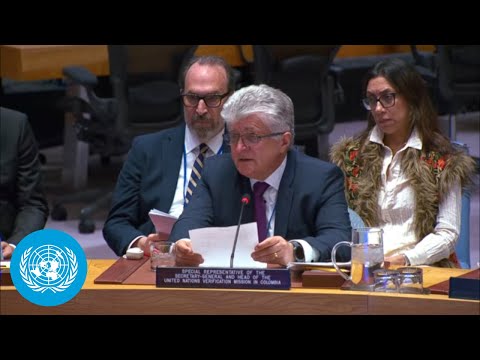
Miroslav Yenka briefs Security Council on Colombia peace process ahead of May 30 vote
Loading...
Summary
Miroslav Yenka told the United Nations Security Council that Colombia has made gains under the peace agreement but that reintegration, land restitution and security in rural areas such as Catatumbo remain fragile; he warned of threats to presidential candidates and urged authorities to guarantee electoral safety.
Miroslav Yenka briefed the United Nations Security Council on the state of Colombia’s peace process, saying recent congressional elections were largely peaceful but warning that violence and insecurity persist in parts of the country ahead of presidential elections on May 30.
Yenka said the verification mission has been restructured and remains "leaner" while maintaining a regional field presence essential for verification and community engagement. He stressed that receiving the resources approved in the mission budget is "essential to delivering on the mandate across Colombia."
The briefing highlighted rural reform as central to consolidating peace. Yenka cited progress in land adjudication and described visiting a peasant community in Cesar Department where beneficiaries had received sizable plots, established a school, begun building houses and started farming projects led by women. He added that "distributing land is only the first step" and emphasized the need to ensure productivity, legal clarity of ownership and security for beneficiaries.
On legal and programmatic steps, Yenka welcomed the enactment in March of a statutory law on the functioning of the agrarian jurisdiction and said additional legislation pending in Congress is needed for that body to become fully operational. He also noted that the PEDAT regional development plans were recently extended through 2037 and that sectoral plans aim to expand rural roads, education, health, irrigation and electricity.
Yenka reported that more than 11,000 former FARC-EP members remain actively engaged in reintegration, a process he described as "replete with challenges" given fragile socioeconomic and security conditions in rural settlement areas. He warned that setbacks in local security can seriously undermine reintegration gains and urged state entities to bolster conditions for former combatants to look to the future with confidence.
The briefing also detailed security concerns in areas such as Catatumbo, where Yenka said renewed clashes between rival armed groups have included drone attacks that damaged homes and the discovery of explosive hazards near schools. He voiced concern about increased recruitment and the use of children by illegal armed groups and called for timely humanitarian assistance to affected communities.
Yenka reiterated the mission’s condemnation of reported threats against presidential candidates, saying: "I reiterate my condemnation of reported threats against presidential candidates, and I call again for state authorities to guarantee the safety of all participants in the electoral process." He said the mission stands ready to contribute to authorities’ exercises to analyze security risks and coordinate preventive actions, as it did during the congressional elections.
Looking ahead, Yenka told the Council that when it next meets on Colombia in July the elections will have concluded and a new government will be preparing to take office in August. "Whoever assumes the presidency will face a formidable challenge in consolidating peace and security in the regions still affected by conflict," he said, and reiterated the mission’s readiness to assist Colombia in implementing the comprehensive roadmap set out by the peace agreement.
The Security Council chair thanked Yenka for his briefing and moved to the next speaker.