Get Full Government Meeting Transcripts, Videos, & Alerts Forever!
Get email alerts on the Health Insurance Billing topic
No spam. Unsubscribe anytime.
House Health Committee hears conflicting testimony on bill to let providers charge 'commercially reasonable' rates
Summary
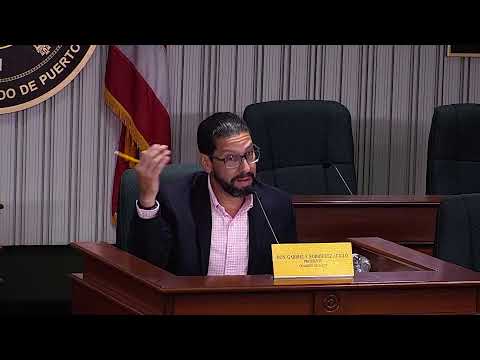
San Juan — The House Health Committee held a public hearing May 13, 2025 on Proyecto de la Cámara 132, a bill by Representative Navarro Suárez that would amend Article 48.030 of the Código de Seguros de Salud to allow providers to charge “commercially reasonable” rates to insurers when an individual or family (direct-pay) plan’s contracted payment does not cover the provider’s total cost.
San Juan — The House Health Committee held a public hearing May 13, 2025 on Proyecto de la Cámara 132, a bill by Representative Navarro Suárez that would amend Article 48.030 of the Código de Seguros de Salud to allow providers to charge “commercially reasonable” rates to insurers when an individual or family (direct-pay) plan’s contracted payment does not cover the provider’s total cost.
Supporters at the hearing, including the Department of Health and representatives from the Office of the Commissioner of Insurance, said the bill aims to protect patients from surprise out‑of‑pocket bills while preventing financial losses for providers. Víctor Ramos Otero, secretary of health, told the committee the measure seeks a balance between protecting patients and ensuring providers remain financially viable. A representative for the Office of the Commissioner of Insurance recommended defining “tarifa comercialmente razonable” in the bill and said the office could contract actuaries to produce the technical study the law would require.
Insurers and industry groups — including Plan de Salud Menonita, Triple‑S, and ACODESE — testified in opposition or expressed serious reservations. They warned that allowing providers to bill insurers amounts to interference with private contracts between insurers and in‑network providers and would introduce large actuarial uncertainty. Wildalis Serra Ortiz, director of government affairs for Triple‑S, said the proposal would undermine the contractual framework that sets rates and could force actuaries to adopt highly conservative assumptions, driving up premiums. Jessica Forti of ACODESE argued the Office of the Commissioner of Insurance lacks the resources and statutory mandate to set or impose rates across thousands of billing codes.
Key provisions and points raised - 90‑day rule: The draft would give the commissioner 90 days after enactment to notify providers of limits that may be billed as “commercially reasonable” and would require annual review of those limits. Insurance‑industry witnesses said that conducting the comprehensive actuarial work for all procedure codes would take well over a year at scale and would be operationally infeasible. The commissioner’s office said it would contract actuaries to perform the work.
- Arbitration and dispute resolution: The bill references existing arbitration procedures in Chapter 48 (articles cited during testimony included 48.080, 48.090 and 48.100). The Office of the Commissioner of Insurance and the Department of Health noted arbitration already considers market‑based benchmarks; proponents said a clear statutory definition would help; insurers said it would instead create more disputes.
- Consumer disclosure: Committee members and witnesses discussed tightening written disclosure requirements so patients receive clear, dated estimates (for example by written notice, email or message) before non‑emergency procedures. Several insurer witnesses agreed enhanced pre‑service written notice is reasonable and can be pursued without altering contractual rate structures.
- Market and solvency concerns: Insurers warned the measure could increase premiums and threaten solvency if providers could unilaterally bill amounts above contracted rates. Triple‑S cited system scale to illustrate the operational burden: the witness said the company processes on the order of 15,000,000 claims per year and covers roughly 1,000,000 lives (figures provided in testimony). Plan de Salud Menonita estimated its commercial book at roughly 45,000–50,000 lives. Insurers said those volumes would make individual code‑by‑code rate setting impracticable.
Testimony gaps and information requests - Arbitration data: The Office of the Commissioner of Insurance and the Department of Health said they did not have a compiled statewide count of arbitration cases between providers and insurers on file; committee members asked staff to request that information from insurers and other parties.
- Definition of “commercially reasonable”: Both the Department of Health and the Office of the Commissioner of Insurance urged the committee to include a clear statutory definition, aligned where appropriate with Centers for Medicare & Medicaid Services (CMS) guidance and federal law references (witnesses cited the federal No Surprise Act and CMS guidance). Insurers recommended using existing actuarial terminology and methods rather than a broad standard that could override contracted rates.
Committee action and next steps - The committee received the written testimonies submitted during the hearing and recessed to hear additional insurer panels later in the session. No vote on the bill was recorded during the hearing.
Why it matters - The bill would alter how out‑of‑network or partially covered services are addressed for individual and family (direct‑pay) commercial plans and could affect premiums, provider contracts and patient financial exposure. The hearing highlighted a fundamental split: public‑health and regulator witnesses emphasized protecting patients and provider sustainability if a clear, technically grounded definition is added; insurers countered that the change would disrupt private contracting, create actuarial uncertainty and risk higher premiums.
The committee signaled it will seek additional data from insurers and may consider amendments to clarify terms, add written notice requirements for patients and define the scope of the commissioner’s authority before advancing the measure. Representative Navarro Suárez, the bill’s author, participated in the hearing and answered members’ questions.