Get AI Briefings, Transcripts & Alerts on Local & National Government Meetings — Forever.
Lago Vista commission denies variance for home built below base flood elevation
Loading...
Summary
The Building and Standards Commission denied a variance allowing a finished floor below the city's base flood elevation for a partially built home at 21321 Paseo De Vaca, voting 6-0 after hearing staff analysis, homeowner testimony and remote comment from the applicant.
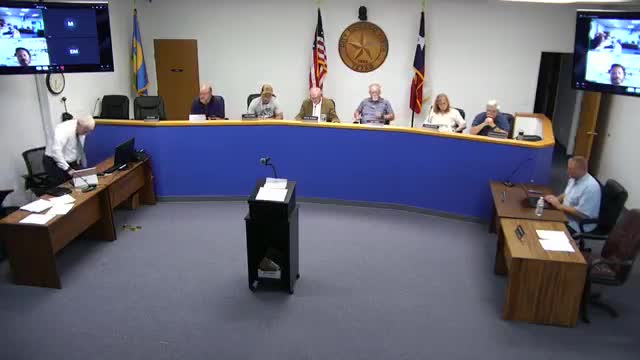
The Building and Standards Commission voted unanimously 6-0 on May 7 to deny a variance that would have allowed the finished floor of a partially built single-family house at 21321 Paseo De Vaca to sit below Lago Vista's base flood elevation.
The item, filed as Project No. 23-208-O7BAR, asked the commission to waive the city's requirement that finished floors be at least 12 inches above the federal base flood elevation. Staff told the commission the house's measured elevation is about 721.2 feet, below the established base elevation for the area and below the city's minimum. Staff recommended denial.
The variance request drew a mix of technical testimony and emotional appeal. Mitchell Richards, a city official who addressed the commission on behalf of staff, summarized federal and local requirements and the commission's role in variance decisions. He told the commission that the city uses the 12-inch elevation requirement to participate in the National Flood Insurance Program and to reduce future flood damage, and that ‘‘staff is recommending, against the approval of various requests.’'
Homeowner Alice Meyer told the commission she and her family are living in an RV while the house is unfinished, said the builder's son was hospitalized and urged the commission to consider the hardship, but she also acknowledged construction was not complete and that drainage and engineered grading had not yet been installed. Meyer's testimony included a local inspection report: Mitchell Richards said he photographed the property after a storm and observed 4 to 5 inches of water inside the structure's garage.
An individual identified in the record as Miss Jones (who said the permit application was filed in August 2024 and who joined the meeting remotely) described steps taken after staff raised concerns, including engaging a surveyor and structural engineer and pursuing a civil-engineered drainage plan. The applicant and owner disagreed with staff's characterization that the permit should never have been issued; staff maintained the permit record lacked an elevation certification required by the ordinance before permit issuance.
Commissioners debated options including postponement to allow the applicant to be present; the panel initially voted to postpone, then voted to reconsider. After additional discussion about public-safety risk, potential effects on FEMA ratings and the completeness of the record, a motion to deny the variance carried unanimously (6-0).
The commission cited the following factual points during its deliberations: staff and the applicant submitted multiple plats, surveys and email exchanges; a survey and form survey included language advising interested parties to verify FEMA flood-zone designations; staff noted a later surveyor communication asked staff to discount one applicant-submitted survey as inaccurate; staff observed the building's finished-floor elevation fell below the required 12 inches above the base flood elevation; and photographs in the record documented standing water inside the structure after a storm.
The commission did not grant the request and instructed staff to work with the owner on next steps. Commissioners and staff said they would try to assist the homeowner administratively, but the decision left open the need for further engineering, permit review or corrective construction if the owner chooses not to demolish or raise the building.
The denial resolves the variance request before the commission; staff noted potential follow-up actions the owner or builder might pursue, including submitting engineered drainage plans or revised elevation certifications for future review.