Lifetime Citizen Portal Access — AI Briefings, Alerts & Unlimited Follows
Hearing on Senate Project 186 focuses on making municipal disability liaisons permanent and better trained
Loading...
Summary
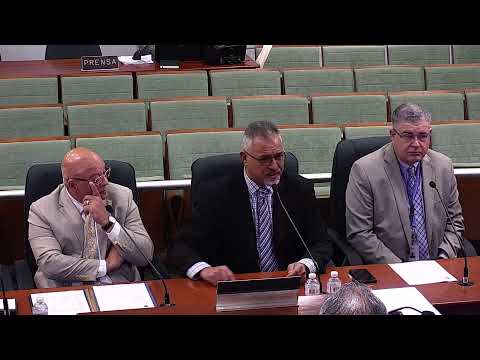
At a public hearing of the Commission on Older Adults and Social Welfare, officials and advocates discussed Senate Project 186, a bill to amend Article 16 of Law 238 (2004), the Carta de Derechos de las Personas con Impedimento, to expand and standardize the role of intra-agency and municipal liaisons (referred to in testimony as "enlace 238").
At a public hearing of the Commission on Older Adults and Social Welfare, officials and advocates discussed Senate Project 186, a bill to amend Article 16 of Law 238 (2004), the Carta de Derechos de las Personas con Impedimento, to expand and standardize the role of intra-agency and municipal liaisons (referred to in testimony as "enlace 238"). The measure would add technical amendments intended to strengthen continuity of services for people with disabilities and require tighter coordination between municipalities, agencies and the Defensoría de las Personas con Impedimento.
The bill’s proponents said the changes are largely technical but would have practical effects on delivery of services. Juan J. Troche, Defensor de las Personas con Impedimento, told the commission the amendments aim “a ampliar las funciones de los enlaces intraagenciales para ayudar a garantizar la coordinación de los recursos y servicios del estado.” He described the liaison as a named employee in a municipality or agency who serves as the direct contact with the Defensoría, assists with annual reports and strategic plans, and helps respond to day‑to‑day needs such as equipment, mobility assistance and accessibility problems.
Why it matters: Proponents said the current practice—many municipalities name liaisons who are political appointees or temporary staff—creates discontinuity. Troche and other witnesses said that turnover (often after elections or administrative changes) has forced the Defensoría to re‑invest in training and has delayed inspections and corrective actions. Troche said the Defensoría’s plan now inspects municipal facilities and helps apoderar (empower) liaisons to resolve simple accessibility fixes without formal enforcement steps.
Key proposals and implementation details discussed
- Strategic-plan cycle: The Defensoría proposed shortening the planning cycle from every five years to every two years so plans respond more quickly to changing needs.
- Employment status of liaisons: The bill would encourage that liaisons be career (non‑political) employees or be tied to offices that deliver direct citizen services to reduce turnover; proponents said this would preserve institutional knowledge and protect the continuity of the public policy embodied in Law 238.
- Regional structure and mentors: The Defensoría said it has regionalized work into offices (Humacao, Ponce, Arecibo, Mayagüez and San Juan) and proposes naming regional mentor liaisons to provide peer support between neighboring municipalities.
- Training and inspection tools: The agency has prepared uniform inspection manuals, training on the law and on "trato digno" (dignified treatment), and guides covering accessibility elements such as door widths, counter heights and accessible parking. Staff said these workshops began last year and have enabled the Defensoría to inspect municipal headquarters and follow up with corrective action plans when needed.
- Transition and accountability: Testimony called for a formal transition process when a liaison leaves and for Defensoría authority to require meetings among liaisons at least twice a year. The Defensoría also described its authority under administrative procedure rules to open investigations or administrative hearings; Troche noted the law allows administrative fines up to $5,000 for noncompliance.
Current capacity and near‑term goals described at the hearing
- Municipal coverage: Witnesses said 74 of 78 municipalities currently have a named liaison; the Defensoría provided the four missing municipalities by name during the hearing: Arroyo, Maunabo, Manatí and Villalba.
- Inspections completed: The Defensoría reported it has completed inspections in 10 municipalities so far and seeks to inspect 30–40 municipalities by December under a five‑year strategic plan that sequences inspections and training.
- Agency staffing and budget: Witnesses said the Defensoría currently has about 31 employees in post; the agency’s organizational plan would bring staff to about 97–100 positions. The Board of Fiscal Control (Junta de Control Fiscal) approved approximately 55% of the requested budget for the structure; the Defensoría said it has requested the remaining funds in the 2025–26 budget process.
Points of discussion and concerns
Lawmakers and other officials repeatedly emphasized the tradeoff between setting strict hiring criteria and ensuring municipalities—especially those with fiscal or recruitment constraints—can fill liaison posts. Representative Denis Márquez and others urged balancing minimum qualifications with the need to avoid hard‑to‑fill vacancies in smaller or fiscally constrained municipalities. Some legislators suggested the commission seek written input from municipal associations and federations to capture the mayors’ operational perspective.
Procurador del Ciudadano Edwin García Feliciano, who testified in support, urged coordination across oversight offices and said agencies should name officials close to the head of agency so there is capacity to act quickly and be held to account if needed.
What did not happen: The hearing recorded no formal votes or final action on the bill. Several legislators asked the Defensoría to supply additional materials within five days: the names of the outstanding municipal liaisons, a draft of the notice the Defensoría sends to mayors when a municipality lacks a liaison, and a list of proposed amendments that the Defensoría had recommended but that may or may not have been adopted in the current Senate draft.
Next steps and forward‑looking notes
Witnesses said the Defensoría will continue regional trainings and inspections, press for the remaining budgeted positions, and provide the requested follow‑up documentation to the commission. Lawmakers signaled interest in inviting municipal officials or their association for input before final drafting to reduce unintended recruitment or operational problems.