Lifetime Citizen Portal Access — AI Briefings, Alerts & Unlimited Follows
Fort Myers environmental advisory board urges bird-safe design, limits on fireworks and updates to development code
Loading...
Summary
The City of Fort Myers Environmental Advisory Board presented its 2024 annual report, urging the council to pursue bird-safe building standards, consider limiting aerial fireworks in favor of drone shows and update portions of the city's land-development code to strengthen green space, permeable-surface and resiliency requirements.
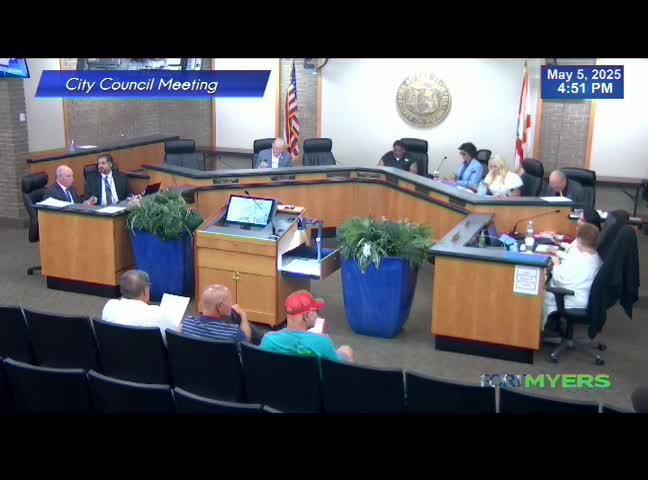
The Fort Myers Environmental Advisory Board (EAB) presented its 2024 annual report to the City Council on May 5, outlining recommendations for shoreline protection, building design and code updates.
The EAB said its work over the past year focused on shoreline stabilization, resilience planning and ordinance review, and recommended several policy changes the board says would reduce environmental harm and strengthen long-term resilience in the city.
Board members Connie Bennett Martin, past chair, and David Heppelman, current chair, told the council the EAB received briefings from state and city staff on topics including living seawalls, the Florida Fish and Wildlife Conservation Commission's derelict vessel program, wellhead protection and potential xeriscaping for city facilities. "We are very committed to protecting and improving the Fort Myers environment," Bennett Martin said during the presentation.
The EAB reported it voted on two formal recommendations last year. One asks the city to limit the use of aerial fireworks within city limits and instead consider drone light shows for public celebrations, citing impacts on wildlife, pets, air quality and human health. The other recommends integrating bird-safe building design standards into future development, including nighttime lighting strategies and architectural choices that reduce collisions during migration.
Board members also described discussion of a cell-tower proposal and urged a comprehensive ordinance to balance deployment of new wireless infrastructure with environmental concerns, specifically potential impacts to migratory birds, human health and light pollution. The EAB recommended the city explore Florida Green Building certification or a similar local green building code and suggested targeted updates to Chapter 138 of the city's land-development code to improve requirements related to green space, permeable surfaces and sustainable infrastructure.
Council members and staff noted the EAB's participation in a resiliency conference and the board's role as an advisory body. The EAB asked the council to consider its recommendations during ongoing updates to the comprehensive plan and land-development code, and to maintain a formal channel for input as those documents are revised.
The board thanked Councilmember Liston Beauchett for serving as council liaison and Justin Mahone, the city's environmental compliance manager, for staff support. The EAB said it currently has several open seats and encouraged council members and residents to help recruit candidates.
The presentation concluded with the council thanking the volunteer board for its work and noting the board's recommendations would be taken into account as related ordinances, capital projects and planning efforts return to council for action.