Lifetime Citizen Portal Access — AI Briefings, Alerts & Unlimited Follows
California lawmakers and cultural leaders warn federal cuts threaten state arts, museums and libraries
Loading...
Summary
At a joint informational hearing, state lawmakers and arts leaders said recent federal actions and proposed budget cuts to the NEA, NEH and IMLS have already disrupted grants and programs across California and urged state action to shore up funding and services.
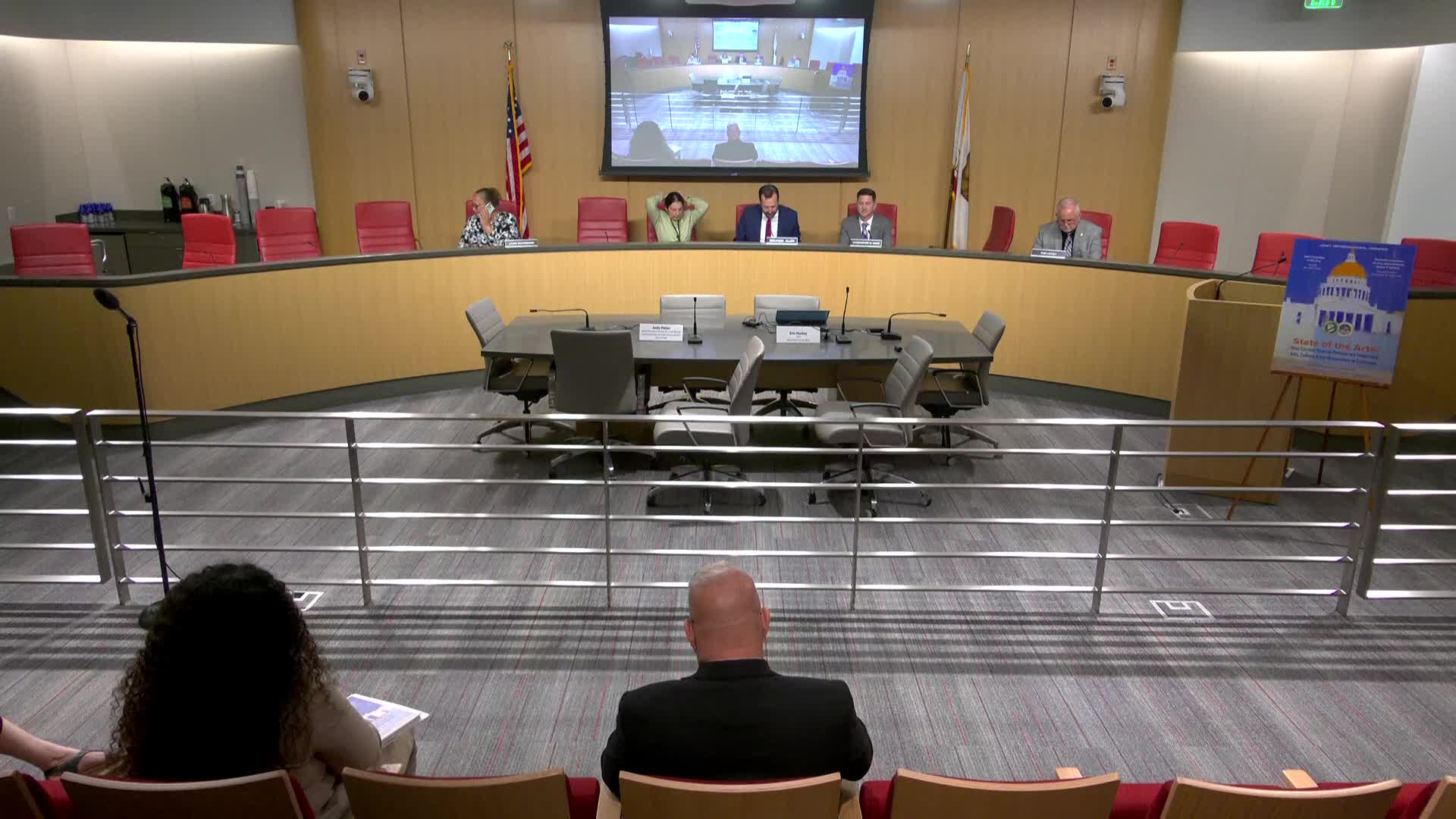
A joint informational hearing convened by Senator Ben Allen and Assemblymember Christopher Ward drew arts leaders, museum directors, filmmakers and union representatives to warn that recent federal actions are disrupting programs and jobs across California's creative economy.
Speakers told the Joint Committee on the Arts and the Assembly Committee on Arts, Entertainment, Sports and Tourism that federal grant terminations and a proposed FY 2026 budget that would zero out the National Endowment for the Arts (NEA), National Endowment for the Humanities (NEH) and the Institute of Museum and Library Services (IMLS) have already forced organizations to pause projects and lay out contingency plans.
Why it matters: testimony cited canceled or at-risk grants that fund education programs, documentaries, museum exhibits and library services that reach rural and urban communities alike. Erin Harkey, chief executive officer of Americans for the Arts, told the committee that the administration’s FY 2026 proposal “calls for the entire zeroing out of NEA, NEH and IMLS and the loss of public funding for the Corporation for Public Broadcasting.” That proposal, witnesses said, would cut federal dollars that are often leveraged to recruit state, local and private matching funds.
Testimony and evidence - Erin Harkey (Americans for the Arts) summarized national data and a pulse survey showing rescinded federal grants and advising some organizations to remove DEI language to preserve funding. - Rick Noguchi (president and CEO, California Humanities) said California Humanities’ roughly $4.5 million annual budget—mostly federal—was cut without warning and that nearly $970,000 in FY 2025 awards were halted; $2 million in FY 2026 grants were at risk. - Greg Lucas (California State Librarian) said an IMLS award of roughly $15 million for California libraries was briefly canceled and then partially restored; he warned that only 50% of next-year funding had been guaranteed at the time of testimony. - Danielle Purcell (director, California Arts Council) described the NEA partnership process and that NEA termination notices had been “selectively widespread,” prompting the council to assess damage and coordinate with grantees. - Julie Fisher (national secretary-treasurer, SAG-AFTRA) described production moving overseas, the union’s support for federal production tax incentives and the performing-artist tax parity act that would update the qualified performing-artist deduction.
Committee response and next steps Senators and assembly members repeatedly asked what California could do at the state level—through direct appropriations, program replacement, ballot measures or targeted workforce supports—to backstop organizations and workers if federal funding remains uncertain. Witnesses urged rapid state action to restore or replace lost funding, create multi‑year grant options, and expand outreach to nontraditional allies in business and tourism.
What remains uncertain: witnesses described parallel paths of advocacy and litigation at the federal level but warned litigation and congressional fixes may be slow. Several panelists said some agency awards had been reinstated or partially restored while others remained terminated, and that long-term prospects depended on congressional action and agency appeals.
The hearing closed with lawmakers and advocates agreeing to continue working together to quantify local impacts, press for reinstatement of federal awards, and pursue state-level contingency funding to preserve programming, jobs and services.