Lifetime Citizen Portal Access — AI Briefings, Alerts & Unlimited Follows
Pakistan warns of possible Indian kinetic action, says Indus Water Treaty suspension could be "act of war"
Loading...
Summary
At a United Nations press briefing, Pakistan's permanent representative warned of an imminent risk of kinetic action by India, said Pakistan would exercise its right of self‑defense, and called attention to Indias decision to place the 1960 Indus Water Treaty in abeyance as a potential existential threat.
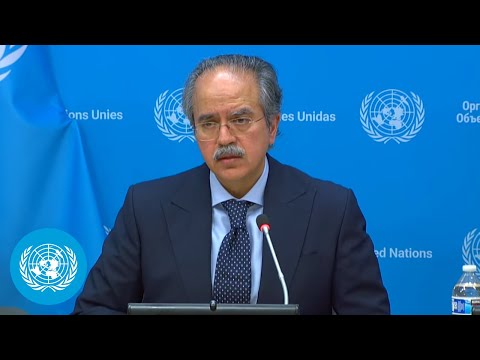
Pakistandoes not seek escalation but is prepared to defend itself, Pakistans permanent representative to the United Nations said at a press briefing that outlined Islamabads response to recent violence in Indian‑administered Jammu and Kashmir.
"Pakistan does not seek escalation," Asimith Garemit, permanent representative of Pakistan to the United Nations, told journalists. "At the same time, we are fully prepared to defend our sovereignty and territorial integrity. Should India resort to aggression, Pakistan will exercise its inherent and legitimate right to self defense as enshrined in the UN Charter." Garemit said Pakistan had briefed the UN secretary‑general, the presidents of the General Assembly and Security Council, the Organization of Islamic Cooperation in New York and other international partners on its concerns.
The representative singled out Indias announcement placing the Indus Water Treaty of 1960 in abeyance, calling it a "historic" and "legally binding" agreement brokered with World Bank involvement and warning that any attempt to stop or divert the western rivers would be treated as "an act of war." "The treaty guarantees Pakistan's right to the three western rivers, which serve as a lifeline," Garemit said, and Pakistan's national security committee had concluded that attempts to divert those waters would pose an existential threat to the people of Pakistan.
Garemit and other Pakistani officials described a recent escalation in rhetoric and troop movements following an attack in Pahalgam in Indian‑administered Jammu and Kashmir. Pakistan categorically rejected any attempt to associate it with the attack and said no credible evidence linking Pakistan to the incident had been shared. "No credible information about the perpetrators has been made public or shared with us," Garemit said, and Pakistan reiterated its call for an independent, neutral investigation.
On the question of whether Islamabad would seek a Security Council meeting, Garemit said Pakistan believes the Security Council has the mandate to consider the situation and that Pakistan had discussed the matter with council members and presidencies and would request a meeting when appropriate. He also said Pakistan welcomed the secretary‑general's offer of "good offices" and had officially invited him to play that role and to visit the region.
Journalists at the briefing pressed the delegation on specific intelligence claims and on nuclear risk. Garemit declined to disclose intelligence details, saying he would not "go into the realm of intelligence," but reiterated that Pakistan was "warning" that preparations by India could make kinetic action plausible and that Pakistan would respond if attacked. On nuclear arms, Garemit described Pakistan as a "responsible nuclear weapon state" and said he assumed India would behave responsibly as well; he declined to discuss doctrine details at the briefing.
The briefing also highlighted human rights concerns in Indian‑administered Jammu and Kashmir. Garemit cited reports from international organizations and the UN high commissioner for human rights alleging arbitrary detentions, home demolitions and other abuses. He said Pakistan viewed the long‑running Jammu and Kashmir dispute as the root cause of regional instability and called for a just settlement in accordance with relevant UN Security Council resolutions and "the wishes of the Kashmiri people."
Garemit rejected assertions that Pakistan supports or sponsors terrorism, saying allegations were often "twisted and presented out of context" and pointing to what he described as documented instances of Indian extraterritorial operations and state actions that, in his view, contributed to instability. He said Islamabad remained willing to discuss terrorism bilaterally if India returned to a comprehensive dialogue process.
The briefing concluded with Pakistan urging immediate de‑escalation and continued diplomatic outreach. Pakistan said its national security committee, chaired by the prime minister, convened and ordered proportionate countermeasures (details not specified by the representative), and that Islamabad had informed multiple international bodies of its position. Garemit closed by thanking attendees and inviting further questions.