Lifetime Citizen Portal Access — AI Briefings, Alerts & Unlimited Follows
Alex Sarkoff emphasizes procedural rigor, sentencing experience in Board of Pardons and Paroles nomination hearing
Loading...
Summary
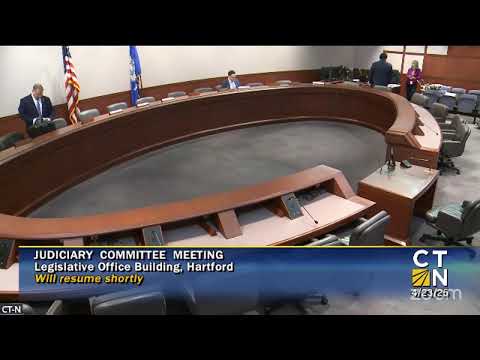
Alex Sarkoff, director of the Connecticut Sentencing Commission and nominee to the Board of Pardons and Paroles, told the Judiciary Committee he will follow statutes and training and bring sentencing and administrative experience to the role; members asked about courtroom experience and victim engagement.
Alex Sarkoff, nominated by Gov. Ned Lamont to the Connecticut Board of Pardons and Paroles, told the General Assembly Judiciary Committee that he intended to apply statutory requirements, board training and his criminal-justice experience to parole and pardon reviews.
Sarkoff, who identified himself as a Hartford resident and said he has served for more than nine years as executive director of the Connecticut Sentencing Commission, described a background that includes work at the Judicial Branch Court Support Services Division, teaching at the University of Connecticut and a law degree from UConn School of Law. “The board of pardons and paroles plays a critical role in ensuring public safety while in fostering rehabilitation,” he said. “If appointed, I look forward to embracing this challenge with hard work, diligence, and humility.”
Why it matters: Sarkoff’s agency-level experience advising on sentencing rules and his knowledge of statutory design drew support from several committee members, but some asked whether he had sufficient direct courtroom experience and direct work with victims to serve in an adjudicative role.
Committee questioning and background Representative Fishbein and other committee members questioned portions of Sarkoff’s submitted questionnaire and asked why certain entries were handwritten or later amended; Sarkoff said staff asked him to fill in questions and that he later added a commission appointment (the Commission on Racial and Ethnic Disparity in the Criminal Justice System) he had not listed initially.
Members asked about his experience working with victims. Sarkoff acknowledged limited direct experience with victims, saying his work has mainly been at the policy level. “Victim input is very important in the Board of Pardons and Paroles process,” he told the committee, adding that victims have “constitutional statutory rights here in Connecticut to be notified of a hearing and to participate in the hearing by providing a statement.”
Sarkoff described his responsibilities at the Sentencing Commission, an independent statutory body that produces reports and legislative recommendations. He said the commission seeks consensus across stakeholders and that its membership includes chief state and defense officials and victim advocates. He cited recent commission work on items such as victim notification and use-of-force policy language.
Support, experience and next steps Several members, including Senator Kisten, praised Sarkoff’s prior committee work and his leadership of the Sentencing Commission; Representative Godfrey, who said Sarkoff had been his intern years earlier, testified to Sarkoff’s diligence and integrity. A public commenter, Ken Brown from the Institute for Municipal and Regional Policy, testified in support of both nominees.
The committee did not vote at the hearing; members said the nominations will be taken up at the Judiciary Committee’s next business meeting on Friday.