Get Full Government Meeting Transcripts, Videos, & Alerts Forever!
Get email alerts on the Syria Humanitarian Aid topic
No spam. Unsubscribe anytime.
UN deputy Syria coordinator says his post will be abolished as cross-border role ends; funding, access remain urgent issues
Summary
David Carden, the United Nations deputy regional humanitarian coordinator based in Gaziantep, said his post will be abolished as UN coordination shifts to Damascus. He warned of severe funding shortfalls, service suspensions in camps, and ongoing displacement even as some returns begin.
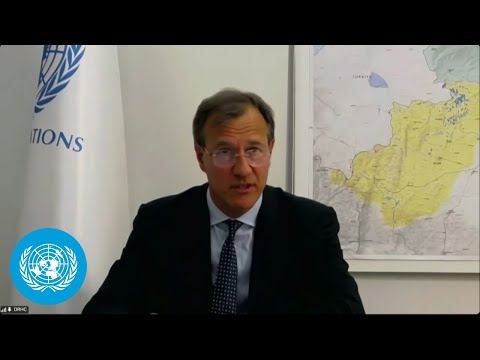
David Carden, the United Nations deputy regional humanitarian coordinator for Syria, told a UN noon briefing from Gaziantep that his post will be officially abolished "as of tomorrow" as the UN moves to a unified coordination structure led from Damascus.
Carden said the change is part of the UN—s transition "to a new Syria" and an effort to "streamline the coordinated response under the leadership of Damascus." He described a decade-long cross-border operation from Gaziantep that has delivered food, medical supplies and shelters to millions of Syrians since 02/2014, including more than 62,000 trucks of aid and nearly 936 trucks so far this year.
Why it matters: Carden said the humanitarian needs remain acute even as some violence subsides and return movements begin. He warned that funding is critically low and that the shift in coordination could change how aid is processed and delivered in practice.
Carden gave a summary of recent operational figures and impacts. He said the Syria Cross Border Humanitarian Fund has allocated almost $1.1 billion since 02/2014, and that last year the fund allocated nearly $67 million, with about 70% of that directed to Syrian nongovernmental organizations. He said the humanitarian community had secured approximately $179 million to date, "less than 9% of the $2 billion needed" through June. The shortfall, Carden said, has already led to suspensions of water and sanitation services in camps and cuts to safe spaces for women and girls.
On displacement and returns, Carden said roughly 7 million people remain displaced in Syria and that since December more than 1 million internally displaced people have returned, though most returns were of people displaced in the last two months of 2024. He said about 225,000 people have departed from camps and that about 2 million people still live in camps across northwest and northeast Syria. He said returns and conditions vary by area: "Over 40% of the needs are concentrated in Idlib and Aleppo," he said.
Carden described field visits, including a recent mission to an area he called Saragheb in Idlib, where he said mine clearance partners reported extensive unexploded ordnance and devastation. He also noted that repairs at the Tishrin Dam (referred to in the briefing) are under way, with the International Committee of the Red Cross and UNICEF involved, and that restoring services could benefit some 400,000 people in eastern Aleppo and surrounding areas.
On relations with new authorities, Carden said the UN has "had contact" with authorities in Damascus and that there is operational engagement "at the practical and problem solving level" to address issues such as liquidity and registration of humanitarian nongovernmental organizations. He said access has generally improved since December but that insecurity continues to limit access to some rural areas and that incidents affecting civilians have been reported.
Carden was asked by reporters about the future UN presence in Syria. He said the UN will remain involved in humanitarian operations, but that coordination will be led by the humanitarian coordinator in Damascus rather than the cross-border arrangement that placed coordinators outside the country. He attributed the funding gap to a difficult global environment and lower donor pledges.
Carden also said he will relocate to Juba, South Sudan, as head of the Office for the Coordination of Humanitarian Affairs there.
Ending: Carden closed by urging continued donor support and saying "the wealth of a human is to work themselves out of a job and build the conditions where humanitarian aid is no longer needed," and he expressed hope that the humanitarian phase will be short and allow a shift toward recovery and reconstruction.