Lifetime Citizen Portal Access — AI Briefings, Alerts & Unlimited Follows
Puerto Rico finance committee hears public safety agencies request funding for technology, recruitment and equipment
Loading...
Summary
Representatives and public-safety officials outlined a consolidated FY26 spending plan for the Department of Public Safety and its components, emphasizing investments in technology, recruitment and vehicle/equipment replacement while flagging dependence on federal grants and outstanding reimbursement issues.
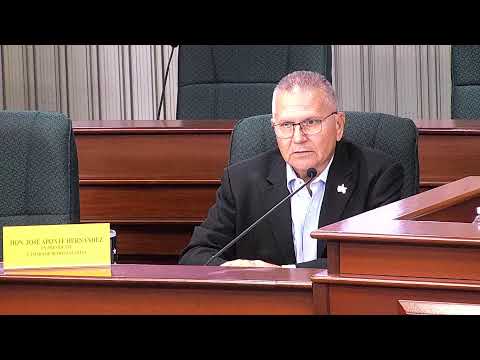
The House of Representatives’ Commission of Finance on April 29 heard top officials from Puerto Rico’s Department of Public Safety (DCP) and its subordinate agencies defend a consolidated budget that officials said totals roughly $1.32 billion for the department and its components.
Why it matters: Committee members repeatedly pressed officials on whether the department can operate without federal grants, on the cost and schedule for planned technology upgrades, and on workforce shortages that officials said are constraining response and service levels across police, fire, emergency medical services (EMS) and 9‑1‑1 operations.
Department overview and fiscal posture Arturo Garfer, secretary of the Department of Public Safety, told the commission his office has prioritized ‘‘investment in technology, equipment and recurrent training’’ and that the consolidated DCP budget is approximately $1.32 billion (with a similar target for FY26). He framed technology investment as central to improving investigations and day‑to‑day response coordination.
Individual component budgets and priorities - Joseph González, commissioner of the Puerto Rico Police, reported a police budget of about $872 million, with roughly 87% of that current allocation going to payroll. He said the police are investing in aerial assets, drones, and technology that supports patrol and investigations. - Josué Piñeiro Torres, commissioner of the Fire Corps, said the bureau’s budget request covers recruitment, station maintenance, vehicle replacement and other capital needs; commissioners said 19 pumpers, one aerial ladder truck and a 45‑foot rescue boat are in procurement or delivery pipelines. - Abner Gómez Cortés, commissioner of Emergency Medical Services, reported a consolidated EMS budget of about $29,739,000 and described a planned fleet replacement of 42 ambulances (eight already delivered or in final stages). He also noted a program to buy bariatric ambulances and additional motorbikes for urban response. - José Reyes Cañada, head of the 9‑1‑1 bureau, said the 9‑1‑1 operation does not receive general‑fund appropriations and is financed primarily by restricted telephone charges; he said current 9‑1‑1 revenue is governed by federal restrictions and monitored by the Federal Communications Commission.
Federal funds, recovery dollars and technology estimates Officials told the committee that the DCP is managing multiple federally funded projects related to disaster recovery and interoperability. The department said it has identified about $633 million in recovery‑project funding across 122 projects, of which roughly $416 million has been spent or is in active execution; the remainder is staged for implementation.
Garfer and other witnesses described a multi‑year technology plan to modernize dispatch, evidence and identification systems. Technology investment estimates mentioned during the hearing ranged from about $129 million up to roughly $139 million depending on which elements are included (interoperability, analytics, licenses and long‑term platform costs). Committee members asked for more precise, line‑item estimates and for a plan to manage recurring license costs.
Staffing, recruitment and retention Committee members pressed agency heads about recruitment shortfalls. Officials said recruiting and retention issues affect police, fire and EMS; the police reported roughly 11,432 sworn officers presently on the rolls and said staffing models adjusted for population and technology point to a larger force (estimates discussed in the hearing ranged toward 14,000, reflecting a mix of older studies and updated operational assumptions).
Several agencies described active recruitment drives, academy classes and incentives. EMS officials noted an $800-per-month retention incentive was recently reprogrammed by the oversight board for paramedic recruitment and retention; commissioners said they are tracking losses to migration and private‑sector hires.
Facility condition and capital projects Committee members and agency officials discussed aging police and first‑responder facilities across the island and a $27 million allocation from public‑building funds for station repairs. Garfer said a priority list of stations has been shared with the centralized building authority and that some projects will require additional funding.
Public‑safety reform and court monitoring Witnesses noted the police‑reform process remains active. Secretariat testimony said the police are at about 82% compliance with court‑mandated reform paragraphs as measured in semiannual monitor reports; speakers emphasized that technology gaps are the main remaining barrier to full and sustained compliance.
What’s next Committee members asked for precise, agency‑by‑agency line items for: projected license and recurring technology costs; lists of recovery projects and their status; detailed staffing plans tied to the recruitment and retention initiatives; and a prioritized roster of stations and facilities that require capital work. Several requests were assigned five‑ to ten‑day turnarounds.
Sources: Testimony from Arturo Garfer (Secretary, Department of Public Safety), Joseph González (Commissioner, Puerto Rico Police), Josué Piñeiro Torres (Commissioner, Fire Corps), Abner Gómez Cortés (Commissioner, Emergency Medical Services), José Reyes Cañada (Head, 9‑1‑1 Bureau) presented to the House Commission of Finance on April 29, 2025.