Lifetime Citizen Portal Access — AI Briefings, Alerts & Unlimited Follows
U.N. warns humanitarian conditions worsening across Gaza, Yemen, Sudan, Somalia and eastern Congo
Loading...
Summary
A U.N. spokesperson told reporters that humanitarian access and supplies remain severely constrained in multiple conflict-affected areas, with acute shortages in Gaza and low funding levels for Yemen and Somalia prompting scaled-up emergency appeals.
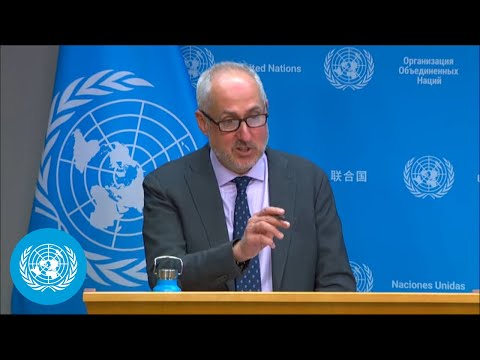
A United Nations spokesperson said Wednesday that humanitarian needs are worsening across multiple crisis zones, and repeatedly urged parties to allow unimpeded access for relief supplies.
The spokesperson said hostilities in Gaza continue "unabated," with Israeli airstrikes hitting tents and areas sheltering displaced families. Teams from the U.N. Office for the Coordination of Humanitarian Affairs (OCHA) reported strikes in Khan Yunis and Al Mawasi that they said killed at least eight people and injured more than a dozen, many of them children. The spokesperson said nearly 20 families lost shelters and belongings at the sites visited.
The U.N. spokesman described acute shortages of food, water, medicine and shelter at multiple displacement sites in Khan Yunis, where nearly 2,500 displaced people were sheltering at two locations visited by OCHA. "Children are going hungry," the spokesperson said, and described overcrowding and injuries during food distributions. The spokesperson said partners screened about 1,300 children in northern Gaza last week and identified more than 80 cases of acute malnutrition, "a twofold increase from previous weeks."
The spokesperson also said deliveries have been constrained by restricted access and shortages of fuel and logistics capacity. A shipment that moved from northern to southern Gaza in recent days could support roughly 470 children for about one month, the spokesperson said, but added that overall food and medical supplies remain dangerously low.
Turning to Yemen, the spokesperson said more than two dozen airstrikes had been reported since Monday and that strikes damaged health infrastructure, including a hospital in Al Bayda governorate where an emergency obstetric and newborn care program was operating. The U.N. humanitarian plan for Yemen is "just 8% funded," the spokesperson said, with "less than $205 million received out of the nearly $2.5 billion required." The briefing noted that funding shortfalls are limiting the ability of partners to respond.
On Sudan, the spokesperson gave an update on the secretary-general's personal envoy for Sudan, Ramtane Lamamra, who was in Port Sudan meeting senior officials including General Abdel Fattah al-Burhan. The spokesperson said Lamamra is intensifying consultations to explore ways to strengthen protection of civilians, press for a cessation of hostilities and advance an inclusive political process. Humanitarian partners reported massive displacement in North Darfur after the takeover of Zamzam camp, with some residents reportedly displaced there since 2003; the spokesperson said famine conditions have been reported in parts of the area since last August.
The briefing said an aid convoy to North Darfur is being coordinated and could carry assistance for up to 40,000 people via a cross-border mission from Chad through the Adre crossing before reaching Tawila in North Darfur. Local NGOs were reported to be running mobile health and nutrition clinics and a water-trucking project providing 20 cubic meters of water daily to about 10,000 people.
In the Democratic Republic of the Congo, the U.N. noted continuing grave violations against children, including forced child marriages and recruitment by armed groups in parts of South Kivu and occupation of at least five schools, and said nearly 9,000 displaced people were living in some 50 collective centers around Goma and Sake. The U.N. mission MINUSCO carried out a long-range patrol near a village in Ituri province to promote security during the cultivation season and to assess conditions on the ground.
The spokesperson also reported that heavy seasonal rains and deadly flash floods in Somalia have affected nearly 30,000 people, and that the country now faces rising humanitarian needs while an appeal of roughly $1.42 billion is only about 10% funded with $143 million received to date. In Ukraine, humanitarian partners reported drone and glide-bomb strikes on populated areas and damaged apartments, infrastructure and hospitals in several regions.
The spokesperson reiterated calls for all parties to respect international humanitarian law, to allow humanitarian access on principled terms (humanity, neutrality, impartiality and independence) and urged member states with influence to press for release of hostages where applicable. "We and our humanitarian partners are continuing to deliver wherever we can," the spokesperson said, while noting that funding shortfalls and access constraints remain severe.
The briefing included descriptions of specific shortfalls, reported casualties and ongoing U.N. and partner operations; no new Security Council actions were announced during the press briefing.
The U.N. spokesperson took questions from reporters after the prepared remarks.