Get Full Government Meeting Transcripts, Videos, & Alerts Forever!
Get email alerts on the Tourism Gastronomy Arecibo topic
No spam. Unsubscribe anytime.
House tourism panel hears Arecibo plan to designate Palma and Gonzalo Marín as gastronomic corridor
Summary
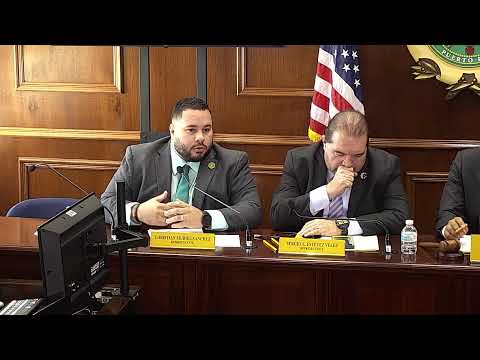
The Tourism Committee of the House of Representatives received testimony April 22 on House Bill 2-43, which would demarcate Calle Palma and Calle Gonzalo Marín in Arecibo as a gastronomic corridor and direct the Compañía de Turismo to develop promotion and support plans.
The Tourism Committee of the House of Representatives received municipal testimony April 22 on House Bill 2-43, which would demarcate Calle Palma and Calle Gonzalo Marín in Arecibo as a gastronomic corridor (“corredor gastronómico de la Villa El Capitán Correa”) and order the Compañía de Turismo de Puerto Rico to prepare marketing, promotion and support plans.
José Luis González Zegarra, director of municipal tourism for Arecibo, read the municipality’s written position and outlined expected benefits: increased visitor attraction, support for local businesses, urban revitalization and cultural promotion. González Zegarra said the proposal “tiene el potencial de ser gran impulso para el comercio local y desarrollo del centro urbano” and emphasized the need for community participation in planning.
Arecibo officials told the committee the downtown area already contains a concentrated food and beverage sector and recommended two additional streets be considered to reflect continuous commercial activity (Calle Barceló and Calle San Felipe). The municipal representative said the downtown cluster totals roughly 31 food‑service establishments and proposed enlarging the corridor perimeter to include contiguous blocks with established restaurants.
Municipal witnesses highlighted constraints unique to Arecibo: a large portion of the casco urbano is historically designated and work in public rights‑of‑way often requires coordination with the Instituto de Cultura and archaeological review. González Zegarra told the committee that infrastructure and renovation projects (for example, Plaza remodeling and Paseo de Diego improvements) have been delayed or complicated by required cultural and archaeological clearances.
Budget and implementation questions were discussed. Arecibo’s presentation noted elements that would affect program cost—street improvements, lighting, signage, promotional campaigns, merchant training, maintenance and security—and offered a broad implementation cost range provided in testimony earlier (municipal witness examples cited between $100,000 and $400,000 depending on scope). González Zegarra said responsibility for implementation would fall to the Compañía de Turismo and the municipality for coordination and noted that certain approvals (permits, cultural clearances) would be required before construction or modifications could proceed.
Representatives asked whether existing municipal ordinances on noise and public‑space regulation would prevent negative impacts on adjacent residential areas; both municipalities (Toa Baja and Arecibo) said they maintain municipal ordinances limiting disruptive activities and enforcement mechanisms. Committee members also asked about accessibility for people with disabilities and reservations for parking spaces near restaurants; witnesses acknowledged these concerns and said the municipalities would consider reserved spaces for people with disabilities in planning.
The committee did not take a formal vote on PLC 2-43 during the session. Members asked Arecibo to provide maps, property lists and further details about identified “estorbos públicos,” the location of restaurants and any projected municipal investments needed to support the corridor.
No formal committee decision was recorded at the hearing.