Lifetime Citizen Portal Access — AI Briefings, Alerts & Unlimited Follows
Subcommittee reviews expansion and infrastructure funding for Universal School Meals, including $150M in kitchen grants
Loading...
Summary
The governor's budget proposes continued support for Universal School Meals including $31.5M current-year backfill, $84.1M to cover projected growth in 2025'26, a 2.43% COLA ($22.2M), and $150M one-time for kitchen infrastructure and training (split $100M competitive grants for infrastructure; $50M formula for training). The
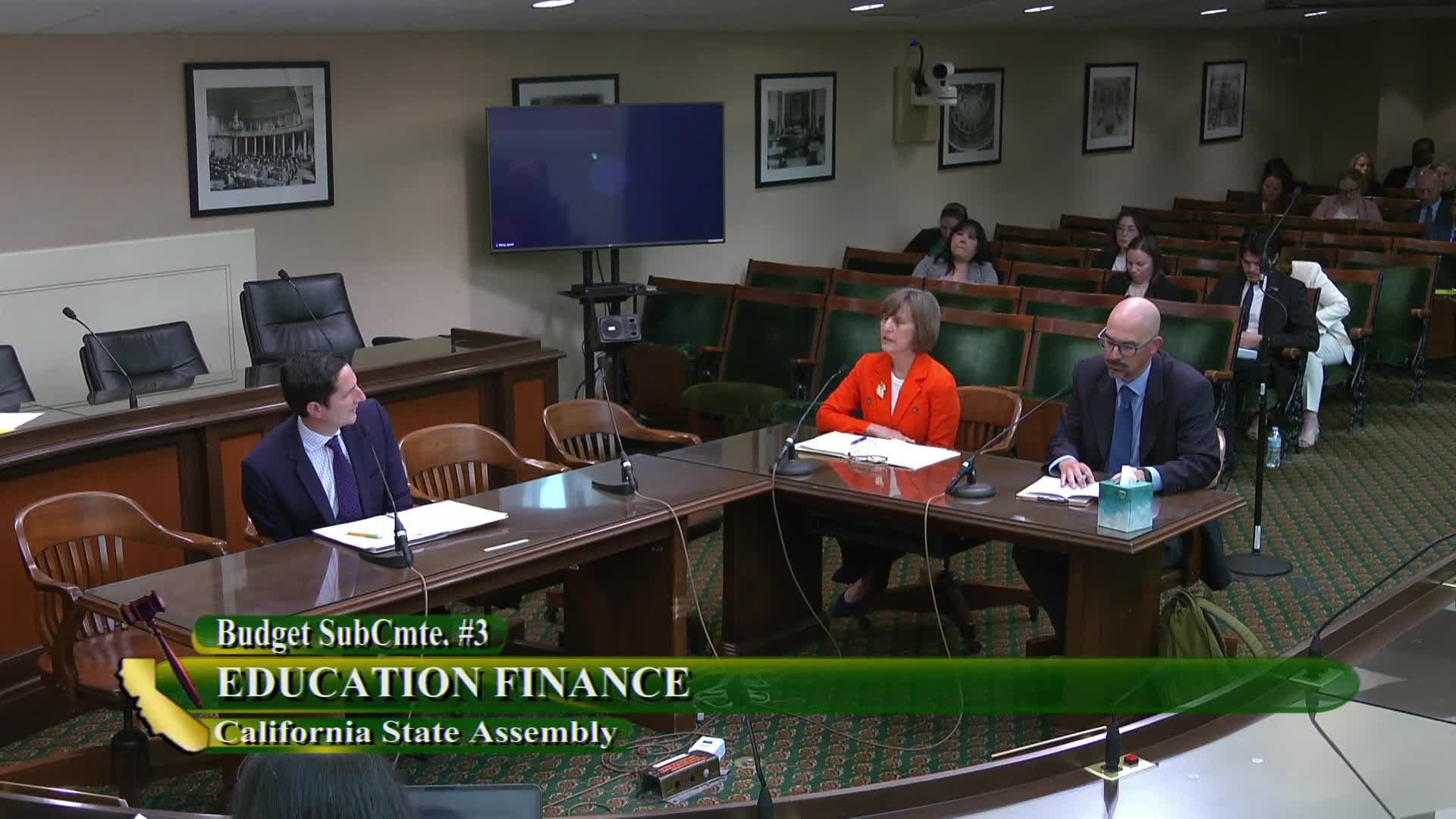
The subcommittee examined the governor's budget for Universal School Meals and related kitchen infrastructure and training grants.
Proposal details: Nate Williams of the Department of Finance explained the administration's package: a $31.5 million Proposition 98 one-time backfill for the current year to cover a shortfall tied to higher-than-expected meal counts, an $84.1 million increase for anticipated growth in 2025'26 meal counts, and a $22.2 million Proposition 98 increase to reflect a 2.43% cost-of-living adjustment to the state reimbursement rate. In addition, the governor proposes $150 million one-time Proposition 98 for Local Educational Agencies for kitchen infrastructure upgrades and training: $100 million in competitive grants for infrastructure to increase capacity for freshly prepared on-site meals and $50 million allocated by formula for staff training.
Analyst view and CDE testimony: The Legislative Analyst's Office recommended the administration's current year estimates were reasonable but said the administration likely underestimates 2025'26 meal counts by about 5% (roughly $32 million). The LAO also recommended rejecting or postponing a third round of kitchen infrastructure funding until the state received and reviewed reports due June 30, 2025, on prior rounds and recommended better systemwide data collection if the Legislature wants to target freshly prepared on-site meals.
CDE and local input: Kim Frenzel of the California Department of Education urged continued investment, citing evidence and a UC Nutrition Policy Institute evaluation that state investments have helped districts increase freshly prepared meals, participation and procurement of locally sourced foods. Public commenters representing school nutrition associations, anti-hunger groups and district officials also urged continued funding and emphasized that many kitchens remain outdated and that training, infrastructure and time to encumber funds remain constraints.
Next steps/direction: Committee members requested more data on prior round outcomes and suggested the May revision and subsequent budget actions should refine meal projections and include data collection and outcome goals if funding for freshly prepared meals is continued. The subcommittee held the item open.