Get Full Government Meeting Transcripts, Videos, & Alerts Forever!
Get email alerts on the Opioid Settlement Funds topic
No spam. Unsubscribe anytime.
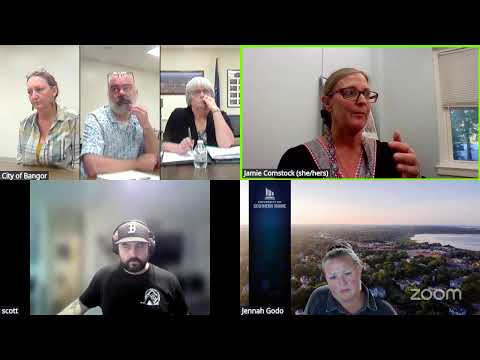
Opioid-settlement committee recommends $550,200 to hire two intensive HIV case managers in Bangor
Summary
Bangor’s opioid settlement funds advisory committee voted to recommend the city use $550,200 in settlement money to hire two intensive case managers for a two-year program aimed at addressing an HIV outbreak among people with unstable housing and substance-use histories.
The Opioid Settlement Funds Advisory Committee voted to send a recommendation to the Bangor City Council to spend $550,200 to hire two intensive case managers to respond to an ongoing HIV outbreak affecting people who are unhoused and who have substance-use histories.
The recommendation, presented at the committee’s Wednesday meeting, requests two full-time intensive case management positions for a two-year period and asks that the city present the full $550,200 proposal to council as a funding recommendation. "The committee recommends that the City of Bangor immediately hire 2 intensive case managers to respond, assist, and coordinate ... services and system navigation for individuals who've been diagnosed with HIV as part of the ongoing HIV outbreak here in the Bangor area," said Jamie, a Bangor Public Health official, while walking the committee through the written proposal.
The recommendation follows data presented by city staff showing the city has received multiple opioid settlement payments in recent years and has roughly $1 million currently in a settlement account. "The City of Bangor in 2022 received $417,000 roughly. In '23, just shy of 85,000. And then in 2024, 577,000. So what that means is that we have over a million in the bank," said Jason, the city manager, during the meeting.
Why it matters: committee members said the intensive case-management proposal addresses an urgent public-health gap that existing programs and funding streams do not cover. According to the proposal reviewed at the meeting, 26 confirmed HIV cases since February 2024 have been linked to people who identified as unhoused and with substance-use histories; many also have hepatitis C coinfection and links to an encampment near a local shelter. Committee members and public-health staff told the group that current case-management resources provide far fewer and less frequent touchpoints than the proposed intensive model, and that without more frequent, outreach-oriented case management the cluster could spread and produce further clinical complications.
Program design and cost: the proposal defines "intensive case management" as frequent (multiple weekly) interactions with affected individuals until they hit clinical and social benchmarks such as viral suppression and supported living arrangements. The city provided two budget options: a basic two-year budget totaling $510,200 and an intermediate option at $550,200; the committee voted to recommend the full $550,200. The recommendation also envisions a two-year funded period after which the program could transition to a reimbursement model (for example, billing MaineCare or other payors) if options exist, or it could be wound down depending on future funding and city decisions.
Committee discussion: members pressed staff on scale, costs and alternatives. Some members said they were reluctant to place a large share of the settlement funds with the city but ultimately agreed the gap needed immediate attention. Staff explained the intensive model would operate as a "roll on/roll off" system: as participants meet benchmarks they would transition to less intensive services, freeing intensive slots for new clients. Staff and community partners said roughly half of the 26 confirmed cases have already engaged with treatment to some degree, but frequent missed doses and mobility among unhoused clients increase the risk of viral rebound and drug resistance.
Other planning items: the committee asked staff to prepare an RFP process for the remainder of settlement funds, to invite local providers to inform RFP design, and to invite Together Place — a community recovery organization — to discuss possible needs or partnerships. Committee members asked that any RFP or direct award include clear clinical and supervisory requirements, including evidence of HIV-specific case-management experience.
Formal action: a committee member moved to present the proposal to council for the full $550,200; the motion was seconded and carried. Committee leadership said the recommendation will be drafted for council review and that the council agenda process will determine the specific meeting date for consideration. Committee members discussed attending the council presentation.
What remains open: staff and partners will monitor caseloads and service outcomes, pursue grant and reimbursement opportunities to sustain services beyond two years if possible, and finalize RFP language for other settlement-funded programs. The committee also agreed to invite local providers, including Together Place, to present needs and ideas to inform future funding rounds.