Get email alerts on the Infrastructure Streets Drainage topic
No spam. Unsubscribe anytime.
Board approves engineering contracts for three street overlay projects; sanitary sewer work added to avoid later digs
Summary
Directors approved engineering services for three roadway overlay projects that together cover about nine miles and include roughly 6.3 miles of sanitary sewer work to avoid subsequent utility excavation; funding sources include the 2025 sales tax programs for streets and the 5/8 percent sales and use tax for sewer design.
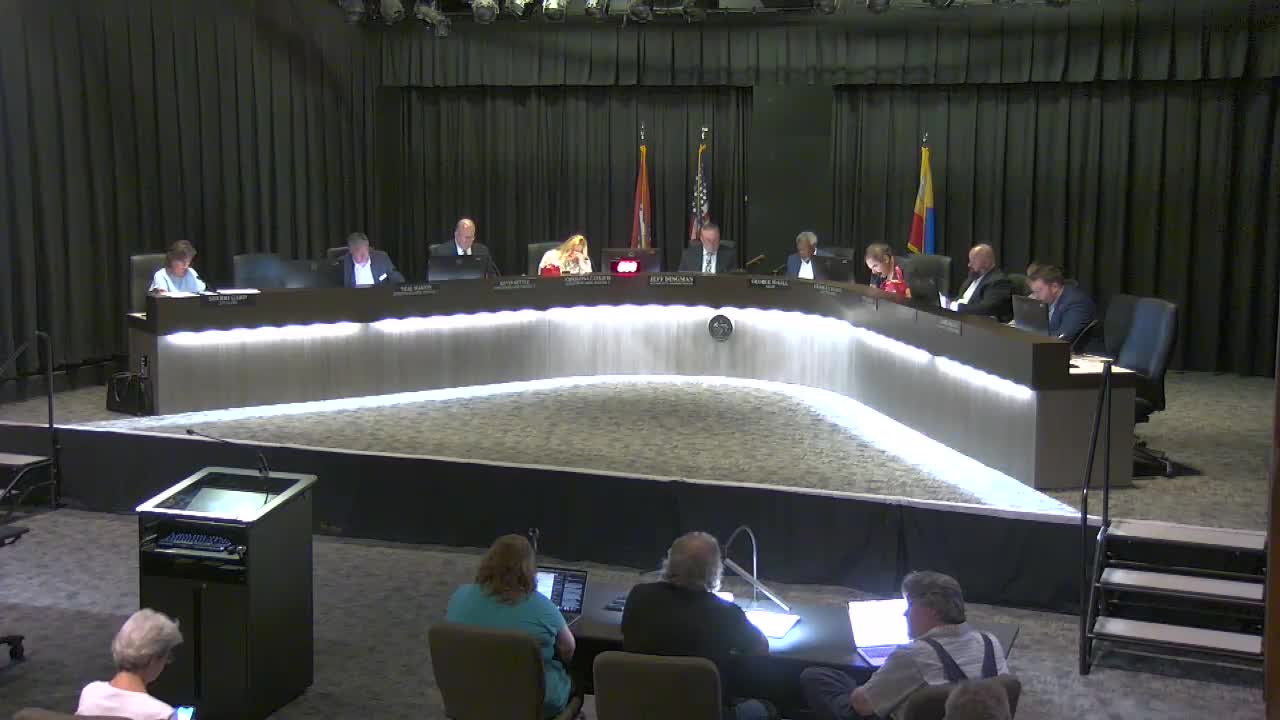
The Fort Smith Board of Directors on July 22 approved engineering services for design of three street overlay projects that together will cover about nine miles of roadway and incorporate approximately 6.3 miles of sanitary‑sewer work identified during coordination with utilities.
Acting engineering staff outlined the scope and three firms selected for phases B, C and D: Hawkins Weir (phase B, ~2.9 miles roadway, 1.5 miles sanitary sewer), Brooksy Engineering (phase C, ~3.1 miles roadway, 2.2 miles sanitary sewer) and Michael Griffin (phase D, ~3.0 miles roadway, 2.6 miles sanitary sewer). Staff said the city coordinated early with utility crews to add sewer and a small amount of water distribution work to avoid re‑digging new overlays after street construction.
Design funding for the roadway portions will come from the 2025 sales‑tax program for streets and drainage; sanitary‑sewer design funding will come from the city's 5/8‑percent sales and use tax dedicated to sewer projects. Acting engineering staff described the approach as a coordinated, multi‑department effort: “We didn't want to go back in and dig up the road after getting out there and doing a brand new road on there,” staff said.
No public speakers expressed opposition; the board approved the contracts by roll call: seven yes, zero no. Staff will return with project schedules and contract details as design work proceeds.
AI generated
The text on this page is AI generated. Summaries, highlights, analysis, and video transcripts are all produced from the original source material.
AI can make mistakes, so if you spot one, and we will fix it for everyone.
Note: the source content is unaltered by us. Any content source we link to, be it a video, an audio recording, or a document, is presented exactly as its publisher released it. That publisher is usually a government body, sometimes an individual official or another organisation.