Lifetime Citizen Portal Access — AI Briefings, Alerts & Unlimited Follows
U.N. warns of sharp deterioration in South Sudan, urges dialogue to avert wider conflict
Loading...
Summary
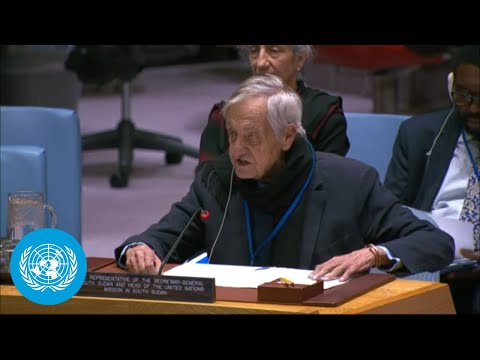
A senior United Nations official told the Security Council that fighting in Upper Nile state and an attack on a U.N. helicopter have sharpened tensions across South Sudan, triggering large displacements and a growing humanitarian crisis and prompting a U.N. appeal for dialogue, mandate continuity and international support.
A senior United Nations official told the Security Council that South Sudan has seen a "sharp deterioration in the political and security situation" that threatens to reverse recent peace gains and could tip the country into wider conflict.
The official said the immediate trigger was fighting in Upper Nile state, including events in Nasir in March that culminated in the March 7 attack on a United Nations helicopter that killed one crew member. Humanitarian agencies estimate more than 80,000 people have been displaced in the Nasir area, the official said.
The briefing outlined why the situation matters: escalating subnational violence, spillover from the conflict in Sudan, economic collapse, extreme weather and sharp declines in international aid have produced one of the worst humanitarian outlooks since South Sudan’s independence. The official said roughly 9.3 million people — about three-quarters of the population — need assistance, about 7.7 million are suffering acute food insecurity, and a cholera outbreak has registered about 47,000 cases and 877 deaths.
The official described a sequence of events in Upper Nile that began when the White Army overran a Nasir-based garrison of the South Sudan People’s Defense Forces, followed by airstrikes allegedly involving incendiary fuel devices and heavy civilian casualties. "Misinformation, disinformation and hate speech is fueling political and ethnic tension, particularly on social media," the official said, and reported further mobilization by both the White Army and the South Sudan People’s Defense Forces, including alleged forced recruitment of children.
The briefing noted additional regional and political escalants: the deployment of Ugandan forces at the South Sudanese government's request and the arrest or detention of senior SPLM-IO civilian and military actors, including the detention of First Vice President Riek Machar, which the official said reflected a new low in trust between the principal parties.
On the humanitarian and protection response, the official said U.N. peacekeepers have increased protection-of-civilians measures, reinforced their posture at internally displaced persons sites in Juba, stepped up patrols, enhanced security at bases and put quick reaction forces on standby. The mission is projecting a mix of flexible basing, reinforced troop deployments and equipment suited to the terrain, the official said, while stressing operational limits caused by access denials and that the mission is a peacekeeping operation, not an army.
The official urged the Security Council to support mandate continuity for the United Nations mission, noting four core pillars: protection of civilians, facilitating humanitarian assistance, supporting implementation of the revitalized peace agreement, and monitoring and reporting human rights. South Sudan has asked the United Nations for comprehensive electoral assistance, the official said, but added that such support requires serious commitment and decision-making from South Sudanese political leaders.
On the Tomping base in Juba, the official said negotiations with the host government are ongoing after an initial ultimatum to vacate; the mission is pursuing a phased relocation to preserve critical functions and is offering available land and facilities as they become available for transfer.
The official repeated appeals made by regional actors and the African Union for an immediate resolution of the Nasir tensions through dialogue rather than military confrontation, for adherence to ceasefires and the revitalized peace agreement, for the release or legal processing of detained civilian and military officials, and for the two principals to exercise restraint and prioritize the public interest.
The briefing closed with an appeal to avoid a relapse into large-scale conflict: "The overriding imperative now is to urgently avert a relapse into full scale conflict, refocus efforts on accelerating the implementation of the agreement, and advance the transition towards South Sudan’s first democratic elections," the senior United Nations official said.
Less critical details discussed in the briefing included the recent launch of civic education and public consultations on the constitution and the mission's longer-term political strategy to strengthen civic and political space and the rule of law to support a lasting democratic transition.