Lifetime Citizen Portal Access — AI Briefings, Alerts & Unlimited Follows
UNICEF at Security Council: Escalation in eastern DR Congo has created 'one of the world's worst' crises for children
Loading...
Summary
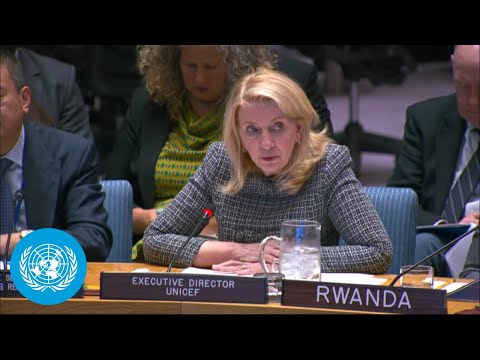
A UNICEF representative told a Security Council briefing that intensified fighting in eastern Democratic Republic of the Congo has displaced more than 1 million people since January, exposed children to widespread sexual violence and disease, forced thousands of schools to close and left humanitarian agencies short of funding and access.
A UNICEF representative told a Security Council briefing that a sharp escalation of fighting in eastern Democratic Republic of the Congo has created one of the world’s worst humanitarian crises for children, displacing more than 1,000,000 people since January and putting millions at risk of violence, disease and malnutrition.
The UNICEF representative said the new wave of displacement — including an estimated 400,000 children — adds to more than 5,000,000 people already living in displacement sites across the region. “The significant escalation of conflict in the Eastern region of the DRC has reached levels not seen in the last 3 decades,” the representative said.
UNICEF warned the violence has included a sharp rise in grave violations against children. The representative cited a 100% increase in verified grave violations against children in the first quarter of this year compared with the first quarter of 2024 and said reported cases of abduction increased sixfold between December 2024 and February of this year. The briefing said children accounted for more than 40% of nearly 10,000 cases of sexual- and gender-based violence reported in January and February, and UNICEF estimated that “during the most intense phase of this year’s conflict in Eastern DRC, a child was raped every half hour.”
The speaker described severe public-health consequences tied to the fighting and displacement. More than 2,500 schools and learning spaces in North Kivu and South Kivu, including those in displacement camps, have been forced to close, the briefing said. Overcrowded, unsanitary conditions in camps are increasing the risk of mpox, cholera and measles, and the representative said 143 mpox patients who had been in isolation units in Goma fled as fighting intensified, complicating the response.
Humanitarian operations are also under direct attack, the UNICEF representative said. Since January, at least 11 humanitarian workers have been killed; humanitarian warehouses and premises have been looted, including two mpox treatment centers supported by UNICEF in Goma and a UNICEF warehouse in Bukavu. The speaker said partners that had relied on MINUSCO to maintain roads and airstrips are now struggling to reach remote areas because of a MINUSCO drawdown.
UNICEF described its ongoing response and the immediate gaps. Operational staff have stayed in Goma and Bukavu and with partners are providing emergency water trucking, rehabilitating water systems, establishing chlorination points along Lake Kivu, supplying medicines and post-exposure prophylaxis kits, supporting survivors of sexual violence and providing psychosocial services, and registering unaccompanied and separated children for family reunification. The representative said UNICEF was reaching 700,000 people a day in Goma with clean water and sanitation.
The agency warned that funding shortfalls are limiting the response. In 2024, UNICEF received only 20% of the funding it said was required to meet urgent needs in eastern DRC. The representative announced an urgent appeal for nearly $57,000,000 to fund emergency assistance to children in the eastern DRC over the next three months and said that without additional funds “hundreds of thousands of children in Eastern DRC will miss out on screening and treatment for malnutrition, on life saving medicines and vaccines, on safe drinking water and on psychosocial support.”
The UNICEF representative urged the Security Council and other members of the international community to press parties to the conflict and those with influence over them to protect children, respect obligations under International Humanitarian Law and human-rights law, and to sign and implement action plans to end grave violations against children. The speaker also called for safe, rapid and unimpeded humanitarian access, open borders for voluntary movement of civilians and supplies, and temporary humanitarian pauses to allow medical evacuations and scaled-up relief. “This ****** violence against children is an abomination and demands condemnation and urgent and collective action,” the UNICEF representative said.
No formal decisions or votes were recorded during the briefing. The representative closed by urging Security Council members to commit to sustained funding and collective action to protect children and civilians in eastern DRC.