Get email alerts on the Advanced Learning And Reading topic
No spam. Unsubscribe anytime.
Board discusses Advanced Learning Program, reading curriculum reviews after mixed public feedback
Summary
Board members and staff debated ALP placement, the district's review of the Lucy Calkins Units of Study revisions, and how internal audits and local evidence inform curriculum decisions.
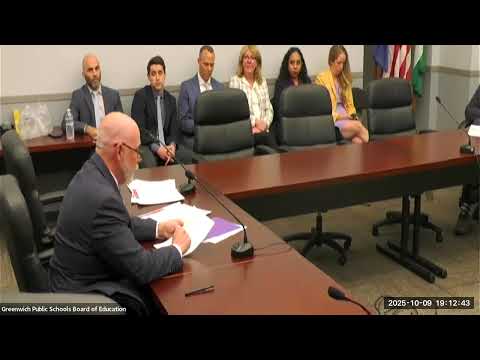
Board members and curriculum staff discussed the district's Advanced Learning Program (ALP) placements in elementary grades and concerns raised about a widely scrutinized reading curriculum. The conversation covered how students are screened for ALP, whether a pullout ALP science model should be retained, and how the district evaluates revised materials.
Curriculum staff described ALP science in elementary grades as an enrichment program (not an acceleration model) that uses multiple inputs for placement: district screeners, teacher referrals and parent requests. Principals and coordinators said school-level building-advisory committees review portfolios, achievement data and teacher feedback before assigning students to ALP.
Board questions focused on outcomes: staff noted that ALP students frequently score at the top of local assessments and often enter advanced middle-school pathways, but that a number of on-level students also score highly on state science tests. Staff cautioned that the NGSS science exam is administered in grade 5 and measures content taught across grades 3'5, which complicates simple cause-and-effect conclusions about ALP pullout models.
The board also revisited recent criticism of the Lucy Calkins Units of Study and the "science of reading" debate. Administrators said the district had performed a year-long internal review of the revised units and had layered units into a compendium that includes explicit phonics (Foundations), Heggerty phonemic-awareness work, decodable texts and adaptive platforms such as Lexia. Staff pointed to district growth on early literacy and broader achievement measures as part of their rationale for continuing the current approach while continuing to monitor evidence and outcomes.
Several board members urged caution and additional external research; curriculum leaders said they will continue audits, involve teachers in implementation-focused feedback, and provide the board with follow-up research and outcome monitoring.
AI generated
The text on this page is AI generated. Summaries, highlights, analysis, and video transcripts are all produced from the original source material.
AI can make mistakes, so if you spot one, and we will fix it for everyone.
Note: the source content is unaltered by us. Any content source we link to, be it a video, an audio recording, or a document, is presented exactly as its publisher released it. That publisher is usually a government body, sometimes an individual official or another organisation.