Get AI Briefings, Transcripts & Alerts on Local & National Government Meetings — Forever.
Wicomico County hearing reviews pilot poultry-litter pyrolysis plan from International Bio Refineries
Loading...
Summary
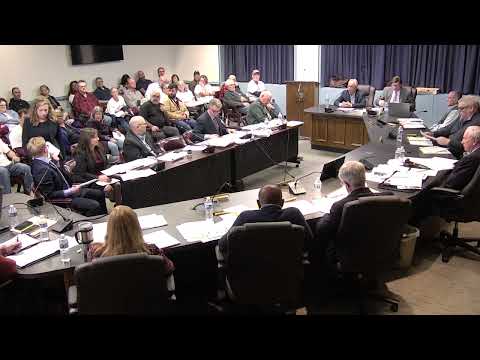
A Wicomico County hearing on a proposed poultry-litter processing facility focused on technical, regulatory and zoning questions after the owner of International Bio Refineries described the company's pilot project and a University of Maryland scientist outlined environmental trade-offs.
A Wicomico County hearing on a proposed poultry-litter processing facility focused on technical, regulatory and zoning questions after the owner of International Bio Refineries described the company's pilot project and a University of Maryland scientist outlined environmental trade-offs.
At the hearing, the company's witness and owner, identified in testimony as Mr. Katheria, said International Bio Refineries (also referred to in the record as INBIO) received a $1,900,000 grant from the Maryland Department of Agriculture in February 2020 to support on-farm equipment and assembly. He also testified that he is a 90% owner of International Bio Refineries and that the company holds patents for the technology under the corporate owner, International Bio Refineries. Mr. Katheria described the pilot as a small-scale site designed to process about three tons of poultry litter per day; he and his consultants said larger commercial designs under study would process roughly 50 to 100 tons per day.
The project uses a thermochemical process the witnesses called pyrolysis, which the company says produces three outputs: bio-oil, biochar and syngas. Mr. Katheria said the pilot at the Hickory Mill location is a smaller-scale deployment and that the grant paid for equipment and assembly while the farm property was purchased separately as Katulia Farms. He told the panel, "I am, 90% owner of that." (testimony).
University of Maryland professor Stephanie Lansing, who testified as an animal-waste-technology specialist and co-vice chair of the state's Food System Resiliency Council, told the hearing that pyrolysis is one of several thermochemical options the university assessed in the Maryland Animal Waste Assessment and Strategy Plan. Lansing said pyrolysis is a closed, high-control thermal process that dries and transforms litter, producing a concentrated soil amendment (biochar) and energy-bearing products, and that it typically reduces volume compared with composting or land application. She testified that, on greenhouse-gas metrics, pyrolysis can produce lower emissions than open composting and that reduced trucking to off-site facilities is an environmental-justice and air-quality benefit in many scenarios.
Questions from county counsel, planning staff and other attendees focused on zoning and permitting. Planning Director Tracy Taylor said county staff reviewed the prior permit application and believed it described an agricultural storage building; staff said they were not told the previous or current sites would be used for a different operational purpose than agricultural storage. The property where the pilot is proposed is zoned A‑1 agricultural, and testimony emphasized the distinction between a one-year on-farm pilot and a larger industrial-scale operation that county staff and the applicant said would better fit an industrial zone.
Regulatory detail was a central point of debate. Mr. Katheria and counsel discussed an air permit issued by the Maryland Department of the Environment (MDE) for the current facility; the permit number cited in testimony ended in "0200." Witnesses and questioners noted MDE issued the permit based on engineering data supplied by the applicant and consultants, not on MDE-conducted stack testing of operating emissions. Mr. Katheria said engineers provided the emissions estimates and that MDE will require ongoing monitoring and periodic permit renewal; he told the panel that state and university investigators plan supplemental testing during the first year.
Several county participants pressed whether specific components'notably a condenser and a cyclone dryer and downstream dust-collection and emission-control equipment'have verified capture or emission rates from operational testing. Mr. Katheria said the condenser is an enclosed system intended to condense vapors to oil and that syngas is recycled into the heating process; he also acknowledged that, as a pilot, some performance data will be produced during testing. Counsel and other questioners repeatedly noted that MDE's current permit is based on modeled or vendor-provided numbers rather than measured stack testing to date.
Speakers also addressed the project's history. Mr. Katheria said an earlier lease at a site called Elysian Farm in Willards expired while the company had assembled roughly "85%" of the equipment, and that after the host landowner declined to extend the lease he purchased a farm to continue the project. A 2022 letter from former Salisbury Mayor Jake Day, entered into the record, referenced assistance locating a 50-ton-per-day industrial site previously discussed for a larger production-scale project; both the applicant and county witnesses said that industrial-scale plan differs from the current on-farm pilot.
No formal zoning decision or final county action appears in the hearing excerpt. Panel members and staff described next steps as including required MDE monitoring and permit compliance; University of Maryland supplemental testing during the first year was discussed as part of the record, and county staff said any scaling or a change of use beyond the on-farm pilot would prompt further review and likely require different zoning or permits.
The hearing record includes technical and operational clarifications, a contested history of prior site leases, a state agricultural grant supporting equipment, and ongoing questions about how the county should classify an on-farm thermochemical processing pilot within A‑1 zoning.
Ending
Panel discussion at the close of the excerpt emphasized that the county must weigh zoning rules for an agricultural district against the applicant's characterization of the project as an on-farm pilot. County staff said they would rely on MDE limits and the university's first-year testing to inform future decisions; the hearing segment ends without a final county determination in the provided record.