Lifetime Citizen Portal Access — AI Briefings, Alerts & Unlimited Follows
U.S. youth poet laureate urges U.N. assembly to pursue reparatory justice and restitution
Loading...
Summary
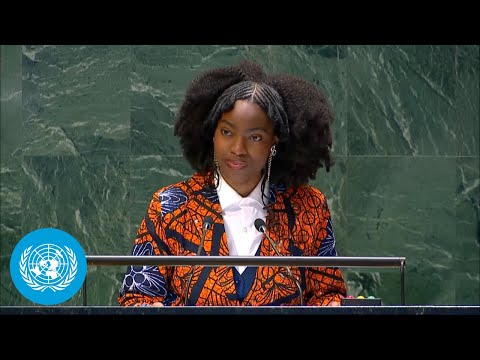
Salome Abwaroji, the United States' national youth poet laureate, urged member states at a United Nations General Assembly commemoration to acknowledge roles in the Transatlantic slave trade, support education about African histories, return stolen cultural goods and adopt reparatory-justice measures.
Salome Abwaroji, the United States' national youth poet laureate, told the United Nations General Assembly at its commemoration of the International Day of Remembrance of the Victims of Slavery and the Transatlantic Slave Trade that member states should formally acknowledge their roles in the transatlantic trade, support educational programs that teach full African histories, and return stolen cultural goods.
Abwaroji framed the call as both moral and practical, saying that nations that once "assign[ed] dollar values to human life" should use the same resources to "assign dollar values to your ethical debt." She cited the scale of the trade in a direct reference: "The 15,000,000 Africans kidnapped, commodified, and brutalized."
The poet said institutional and systemic practices — including segregation, gentrification and housing discrimination — continue to produce racial disparities worldwide. "The state sponsored systems of institutional racism, like segregation, gentrification, and housing discrimination all over the world, insidiously contribute to racial disparities," she said.
Abwaroji, who said she is the seventh national youth poet laureate of the United States and the daughter of Nigerian immigrants, urged a reclaiming of narrative and personhood. "Turn the tide. Flip the phrase to reclaim our personhood and our narratives," she said, adding that African nations and Afro-diasporic communities should be recognized for "the vibrancy of your culture and innovations," not only for extractive value.
She echoed the United Nations secretary-general's call for reparatory-justice mechanisms, saying a way forward includes "supporting and sponsoring educational programs that tell the full and true African history" and "returning stolen goods to their rightful owners." Abwaroji described this as putting "our money where our morals are."
The address referenced literary and cultural figures to underscore the role of storytelling in the struggle for historical accuracy; Abwaroji invoked the Nigerian writer Wole Soyinka as a model for defending African narratives. She also warned against silencing and censorship: "Even when we do have accurate histories, we refuse to disseminate them. Our books are banned. Our voices are silenced."
Before concluding she asked member states and audiences to reflect on national responsibility and to take concrete steps to "rebalance the scales of justice," closing: "And realize that this future we call good is well within our collective reach. Thank you."