Lifetime Citizen Portal Access — AI Briefings, Alerts & Unlimited Follows
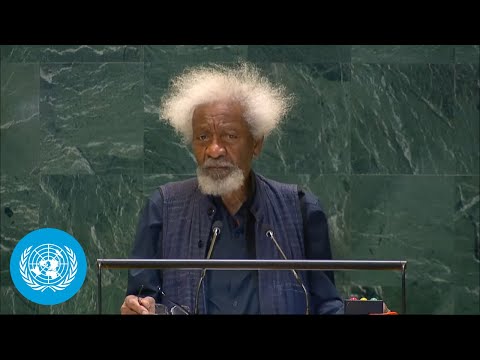
Wole Soyinka urges symbolic reparations, proposes "heritage voyage of return"
Loading...
Summary
Wole Soyinka told an assembly that slavery remains a global scourge and urged symbolic, moral reparative acts — including a movable "heritage voyage of return" and dynamic monuments — rather than material reparations.
Wole Soyinka, writer and Nobel laureate, told an assembly that slavery remains "not yet over, by no means over" and urged members to pursue symbolic, moral forms of reparatory justice rather than material compensation.
Soyinka outlined a proposal he called the "heritage voyage of return," a movable, living remembrance project he said would combine exhibitions, returned artifacts, seminars, films, music, a library of manuscripts and an exhumed slave vessel to be visited by diaspora communities and ports tied to the history of enslavement. "We can only tackle it symbolically, gesturally," he said, and described the voyage as a "transitional warehouse of a continent's past, present, and future."
Soyinka argued that slavery and related abuses continue in multiple forms across the African continent, including what he described as modern kidnapping and forced confinement of children from boarding schools. "The name Chibok is familiar to all of you, but you have no idea how many Chiboks there are," he said, referring to the widely reported abductions of schoolchildren in Nigeria. He also said "slave markets thrive, all over the African continent."
Rejecting the idea that some forms of slavery are "more benign," Soyinka said the condition of being owned or controlled by another is uniformly wrong. He invoked a film example, saying a scene in Django Unchained captures the essence of ownership: "this is my property. I can do with her what I like."
On the question of reparations, Soyinka said quantifying an appropriate material payment for the global scale of slavery is impossible and instead urged symbolic acts that could be morally and therapeutically "propulsive." He proposed a dynamic monument accessible virtually and physically, and described the heritage voyage as focused on "learning, leisure, and linkage" — the "3 L's."
Soyinka said the project would build on existing international efforts, noting UNESCO's work on the roots of enslaved peoples, and stressed the voyage should not be a vehicle for recrimination but rather a means to confront historical wrongs and foster broader human reflection. "It is not designed to be a vessel of recriminations," he said.
The remarks outlined a conceptual and cultural approach to reparatory justice rather than any specific legal, fiscal or policy action. No votes, motions or formal directives were recorded in the transcript.