Get Full Government Meeting Transcripts, Videos, & Alerts Forever!
Get email alerts on the Uranium Processing And Supply Chain topic
No spam. Unsubscribe anytime.
Lawmakers hear bill that would enable uranium fuel processing activity in Montana; opponents cite health, transport and cost concerns
Summary
House Bill 696 would authorize state steps toward hosting uranium processing and fuel production; sponsor framed the measure as improving supply‑chain security, while opponents warned of public‑health risks, depleted‑uranium waste streams and long‑term contamination concerns.
Representative Gary Perry presented House Bill 696 as a follow‑up measure to HB 623, describing it as a framework for Montana to consider enrichment, fuel processing and related industrial activity. Perry said the goal is to reduce reliance on foreign sources of critical nuclear materials and suggested Montana might serve as a regional processing hub. "We have got to turn this around," Perry said, adding geopolitical and supply chain concerns about imports from Russia and China.
Supporters repeated arguments made in earlier nuclear hearings: David Herbst of American Powerplay said opening the door to fuel processing aligns with a broader vision of Montana as a net energy exporter; proponents emphasized potential jobs and domestic supply chains. Opponents included the same mix of environmental, public‑health and tribal voices that spoke on HB 623. Nick Fitzmaurice of the Montana Environmental Information Center warned that transport and processing of uranium and enriched materials would increase public safety risks on Montana roads and rails and noted the state would inherit hazardous waste streams associated with enrichment operations.
Witnesses described historical examples of high cost overruns and contamination problems at U.S. nuclear projects and enrichment sites. Testifiers noted that depleted uranium hexafluoride (DUF6) stockpiles at Ohio and Kentucky have generated long‑running cleanup liabilities; one witness quoted an estimated cleanup cost in the billions for existing DUF6 sites. Health care and biologist witnesses described potential long‑term population health risks associated with radioactivity if storage or processing were mishandled.
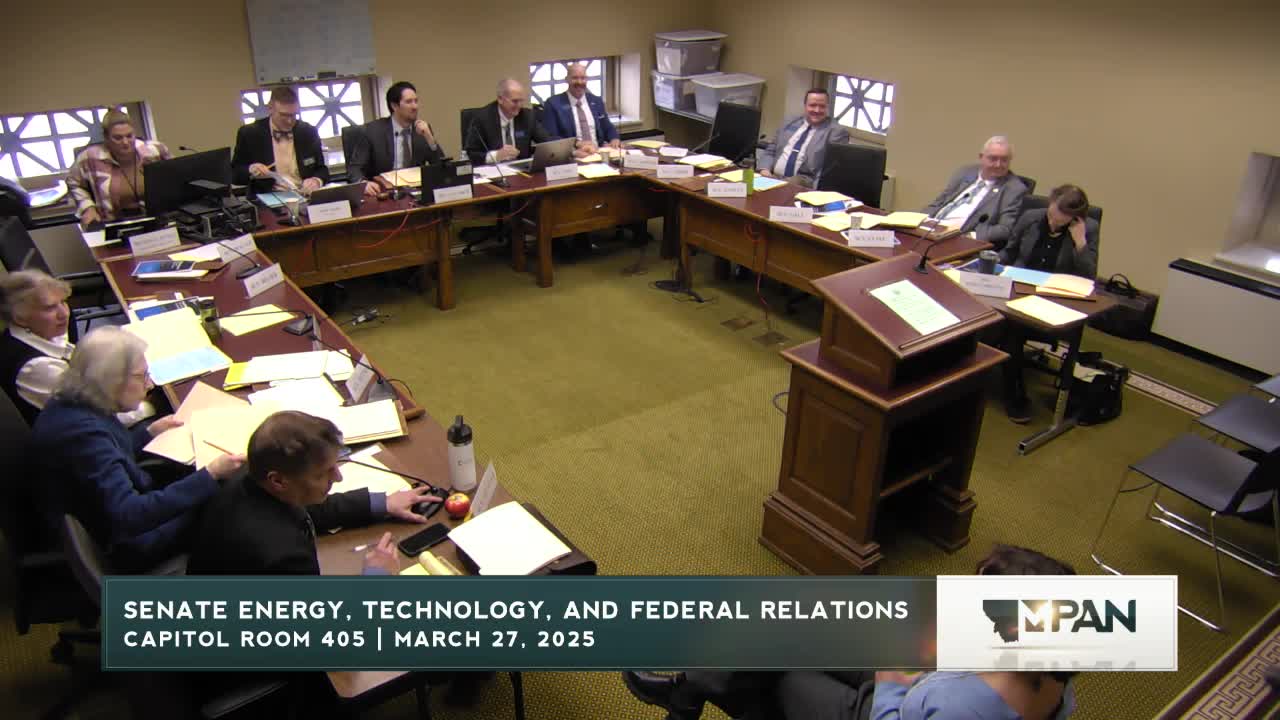
Committee members asked about the role of state agencies and about consent and outreach to tribal governments. Perry said the bill is intended to create a pathway but not to mandate immediate construction; he stated timelines for any such projects would likely be measured in years and reiterated his view that federal regulators (NRC) and DEQ would be involved in oversight. The committee closed the hearing without taking a committee vote on HB 696.