Lifetime Citizen Portal Access — AI Briefings, Alerts & Unlimited Follows
Representatives press Labor Department on $25 million in overdue arbitration/conciliation receivables and collection strategy
Loading...
Summary
Lawmakers asked the Department of Labor why arrears tied to conciliation and arbitration total about $25 million and whether debts tied to bankrupt public corporations are collectible; agency staff said collecting requires dedicated teams and the department will explore contingency recovery contracts.
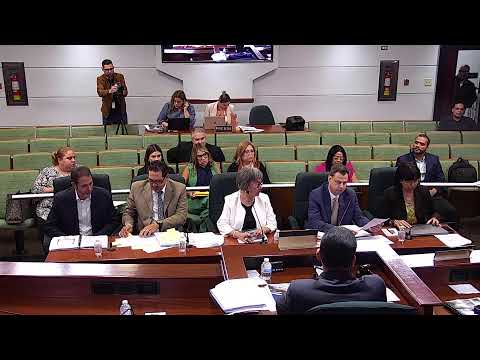
Representatives pressed Department of Labor officials on March 26 about long‑standing accounts receivable, including a table in the agency memorial showing roughly $25 million owed to the department under the conciliation and arbitration program.
Committee members asked why the receivables have not been collected and whether amounts tied to public corporations — which in some cases are in bankruptcy or subject to a fiscal‑adjustment plan — are included in those totals. John Rivas García and other budget staff explained that page five of the memorial lists accounts receivable while page six lists accounts payable, and confirmed the $25 million figure refers to receivables tied to conciliation and arbitration.
Discussion and follow‑ups - Collectability concerns: Members noted some debtors are corporations in financial distress or involved in restructuring plans under court supervision; agency staff said collecting from insolvent entities is difficult and that some debt is likely not recoverable without legal remedies. - Need for a collection unit: The department said it lacks a sustained collections team and that organizational discontinuities and staff shortages have hampered long‑term recovery efforts. Agency witnesses said reorganizing and creating specialist teams is part of their plan. - Contingency contracting suggested: Representative Héctor Ferrer asked whether the department had considered retaining private collection firms on a contingency (percentage‑of‑recovery) basis; department staff said they had not formally vetted such contracts but were open to the idea and would consider market rates (one legislator suggested ~10%).
Why it matters: The receivable balances affect the department’s net resources and the arbitrations fund that supports collective bargaining processes. Lawmakers said the figures are material to budgeting and that the legislature should not treat large receivable sums as reliable revenue without verification.
Requests: The committee asked the department to provide a written analysis identifying which receivables are likely recoverable and, if possible, to list those that are effectively uncollectible or included in bankruptcy proceedings. The department asked for up to ten days to return that analysis to the commission.
Ending note: The committee recorded the need to coordinate with other committees that oversee entities such as the Puerto Rico Electric Power Authority, since corporation debts may intersect with separate restructuring plans.