Lifetime Citizen Portal Access — AI Briefings, Alerts & Unlimited Follows
Commission amends Myrick Street order to accept MassDOT-approved erosion controls; contractor must provide dewatering plan
Loading...
Summary
The commission approved an amended order of conditions for the Myrick Street–Rhode Island Road project to allow equivalent erosion-control materials (MassDOT prohibits hay/straw bales) and required that any dewatering be treated and that the contractor submit a treatment plan for commission review before work begins.
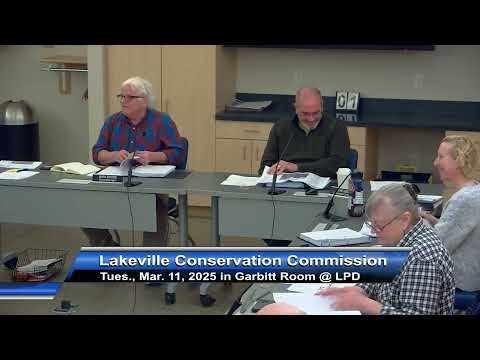
At its March 11 meeting the Lakeville Conservation Commission approved an amended order of conditions for work on Myrick Street and Rhode Island Road that reflects MassDOT contract restrictions on erosion-control materials and imposes a requirement that any dewatering include prior treatment and a contractor-submitted treatment plan.
Commission members explained MassDOT's contracts prohibit the use of hay and straw bales on its projects and said the agency instead uses equivalent materials — for example, mulch or manufactured erosion-control products — that are acceptable to the Department of Environmental Protection (DEP) and have lower risk of introducing invasive seed. Members agreed the commission had no objection to MassDOT’s approved equivalents provided the materials are DEP-approved or otherwise acceptable.
Members also addressed how water from dewatering operations must be handled. The amended order specifies dewatering discharges may not be sent directly to resource areas without treatment. Commissioners adopted language requiring the contractor to provide a dewatering treatment plan to the commission for review and approval before work begins. The commission voted to approve the amended order of conditions by voice vote.
Commissioners noted the contractor for the state project had not been selected at the time of the meeting, and that the work was not expected to begin until the following spring; the commission therefore allowed approval to be contingent on receiving the contractor’s treatment plan prior to construction.