Lifetime Citizen Portal Access — AI Briefings, Alerts & Unlimited Follows
Business groups call for diversification, streamlined permits and stronger small‑business enforcement in D.C.
Loading...
Summary
Leaders at the March 12 roundtable urged the D.C. Council to diversify the economy beyond federal dependence, speed permitting and entitlement processes, expand workforce pathways, and strengthen enforcement of local contracting goals for small and CBE firms.
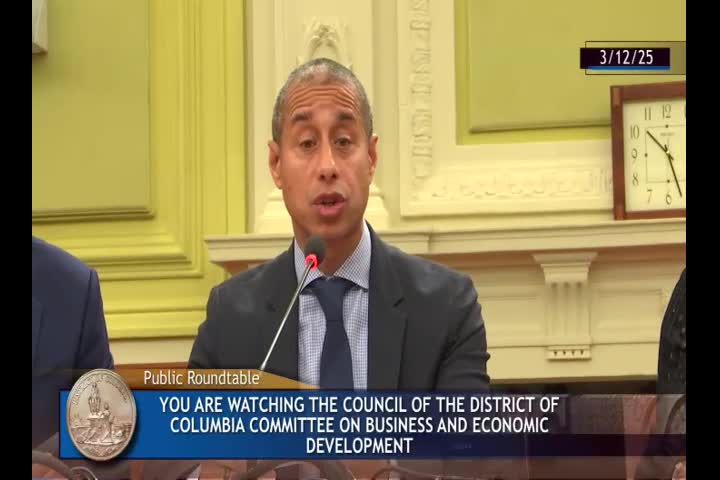
At an oversight roundtable of the Committee on Business and Economic Development on March 12, 2025, business groups, workforce advocates and chambers of commerce urged the District to accelerate economic diversification, better match workforce training with employer needs and make permitting and procurement more predictable for small firms.
Why this matters: witnesses warned that federal employment reductions and lower revenue forecasts amplify the need for D.C. to grow industries beyond the federal footprint, retain displaced talent and reduce administrative friction that drives investment across the river.
Key recommendations from the business community
Marissa Flowers, executive vice president and chief operating officer at the Greater Washington Partnership, said the District should pursue a data‑driven strategy to diversify into industries where the region has competitive advantage, expand talent‑retention pathways for displaced federal workers and create targeted support for entrepreneurs. Flowers noted that, as of December 2024, the District had roughly 26,000 fewer jobs than before the pandemic and that “nearly 1 in 4 workers in the district [is] directly tied to federal employment.”
Chinyere Hubbard, president and CEO of the D.C. Chamber of Commerce, urged the council to back downtown conversion incentives, consider temporary flexibility on First Source and TOPA for large projects, and remove barriers such as “clean hands” restrictions that she said put D.C. at a disadvantage relative to Maryland and Virginia.
Ayesha Bond of the Greater Washington D.C. Black Chamber of Commerce pressed for stronger enforcement of the certified business enterprise (CBE) program and more transparency in procurement. She cited gaps in waiver tracking, inconsistent reporting in the Office of Contracting and Procurement portals and slow hiring for regulatory positions tied to the cannabis sector that have delayed licensing and business starts.
Technical assistance, permits and small-business fixes
Brookings Metro Fellow Dr. Tracy Hadlow recommended citywide adoption of “pop‑up” permitting (temporary permits that can be issued quickly) to reduce the time and cost for storefronts to open, and an expansion of technical assistance beyond Main Street areas to help small firms meet new regulatory requirements and grow. Dr. Hadlow also urged the District to finalize streetery rules and to resolve a licensing catch‑22 affecting vendors, where health inspections and business licenses are mutually dependent.
Panelists also urged expanding apprenticeship programs and coordinating employer signaling with educational institutions so training aligns with employer demand. The Partnership described an employer‑signaling tool and skills‑forecasting work the organization has produced to match employer needs with training programs.
Procurement and cannabis licensing concerns
Ayesha Bond and other witnesses said DSLBD lacks enforcement authority over agencies that fail to meet CBE contracting goals and recommended a centralized, real‑time tracking system for procurement and waivers. They also flagged the Cannabis industry’s slow regulatory progress: positions authorized for licensing review remain unfilled, one‑year deadlines for licensees to become operational lack extensions, and zoning and occupancy approvals are delaying business openings.
Next steps and fiscal context
Witnesses emphasized that many of the reforms — from permitting fixes to procurement transparency — are within local control and should be prioritized in the FY26 budget process. The D.C. Chamber recommended deploying targeted grants and low‑interest loan programs to mobilize private investment and urged a focused review of agency practices that impose avoidable costs on businesses.
Ending: business and nonprofit leaders pledged to work with the Council on near‑term reforms to permitting, workforce alignment and procurement enforcement to help the District retain jobs, attract private capital and protect local small businesses as the federal footprint shifts.