Get Full Government Meeting Transcripts, Videos, & Alerts Forever!
Get email alerts on the Truancy Pilot topic
No spam. Unsubscribe anytime.
DHS defends truancy-reduction pilot, says expansion planned after staffing increases
Summary
DHS told the Committee on Human Services on June 5 that its truancy-reduction pilot is showing promising attendance gains and that the FY26 budget would fund expansion and additional case managers, though members questioned pace and staffing plans.
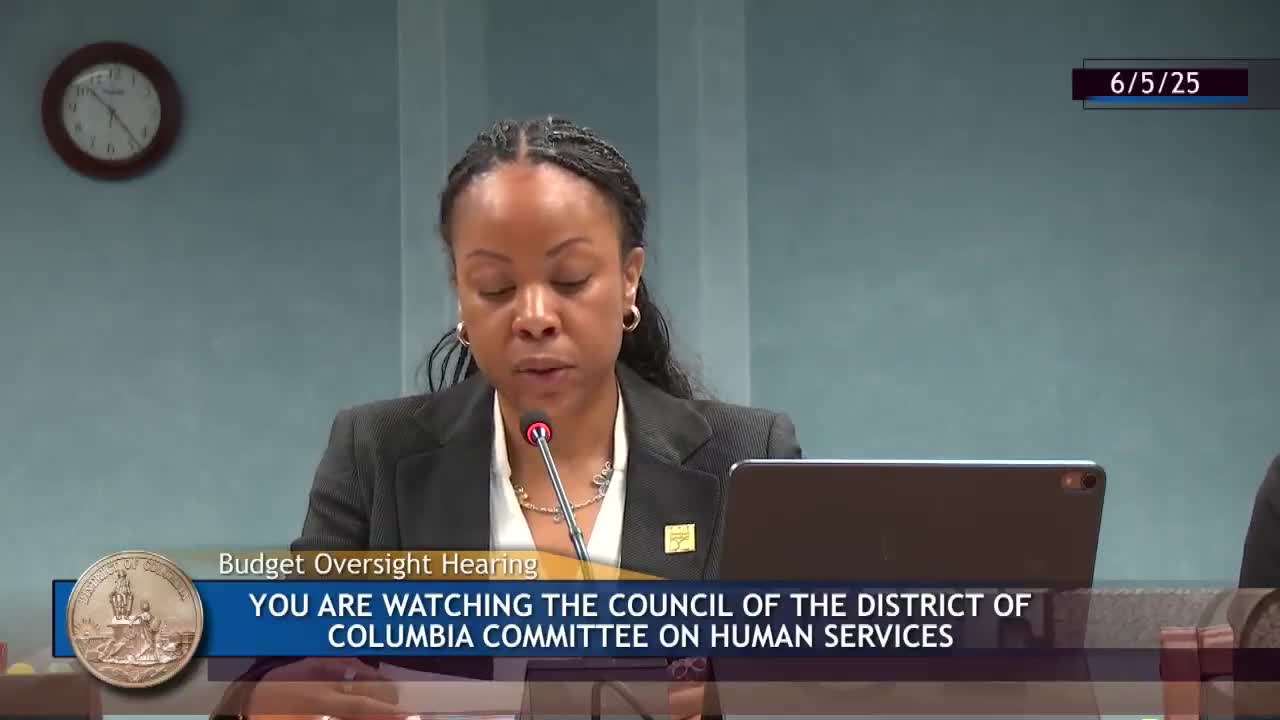
The D.C. Department of Human Services described the early results and planned expansion of its truancy-reduction pilot at the June 5 Committee on Human Services hearing.
DHS said the pilot, launched in the current fiscal year and focused on high schools, provides rapid family engagement and tailored services to address barriers to school attendance. "Early results from the pilot have been promising with attendance improving and most young people that have completed the program," Rachel Pierre said. The mayor's proposed FY26 budget includes $7.1 million to continue and expand the initiative and to add additional case managers.
Council members praised early results but pressed DHS on staffing and scale. Councilmember Parker and others asked why staffing had not matched rolling expansion and whether the agency could realistically scale from 5 schools now to a larger cohort next year. DHS said it had 7 staff currently working on the pilot, is authorized for more, and is seeking to get to a larger staffing complement (19 positions mentioned for the immediate scale) but noted hiring freezes and other budget-year constraints had delayed full recruitment. DHS said it would prioritize filling those vacancies and would work with DC Public Schools and the Deputy Mayor for Education to identify additional schools for next year.
The agency said the short-term program is distinct from longer-term youth interventions such as ACE and PASS, which are housed in the agency's youth services division and use different referral sources and treatment models. DHS told the committee it would provide follow-up data on caseloads, program outcomes and staffing timelines.