Lifetime Citizen Portal Access — AI Briefings, Alerts & Unlimited Follows
DHS details SNAP error-rate penalties and stolen-card reimbursements; seeks reinvestment funds and considers chip cards
Loading...
Summary
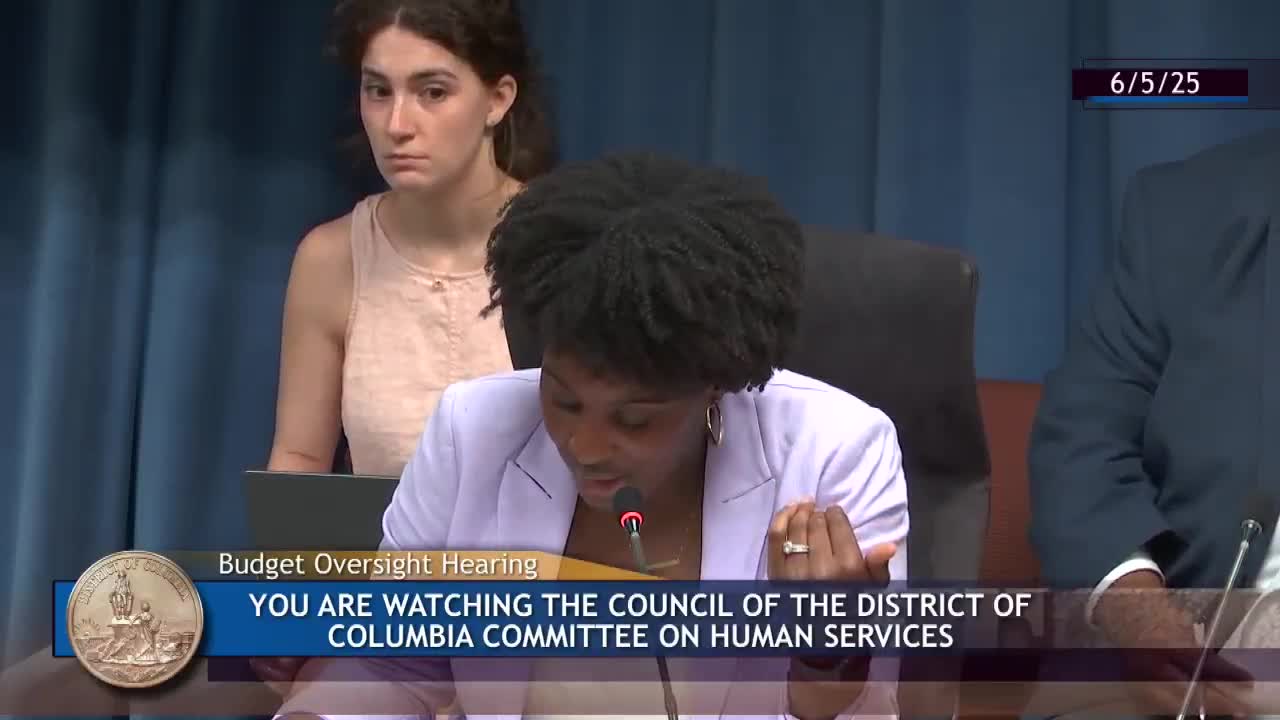
At a June 5 Committee on Human Services hearing DHS told council members it is working to reduce a high SNAP error rate, has reimbursed millions for stolen electronic benefits and is studying a move to chip-enabled EBT cards.
At the June 5 oversight hearing the Department of Human Services discussed two SNAP-related issues: a persistently high error rate that drew a federal penalty and a spike in stolen or fraudulently accessed electronic benefits that the agency has reimbursed to households.
Error rate: Councilmember Henderson summarized the situation: federal reviews flagged D.C.'s SNAP error rate at roughly 19'20%, producing a multi-million-dollar penalty and a federal requirement for a corrective action plan. DHS fiscal staff said the district has not yet received full approval for its reinvestment plan from the U.S. Department of Agriculture (USDA) and that the reinvestment fund is currently non-lapsing and funded from end-of-year surpluses pending federal approval of how the district will spend the money to reduce errors. "We are committed. We are watching what's happening on the federal level," Hayden Bernard, DHS fiscal officer, told the committee.
Stolen-card reimbursements and chip cards: DHS reported it had reimbursed about $1.7 million in stolen benefits year-to-date at the time of the hearing; full-year outlays could be higher if trends continue. DHS staff said the district paid roughly $3.7 million in stolen-benefit reimbursements in FY24. Committee members asked about a one-time capital expense and ongoing costs to convert SNAP cards to chip-enabled cards; DHS said preliminary vendor and peer-jurisdiction consultations suggested an approximate one-time conversion cost on the order of $3'$3.25 million and recurring annual fees near $600,000, but that the city would need local matching funds to draw federal matching dollars and that no committed local funding for that conversion was in the FY26 budget.
Reinvestment fund and next steps: DHS said it has proposed reinvesting half of the USDA penalty into technology and process improvements where the federal rules allow, but the agency is awaiting USDA approval of the specific reinvestment plan. DHS officials said they are also collaborating with DCAS and Code for America and are deploying short-term measures such as PIN removal and account-level safeguards while pursuing longer-term tech investments.
Supplemental SNAP: DHS said the Mayor's proposed FY26 budget maintains the local SNAP supplement that guarantees at least $30 per participating SNAP household monthly; DHS described this as a priority and noted potential federal changes that could affect SNAP funding overall.
Committee follow-up: Council members asked for a timetable on USDA's reinvestment-plan review, greater detail on costs and procurement options for chip-card conversion, and a brief on whether renewed staffing or systems funding could be allocated to reduce errors and administrative penalties.