Lifetime Citizen Portal Access — AI Briefings, Alerts & Unlimited Follows
UN adviser: Mines and unexploded ordnance are major barrier to Ukraine recovery, require billions to clear
Loading...
Summary
Paul Heslov of the UN Mine Action Service told a UN Correspondents briefing that roughly 20% of Ukraine is suspected contaminated by mines or unexploded ordnance, putting more than 6 million people near hazardous areas and requiring billions of dollars and new technologies to assess and clear land.
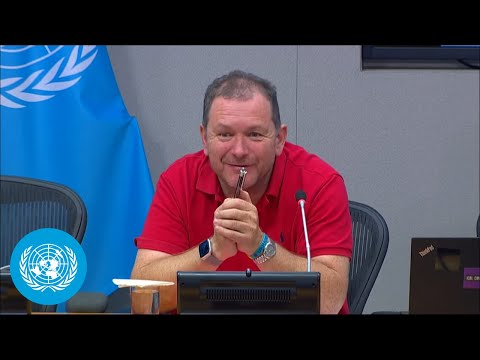
Paul Heslov, an adviser with the UN Mine Action Service to the U.N. country team in Ukraine, warned at a United Nations Correspondents Association briefing that mines and unexploded ordnance are widely contaminating Ukraine and will require billions of dollars and new approaches to clear.
"Contaminated land is not just dangerous, it's lost hope, recovery, and livelihood," Heslov said, adding that "20% of the country is suspected of having some level of contamination" and that "over 6,000,000 people now live near hazardous areas." He said 812 incidents have been recorded since the full-scale invasion and described the situation as "probably the most significant problem for mines in Europe" since World War II.
Heslov said recent advances in remote sensing and data analysis have already reduced the estimated contaminated area. Two years ago, he said, roughly 74,000 square kilometers of land were suspected of contamination; that figure has fallen to about 39,000 square kilometers after applying satellite and drone imagery, AI and other techniques. Heslov credited Ukrainian authorities and new technologies with "releasing over assessing over 30,000 square kilometers of land that may have been contaminated actually wasn't contaminated, and could be used, and could be returned for agricultural production." He later described roughly 35,000 square kilometers once suspected a year ago as no longer considered contaminated.
Heslov described a layered, cost‑efficiency approach to clearance he called an "efficiency curve," in which less expensive remote methods (satellite imagery, aerial surveys) narrow areas for progressively more assured and costly techniques (ground-penetrating sensors, manual deminers). "One of the things that we're trying to do is use the different techniques and the different technologies that are available, each of which get progressively more assured, but also more expensive," he said.
He said Ukraine has increased mechanized capacity and accreditation: "we've now seen an increase in demining machines from under 10 2 years ago to nearly 200," and "23 government entities are now accredited to conduct demining operations." Heslov also urged improved quality assurance, monitoring and evaluation, and better donor coordination; he said more than $1 billion has been pledged but that "we will need several billion more." He warned the full scope of clearance could reach "single digit billions" or substantially more depending on scale and failure rates of munitions.
On the scale of unexploded ordnance, Heslov gave multiple estimates based on ammunition fired during roughly 1,200 days of war. Using an example of "10,000 rounds were fired a day" and a 10% failure rate, he said "that's 1,200,000 items." Using a 40% failure-rate scenario, he said the number could reach about 5,000,000 items, and he cautioned that higher firing rates would raise the totals further. Heslov emphasized these as illustrative estimates and said precise counts are not currently available.
Heslov highlighted technological innovations being applied in Ukraine, including combinations of lidar, infrared, ultraviolet and ground-penetrating radar, as well as drone imaging plus AI to detect small fragments or indicators of contamination. He gave practical examples such as flying infrared imagery at different times of day to exploit temperature gradients and building three-dimensional maps from repeated drone flights to plan targeted responses.
The adviser also raised workforce and social issues, noting that women make up "probably 10 or 15% of the workforce already" in mine action in Ukraine and that UN Mine Action Service is working with UN Women to address gender stereotypes and expand women's roles in the sector. He described efforts to prioritize clearance of high‑value agricultural land, roads, energy infrastructure and areas with returning internally displaced persons to maximize economic and humanitarian benefit.
During a question-and-answer session, Edith Lettera of The Associated Press asked for figures linking mine contamination to specific food-price increases; Heslov said he did not have those figures and suggested agencies such as the Food and Agriculture Organization or the World Food Programme could provide them. When asked who was responsible for mines and unexploded ordnance, Heslov replied that "if there was no conflict, there'd be no unexploded bombs and no mines," and said responsibility rests with "the two sides that are firing weapons at each other," while declining to explore the causes of the conflict.
No formal decisions or actions were taken at the briefing; Heslov concluded by urging continued investment, better donor coordination and scaling of innovations to accelerate safe land release and reduce long-term economic costs.