Boulder staff present draft vision, values and seven focus areas for major BVCP update
Summary
City planning staff told a joint City Council–Planning Board session May 22 they intend to carry forward sustainability, equity and resilience goals into a 2025 major update to the Boulder Valley Comprehensive Plan and to test seven focus topics through summer community engagement.
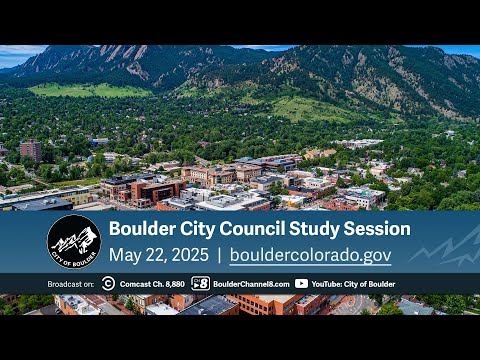
City staff presented a project update May 22 to a joint session of the Boulder City Council and the Planning Board as part of the 2025 major update to the Boulder Valley Comprehensive Plan (BVCP).
The presentation sought council and planning board confirmation of a draft vision statement, a set of community values aligned with the city’s sustainability, equity and resilience (SER) framework, and seven areas of focus that staff plan to deepen with community conversations over the summer. Staff said the update will use analysis and public feedback to refine policy options for later decision meetings.
Why it matters: The BVCP is the city’s long-range guiding document on land use, housing, climate, mobility, open space and related policies. Changes to the plan or its land-use map can shape development choices, infrastructure priorities and future zoning work that affects housing supply, transit planning and open-space stewardship across the Boulder Valley.
Staff said the public engagement effort launched last October and to date has collected more than 4,000 comments across 31 events and reached more than 1,000 participants; teams also conducted 10 targeted events aimed at groups historically excluded from planning processes. Vivian Castro Wooldridge, who leads engagement strategy for the update, told the joint meeting staff want to bring more diverse groups together in the same room over the next phase to deliberate tradeoffs and build shared understanding.
The recommended vision statement presented by staff reads in full: “Our community is welcoming, diverse, and committed to the Boulder Valley. We balance economic and housing opportunities with respect for nature and open lands, serve as a model to others as we face a changing climate, and leverage our community assets and innovative spirit for the benefit of future generations.” Tess Shorn, a city planner on the project team, said staff drafted the vision after multiple iterations with community feedback and will carry seven core SER-based values forward into the plan.
Staff also proposed seven focus areas that will guide deeper policy work: climate action; housing choice and opportunity; inclusive local economy; food systems; multicultural and multigenerational community; wildfire and community safety; and mobility and public transit performance. Christopher Johnson, comprehensive planning senior manager, said the list is meant to reflect topics the community repeatedly raised and is not intended to exclude other policy areas that the BVCP will continue to cover.
Council and planning board members asked clarifying questions on multiple points. Questions included how the community assembly’s 15-minute-neighborhood work will connect to the focus areas; whether food-systems analysis should include county lands; how accessibility and equity are reflected in the draft vision and focus areas; and whether subcommunity and area planning will continue to be part of the BVCP toolkit. Staff told the joint meeting the county has been engaged from the start on cross-jurisdictional topics and that the project team will test policy options with case studies and data modeling.
Next steps and schedule noted at the meeting: staff will start targeted research and partner outreach in June; hold community conversations on preliminary policy options in mid‑July; open the public change‑request window (for land‑use or plan change requests) in August; run a statistically valid survey and an online companion questionnaire starting in August; and report back to the Planning Board (scheduled Aug. 26) and City Council (Aug. 28) with summary findings and recommended topics for further study. Staff said they will collect worksheets from council and planning board members after tonight’s session and publish a meeting summary.
The update will use the city’s digital twin GIS tools to model land‑use and emissions outcomes for options staff bring forward and will apply the city’s racial equity instrument to evaluate likely distributional effects of policy choices. Staff emphasized that the meeting sought direction only about subjects to study further, not final policy or map changes.
AI generated
The text on this page is AI generated. Summaries, highlights, analysis, and video transcripts are all produced from the original source material.
AI can make mistakes, so if you spot one, and we will fix it for everyone.
Note: the source content is unaltered by us. Any content source we link to, be it a video, an audio recording, or a document, is presented exactly as its publisher released it. That publisher is usually a government body, sometimes an individual official or another organisation.