Lifetime Citizen Portal Access — AI Briefings, Alerts & Unlimited Follows
DASH and providers tell council domestic violence is a leading cause of homelessness; ask for increased, stable funding
Loading...
Summary
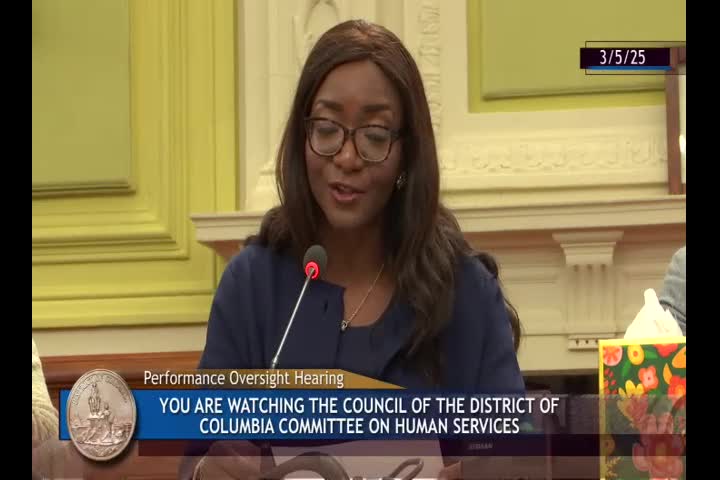
Representatives from DASH, DC Safe and victim-service coalitions told the Committee on Human Services that domestic violence remains a primary driver of homelessness in D.C. and urged dedicated, sustained funding for domestic-violence housing, training and flexible supports.
Representatives of domestic-violence service organizations told the Committee on Human Services that intimate-partner and family violence continue to be among the most frequently reported life experiences for people counted as unhoused in the district, and they urged the council to dedicate more funding and clearer procurement terms to preserve survivor-specific housing and services.
Kuvang Gage, CEO of DASH, the city’s largest provider of safe housing to survivors, testified that surviving domestic or intimate-partner violence was the most reported life experience among adults and families in the 2024 Point-in-Time Count and that domestic violence remains a frequent cause of housing instability. DASH and partner agencies asked the council to restore and expand funds to $7,820,000 in the DHS budget for domestic-violence services, a figure the witnesses described as necessary to sustain scattered-site transitional housing, training and technical assistance and emergency housing.
Vaughn Edmeade and Olubunmi Akinkolo of DASH described Right to Dream, a scattered-site transitional housing program for youth survivors, and asked DHS to preserve scattered-site eligibility in upcoming Requests for Proposals. They said a shift to site-based models would make DASH ineligible and would disrupt services for youth who were served in scattered-site apartments in their own names.
Bridget Claiborne and other leaders at DC Safe explained how TANF “POWER” exemptions, shelter dollars and DHS grants overlay and sometimes collide with homeless-service funding; they called for clearer coordination across DHS funding streams and better grant management practices so survivor services do not fall through cracks when program rules differ.
Ending
Witnesses urged the committee to ensure DHS preserves survivor-specific housing models (including scattered-site youth housing), fully funds domestic-violence grants and protects the technical assistance and training line items that maintain a citywide trauma-informed response.