Lifetime Citizen Portal Access — AI Briefings, Alerts & Unlimited Follows
Independent pharmacies warn Medicaid reimbursements are unsustainable, urge PBM transparency
Loading...
Summary
Independent pharmacy owners and the Washington DC Pharmacy Association told the Committee on Health that low Medicaid and managed-care reimbursements — amplified by pharmacy benefit manager (PBM) practices — are forcing neighborhood pharmacies to close and reducing access in the District’s most vulnerable communities.
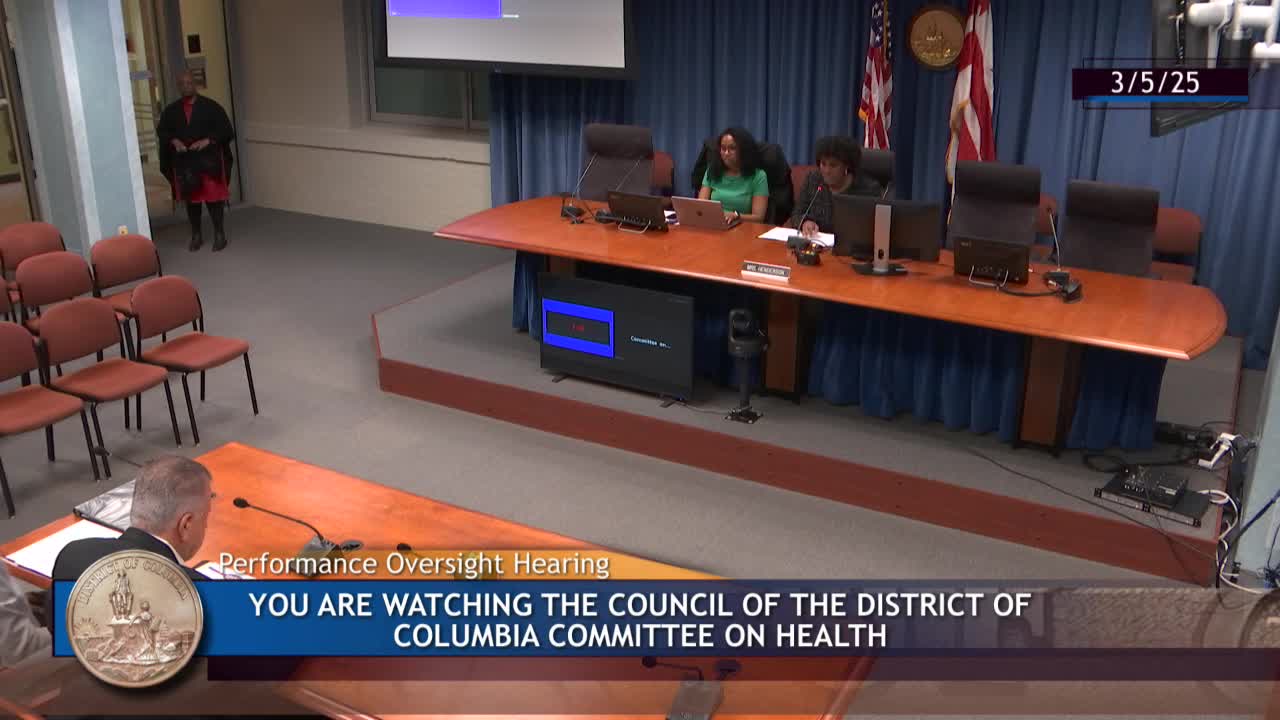
Independent pharmacy owners and pharmacy advocates told the District’s Committee on Health on March 5 that low Medicaid and managed-care reimbursements and opaque pharmacy benefit manager contracts are driving neighborhood pharmacies out of business, reducing access for residents in Wards 7 and 8 and other underserved areas.
"In Q4 of 2024, my pharmacy alone lost over $43,000 in negative reimbursement just due to billing the MCOs and the district and DC Medicaid," said William Fadel, owner and CEO of Grubbs Pharmacy Southeast in Anacostia. Fadel told the committee that three independent pharmacies in his immediate area closed in recent months and that one nearby pharmacy on Capitol Hill stopped accepting Medicaid and MCO plans on Oct. 1, 2024.
The Washington DC Pharmacy Association’s executive director, Carolyn Rochelle Price, said district-level data show a longer-term trend of closures. "District specific data reports that between March of 2014 and July of 2024, 36 independent and chain pharmacies in the district have closed," Price said. She added that most closures are tied to a payment methodology that leaves pharmacies reimbursed below acquisition cost.
Witnesses described how the combination of MCO-contracted PBMs and prevailing reimbursement formulas create a repeated loss for commonly dispensed medications. Fadel offered an itemized example: "If we take an asthma inhaler, let's say, I pay $54, I get paid $32. If it's a generic, I pay $19, I get paid $6." He said that the top 400 most-utilized drugs fall into the latter category — routine maintenance medicines that pharmacies dispense daily.
Speakers proposed several remedies. Fadel and Price urged the Council to consider carving pharmacy benefits out of Medicaid managed care and administering them through fee-for-service, to require MCOs and PBMs to reimburse at a transparent fee-for-service rate, or to increase regulatory oversight of PBMs in the Medicaid managed-care program. Price said many other states have enacted legislative reforms and offered to provide state-by-state examples to the committee.
The Board of Pharmacy chair, Dr. Lisonbee Hill, told the committee the board is aware of workforce and payment concerns and described administrative steps the board has taken to improve licensing processes and scope-of-practice updates. In her testimony, Dr. Hill said the board licenses 4,984 pharmacy professionals (as of Feb. 6, 2025) and has implemented a date-of-birth renewal model to stagger renewals. The board has also finalized patient education materials for pharmacists who will prescribe hormonal contraceptives and is working on pharmacy technician regulation changes.
Committee Chair Christina Henderson said the Council is in conversation with the Department of Health Care Finance (DHCF) and that staff have arranged follow-up meetings with DHCF leadership to address reimbursement and network adequacy. Henderson asked the board to use open sessions to surface issues that may need legislative attention, including PBM transparency and reimbursement adequacy.
No formal action or vote was taken at the hearing. Committee staff said written testimony will be accepted through March 19, 2025 at 5 p.m.
Ending: The witnesses asked the Council to pursue statutory and regulatory fixes to preserve neighborhood pharmacies, protect pharmacy jobs and prevent further pharmacy deserts in the District. Several witnesses offered to provide state policy examples to the committee.