Lifetime Citizen Portal Access — AI Briefings, Alerts & Unlimited Follows
House committee hears competing views on bill to expand municipal police powers and benefits
Loading...
Summary
Lawmakers heard opposing testimony March 5 on House Bill 139, which would expand the duties, training requirements and benefits for municipal police in Puerto Rico. The Department of Public Safety warned of fiscal and oversight risks, while municipal police leaders urged adoption to strengthen local response and benefits for officers' families.
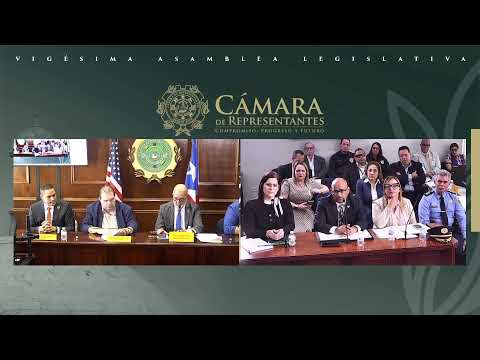
The House of Representatives’ Commission on Municipal Affairs on March 5 heard testimony on House Bill 139, a measure that would amend multiple provisions of the Código Municipal de Puerto Rico and related statutes to expand duties, training and benefits for municipal police corps across the island.
Why it matters: The bill would extend certain police functions, create or clarify specialized units for municipal forces, adjust certification and training requirements, and extend benefits (including scholarship and survivor-pay provisions) currently available to state police to municipal officers. The measure prompted sharply divergent views at the hearing on whether those changes would improve public safety or create fiscal and coordination problems with the ongoing state police reform.
The Department of Public Safety (DPS) told the committee it cannot support the bill “en su forma actual.” Omara Arias Nieves, identified in the hearing as the DPS interim director, said the department’s written analysis and oral presentation stressed that many proposed changes fall outside DPS authority and could affect the structure and implementation of the state police reform. “El DSP indica que no apoya el proyecto de la cámara uno treinta y nueve en su forma actual, ya que considera que muchas de sus disposiciones afectarían la estructura de seguridad pública, la reforma de la policía estatal y la capacidad fiscal del gobierno,” Arias stated during her presentation.
Arias and DPS staff emphasized fiscal uncertainty: the department said it lacks the data to certify financial impact for several benefit expansions and asked the committee to consult the Office of Management and Budget and the Office of the Financial Advisor. DPS requested that any fiscal-impact questions be routed through the financial oversight bodies and offered to provide additional data if the committee requests it. DPS also noted that the state police reform agreement is federally supervised and that wholesale parity of municipal police with the state force could disrupt the phased reform process.
Municipal police leaders pushed the opposite view. Inspector Rubén Molleno Cintrón (introduced in the record as president of the Association of Municipal Police Commissioners of Puerto Rico and commissioner of the Carolina municipal police) said municipal departments already perform specialized work in many towns and that the bill would provide legal clarity and benefits to officers and their families. “...buscamos dotar a estos servidores públicos de ley y orden que puedan desempeñar sus funciones, deber y responsabilidad a través de los poderes y facultades necesarias,” Molleno told the committee. He said municipal forces have developed specialized teams—traffic units, investigative capabilities and evidence rooms—and that local departments sometimes arrive first at incidents.
Molleno also provided data to the committee: he said the association represents 75 municipalities (three towns lack municipal police) and put the total municipal police force at about 3,092 officers. He told legislators the association supports extending scholarship benefits, survivor payments and some expanded authorities to municipal officers and urged coordination with mayors and municipal budgets.
Other municipal witnesses, including Commander Sharon Ruiz (Superintendencia Auxiliar de Investigaciones Criminales) and commanders accompanying DPS, highlighted operational concerns about overlapping investigations, the need for standardized training, and the potential for parallel probes if jurisdictional lines are not clearly defined. Ruiz said coordination protocols and clear jurisdictional rules are essential to avoid duplication and preserve investigatory integrity.
Key proposals and points discussed - Scope of powers: The bill would amend several articles of the Código Municipal (Ley 107-2020) including articles cited in the hearing as 3.22, 3.23, 3.25, 3.28, 3.33, 3.35 and 8.02 to expand powers and duties of municipal police and clarify when municipal officers may act off duty. - Specialized units and certification: The measure would permit creation of specialized municipal units subject to certification and training requirements; DPS and municipal leaders agreed training is essential but differ on who should bear the fiscal and operational costs. - Survivor and scholarship benefits: The bill proposes adding municipal officers to certain benefit schemes (including the scholarship fund and survivor pay provisions referenced in Ley 111 and Ley 263 and related regulations), and would make municipal officers’ families eligible for funeral and scholarship benefits similar to those already available to state police families. DPS cautioned that shifting recurring salary or pension obligations to its budgets would create unplanned fiscal obligations for the department. - Training and reform: DPS pointed out that the state police operate under a court-supervised reform agreement that imposes ongoing training and monitoring; DPS warned that bringing municipal forces fully “to par” with the state police without a clear funding and oversight plan could conflict with reform implementation.
What the committee asked for and next steps Committee members pressed DPS and municipal leaders for fiscal studies, training-time estimates and lists of existing interagency agreements. DPS agreed to deliver additional data and asked for consultation with budget and fiscal entities; at one point the department requested ten days to supply specific statistics and agreements. The committee chair also suggested executive sessions to work through operational details and requested memorials from the Association of Mayors and from the federation of mayors on fiscal viability.
No formal committee votes were taken at the March 5 hearing. Committee members said the hearing was part of an ongoing review and that future meetings, requests for data and possible executive sessions will inform any amendments before the bill advances.
Ending note: Testimony showed clear support among municipal police leaders for expanded authorities and benefits, while DPS cautioned against immediate adoption without fiscal, training and oversight safeguards. Lawmakers signaled willingness to continue the record and seek additional data before acting on House Bill 139.