Lifetime Citizen Portal Access — AI Briefings, Alerts & Unlimited Follows
Union and WMATA clash over Circulator hires and fare‑enforcement duties; WMATA says hiring improving
Loading...
Summary
ATU Local 689 urged funding and policy changes to protect jobs and keep fare enforcement off frontline operators; WMATA said hiring for bus operators has recovered after earlier freezes and that contractor transitions remain a challenge for some conversions.
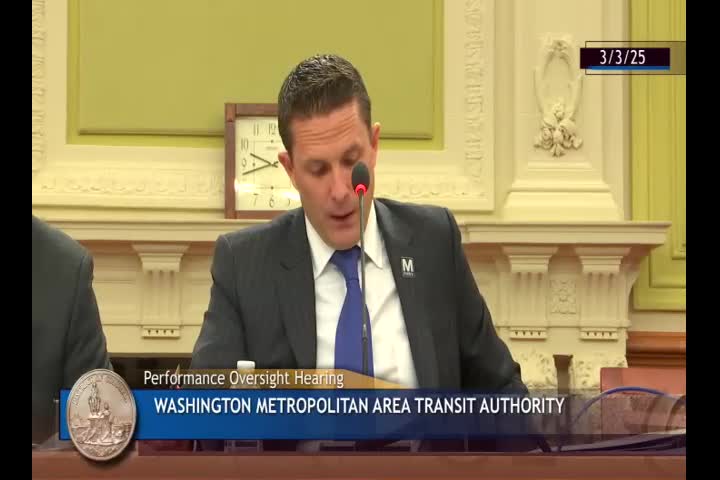
Labor relations, hiring and the Circulator transition were focal points at the March 3 hearing. ATU Local 689 and operators urged protections for Circulator workers, raised concerns about fare‑enforcement putting operators at risk, and asked for more predictable workforce pipelines. WMATA told the committee it is hiring and training operators but that a hiring freeze earlier in 2024 and contractor transitions caused temporary staffing gaps.
Key points
- Circulator transition: ATU and the union's organizers said WMATA agreed with the union that a financial cost for bringing former Circulator drivers into WMATA at prior wage levels was approximately $2.5 million and that the District declined a funding request. WMATA said the authority explored options but that those financial decisions rested with the District and that 76 of roughly 179 former Circulator applicants were hired into WMATA positions.
- Operator hiring and training: WMATA said recruitment has improved after an earlier hiring freeze; recent classes graduated roughly 160 operators and WMATA said it is near its target staffing levels but will continue recruiting. The agency said a single hiring pause last year left a backlog that staffing efforts are now correcting.
- Fare enforcement and frontline risk: Union leaders and operators said renewed fare‑evasion enforcement must not place bus operators and station managers in the role of de facto law enforcement and detailed incidents of assaults and spitting suffered by operators. WMATA said fare‑enforcement will concentrate on high‑evader locations and that the agency is moving toward digital tools and strategic deployments to achieve deterrence without overburdening operators.
Why this matters: Labor stability, hiring pipeline and operator safety affect service reliability; the committee pressed WMATA to coordinate hiring, funding and worker protections to stabilize operations.
Ending
WMATA said it will continue recruitment and training and noted the agency will work with unions and jurisdictions on transitions; the committee asked for follow‑up on hiring pipelines, grievances and the status of any outstanding Circulator funding requests.