Lifetime Citizen Portal Access — AI Briefings, Alerts & Unlimited Follows
Council reviews data on 24/7 bus pilot: most routes grew but some low‑ridership overnight routes under review
Loading...
Summary
WMATA reported that all 14 overnight routes added in 2024 grew in ridership during the first full year, with some routes showing much higher demand than others; the agency said it will analyze low‑use routes for possible adjustments.
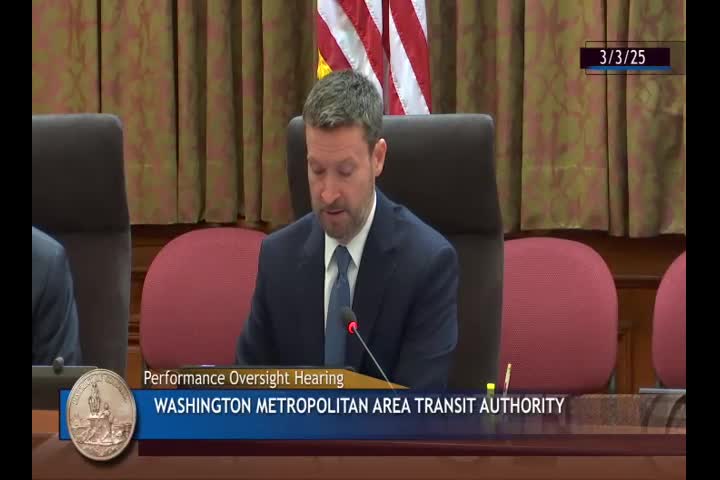
The Committee heard WMATA data showing the District's 24/7 overnight bus pilot carried more than 316,000 rides between 2 a.m. and 4 a.m. in the first year, and that each of the 14 overnight routes experienced year‑over‑year growth. WMATA and Councilmembers agreed the pilot demonstrates demand, while noting some routes have much higher ridership than others and need close evaluation.
Highlights:
- Top overnight routes: The 70 saw about 52,000 overnight rides in the year reviewed; the 92 carried roughly 37,000; and the X2 carried about 34,000 rides during the overnight hours. WMATA officials said those were the most used routes in the overnight pilot.
- Lower-use routes: The A6 and H4 were cited as lower‑use overnight routes, with totals of roughly 7,500 and 8,400 overnight trips respectively across the year. Committee members asked WMATA whether route changes or reallocations should be considered for lower‑use corridors.
- Agency response: Randy Clark and WMATA operations staff said the agency will continue to evaluate overnight routing and frequency as the Better Bus Network is implemented and as data accumulates. WMATA also noted seasonal ridership patterns and recent ridership acceleration since October 2024.
Why this matters: Overnight service is important for late‑shift workers and for a 24‑hour city; the data help policymakers assess whether to keep, modify or expand the service and how to allocate limited operating resources.
What the committee asked and WMATA answered
- Council Chair Charles Allen and other members noted the pilot's broad ridership growth and asked whether service changes were being considered for low‑use routes; WMATA said it would analyze detailed route performance and that some changes might be implemented as the Better Bus network takes effect.
- WMATA emphasized that longer‑term decisions will consider ridership growth, seasonal patterns and the Better Bus redesign—s interaction with overnight operations.
Ending
The committee urged WMATA to continue monitoring performance and to prioritize overnight routes that serve essential workers and neighborhoods with few other late‑night transit options. WMATA pledged to return with further analyses of individual route performance and potential adjustments.