Get email alerts on the Code Consolidation topic
No spam. Unsubscribe anytime.
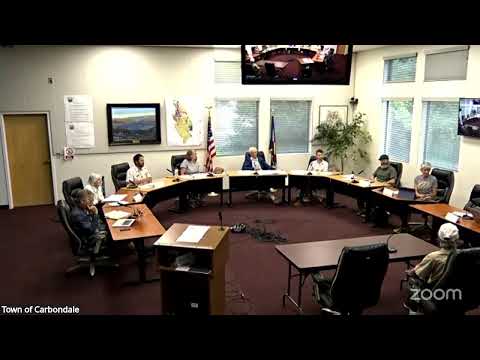
Tree board discusses code consolidation, mission and orientation materials
Summary
Members reviewed the tree ordinance and discussed consolidating references in the municipal code, the Unified Development Code and the tree ordinance; they proposed assembling a member notebook and a project-oriented agenda for future meetings.
Carbondale’s Tree Board spent substantial time reviewing its role, the relevant codes and how to make board recommendations more actionable.
Tree board member Josh Crawford said he and another member had discussed inconsistencies between three documents — the tree ordinance, the Unified Development Code and the municipal code — and proposed consolidating or clarifying where standards are defined so developers and staff have one clear reference. “The tree ordinance and unified development code should point to the municipal code,” Josh Crawford said, arguing the municipal code should contain the detailed planting standards developers must follow.
Why it matters: Board members said divergent or duplicated language across codes creates confusion for designers and applicants and can undermine tree survivability. Members proposed creating a single packet (ordinance, municipal code excerpts and the UDC) for board members to use during plan review.
Other discussion points: Members noted upcoming regulatory changes that will affect their work, including a fire-code update the board was told will take effect in July 2026 and state-mandated water-conservation standards for multifamily projects. The board agreed a practical next step is assembling a notebook for members with the ordinance, municipal-code excerpts and recommended tree lists; a project-oriented agenda would let the board assign timelines and tasks for clarifying standards and drafting recommended language for staff review.
Board process and governance: Members discussed creating or revising a mission statement and a clearer workflow chart that shows when staff, planning, and trustees get advisory input. Several members urged consistent communications through town staff rather than ad-hoc emails among board members, citing open-meeting concerns.
The board did not take a formal vote on code language changes; members directed staff to supply source documents and to invite Public Works staff to a future meeting to discuss feasibility and implementation timelines.
AI generated
The text on this page is AI generated. Summaries, highlights, analysis, and video transcripts are all produced from the original source material.
AI can make mistakes, so if you spot one, and we will fix it for everyone.
Note: the source content is unaltered by us. Any content source we link to, be it a video, an audio recording, or a document, is presented exactly as its publisher released it. That publisher is usually a government body, sometimes an individual official or another organisation.