Lifetime Citizen Portal Access — AI Briefings, Alerts & Unlimited Follows
Ethics staff outline wide-ranging enforcement-regulation revisions; commissioners and public raise concerns about sunshine, fines and reopening rules
Loading...
Summary
Ethics staff presented a red-lined draft of amendments to the commission’s enforcement regulations on July 11, proposing changes that include a formal good-cause definition for extensions, delegation of probable-cause drafting, limited reopening authority for newly discovered evidence and a ban on using donor or legal-defense funds to pay assessed penalties.
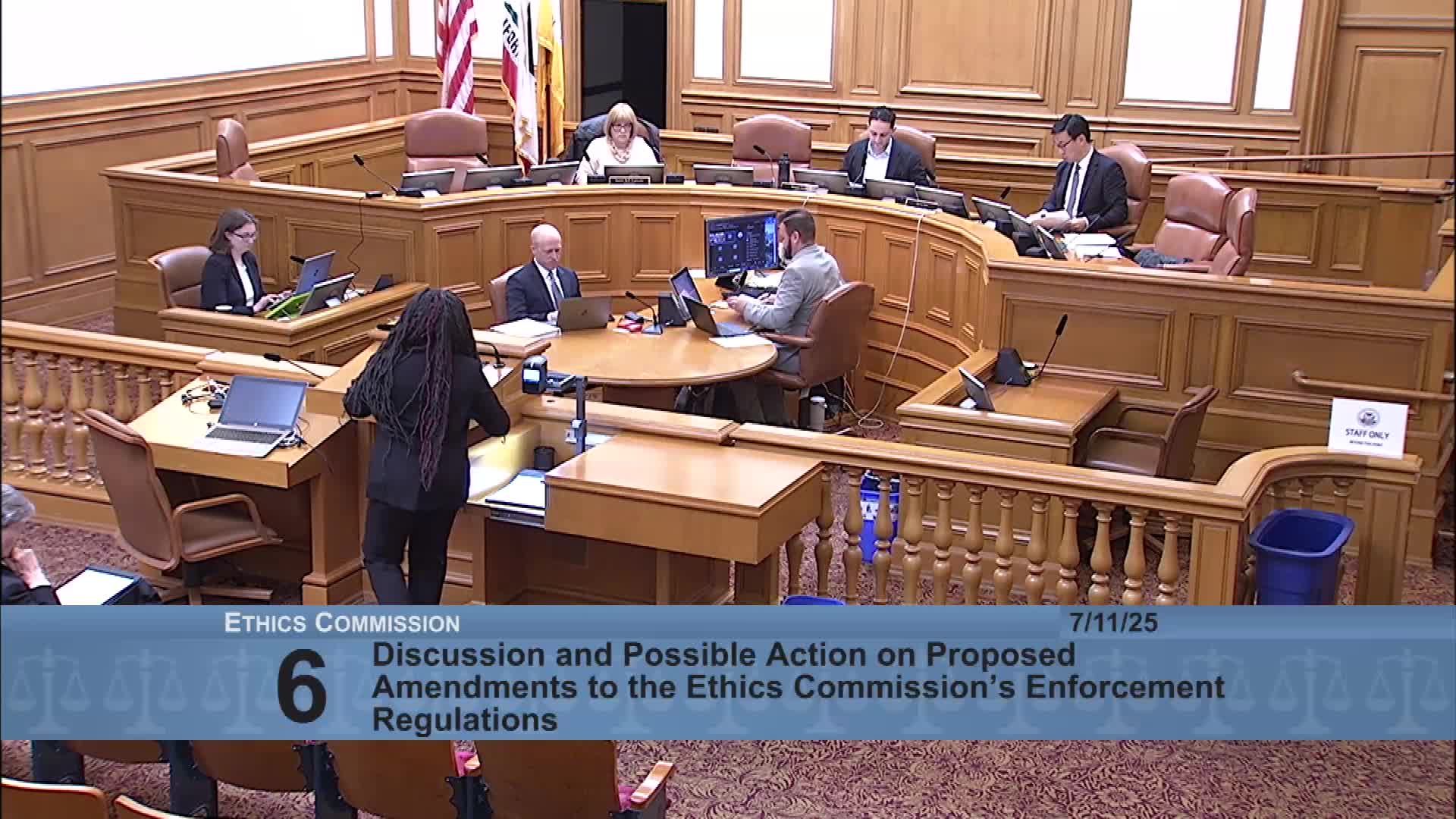
San Francisco Ethics Commission staff on July 11 presented proposed, red-lined amendments to the agency’s enforcement regulations intended to clarify deadlines, tighten procedures and adapt practices the enforcement division has been using in recent years.
Director of Enforcement Matthews said the revisions were designed to "promote a clearer, more consistent, fair and efficient enforcement process," and outlined proposals including: a clear "good cause" standard for deadline extensions; a rule that if filing deadlines fall on a weekend or holiday filings are due the next business day; explicit authority for the executive director (or designee) to prepare or sign probable-cause determinations; a limited ability for the commission to reopen closed matters when newly discovered material facts surface; a clarification that investigative evidence gathered prior to a probable-cause determination may be offered at hearing; and language to make clear the commission cannot accept donor or legal-defense funds to pay assessed administrative penalties.
Staff said the proposals were developed after two rounds of interested‑persons meetings, consultations with the City Attorney’s Office and an internal review prompted by an increase in cases advancing through the probable-cause process. The enforcement division noted that the changes largely formalize practices the division follows in day‑to‑day investigations and hearings and aim to avoid procedural bottlenecks.
Commissioners and members of the public raised several concerns. Several Sunshine Ordinance Task Force members — including Dean Schmidt and Task Force Chair Matt Yankee — pressed the commission not to narrow the agency’s authority to hear Sunshine Ordinance matters and urged a written definition of “willful failure.” Schmidt and Yankee argued that the task force has on occasion referred willful matters to the Ethics Commission and that those referrals should be heard publicly by the commission rather than dispatched only to staff.
Multiple public commenters and several organizations also objected to certain proposed changes. Public commenters and representatives of legal and campaign-practice groups said the proposed ban on using campaign committee or legal-defense funds to pay assessed administrative penalties would be unworkable and could discourage individuals from serving as treasurers or participating in campaign activity. Critics also urged the commission to adopt any major procedural changes only prospectively rather than retroactively and called for clearer notice and due-process protections around any authority to "reopen" closed cases; one commenter from the Campaign Practice Advisory Association asked for a clear process and notice to respondents.
Whistleblower advocates urged the commission not to reduce transparency by removing a standalone quarterly summary of whistleblower retaliation investigations. Professor/advocate Dr. Derek Kerr told commissioners the commission’s retaliation-records history shows no sustained findings, and said eliminating a visible, standalone report could further obscure patterns in retaliation complaints.
Staff told commissioners they plan to revise the redlines and return with a final package for formal consideration; Acting Chair Salahi and others said no vote would be taken at the July meeting because only three commissioners were present. Commissioners and staff flagged specific drafting issues for correction (citation numbering, a proposed good‑cause documentation requirement, confidentiality language and notice requirements for reopened matters) and asked staff to post additional public comments received on the commission website. Director Matthews said staff would incorporate input from the public meetings, the City Attorney and interested parties before the next hearing on the regulations.