Lifetime Citizen Portal Access — AI Briefings, Alerts & Unlimited Follows
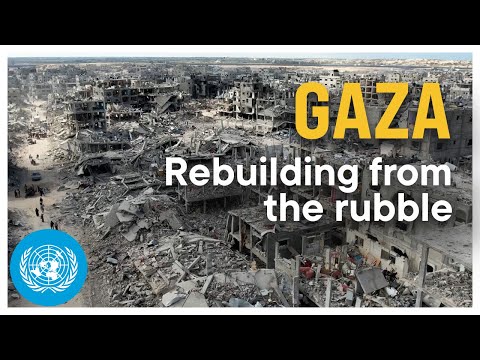
More than 50 million tons of rubble in Gaza; clearing hampered by unexploded ordnance and complex land claims
Loading...
Summary
Speakers said Gaza contains over 50,000,000 tons of debris; removal work began in December, with 21,600 tons cleared and about 290 tons repurposed for roadworks, but unexploded ordnance and disputed property rights complicate reconstruction.
"In Gaza, there is more than 50,000,000 tons of debris and rubble," a speaker not identified in the transcript said, adding that dangerous waste and unexploded ordnance make removal a high priority beyond immediate life-saving efforts.
Why it matters: The volume and hazardous nature of the rubble create public-safety, environmental and legal challenges for reconstruction. According to another speaker in the same briefing, removal work began in December and has included limited reuse of material and employment-generation elements, but unresolved land and property claims could slow or complicate longer-term rebuilding.
The unidentified speaker who opened the discussion said the quantity and risks are severe: "And the problem is not just the volume, it's also the fact that dangerous waste is there, also an exploded ordinance. So removing the rubble, removing the debris is a top priority. It's probably the most urgent task beyond life saving efforts to protect the people." The transcript records no formal decision or vote on next steps.
A second speaker reported early removal efforts and how some material has been reused. "In December, we already started implementing some of the removal efforts. We've been able to remove about, 21,600 tons of rubble. We've been able to use that about 290 tons, which we've been able to repurpose for roadworks. And we've also built employment creation, into the efforts," the speaker said.
Both speakers flagged a separate legal and technical obstacle: unclear land and property ownership. "We also have the very important and the very big challenge related to the land and the property ownership, which we know is very complex," the second speaker said, adding that the issue "requires technical expertise. It also requires, legal guidance to ensure that we have a transparent and also just, land tenure solutions that are related to the land and the property rights." The transcript does not identify which agencies or legal authorities would lead that work.
The briefing provided specific, limited figures on removal to date (21,600 tons cleared; roughly 290 tons reused for roadworks) but did not include source funding, implementation timelines, or named implementing organizations. The speakers emphasized public-safety risks from hazardous waste and unexploded ordnance and framed land-tenure resolution as necessary before broader reconstruction can proceed.
No formal motions, votes, or funding approvals were recorded in the transcript excerpts provided. The speakers described ongoing operational activity and legal/technical needs but did not specify responsible agencies, budget amounts, or deadlines for further action.