Get Full Government Meeting Transcripts, Videos, & Alerts Forever!
Get email alerts on the Market Structure topic
No spam. Unsubscribe anytime.
Subcommittee debates market structure and asset classification; witnesses press for clear CFTC/SEC lines
Summary
The Senate Banking subcommittee’s inaugural hearing also focused on market structure and the legal classification of digital assets, with witnesses calling for explicit, durable lines between securities and non‑securities activity so exchanges and intermediaries can operate under clear rules.
The Senate Banking subcommittee’s inaugural hearing also focused on market structure and the legal classification of digital assets, with witnesses calling for explicit, durable lines between securities and non‑securities activity so exchanges and intermediaries can operate under clear rules.
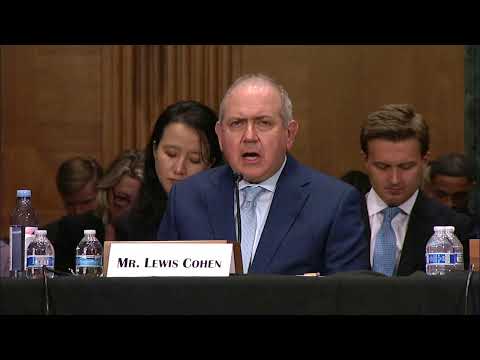
Louis Cohen, a partner at Cahill Gordon & Rindell, told senators that many widely traded digital assets do not fit traditional securities categories because they lack an identifiable issuer that could be held to ongoing disclosure obligations. "A security is a legal relationship between an issuer and the investor," Cohen said; without an issuer, he argued, secondary trading is difficult to regulate under existing securities law and courts have resisted stretching the Howey Test to cover all tokens.
Kraken’s Jonathan Yacom urged Congress to grant the Commodity Futures Trading Commission spot‑market authority to register and oversee centralized intermediaries and secondary‑market trading, arguing that nearly 90% of trading is executed through centralized platforms today and that basic market regulation should be set in statute.
Former CFTC Chairman Tim Massad warned against a wholesale rewrite of securities law to address decentralization. He said regulators should exercise caution before changing core securities statutes and suggested letting current agency rulemaking proceed in parallel with legislative efforts on stablecoins.
Key points from the exchange - Howey and issuer concept: Cohen emphasized that the Howey Test historically targets transactions reflecting an investment contract and depends on a recognizable issuer/promoter relationship. Several senators and witnesses said the lack of an issuer for many tokens complicates securities analysis and supports a statutory dividing line for fundraising vs. secondary trading. - SEC litigation posture: Cohen noted that some prior SEC theories treating tokens broadly as securities have been rejected by courts, and he cautioned that a statutory definition should avoid replicating rejected litigation theories. - CFTC authority and registration: Yacom and others argued for clear CFTC authority over spot markets and for registration requirements for centralized exchanges to provide market integrity, disclosure and operational rules. - International comparisons: Witnesses pointed to EU rules (MiCA) and to state initiatives such as Wyoming’s chartering efforts as instructive examples for drawing durable, simple jurisdictional rules.
Context and consequences Committee members framed market‑structure clarity as essential to keep firms and innovation in the United States. Representatives from exchanges said the threat of litigation and regulatory enforcement by agencies rather than through statute has pushed activity and talent offshore. Senator questions focused on where the U.S. should adopt international best practices and how to avoid regulatory arbitrage.
Ending Witnesses urged a careful, targeted statutory approach that clarifies when fundraising and secondary trading fall under securities law and when markets should be regulated more like commodity spot markets, so exchanges and intermediaries can operate with durable, predictable rules.