Lifetime Citizen Portal Access — AI Briefings, Alerts & Unlimited Follows
Legal service providers say Access to Justice grants are critical as demand for eviction defense and civil legal aid grows
Loading...
Summary
Nonprofit legal services, interpreter banks and eviction-prevention networks told the Committee on the Judiciary and Public Safety that the Access to Justice Initiative and OVSJG funding have expanded representation for low‑income residents while demand for housing, family‑law and probate services continues to rise.
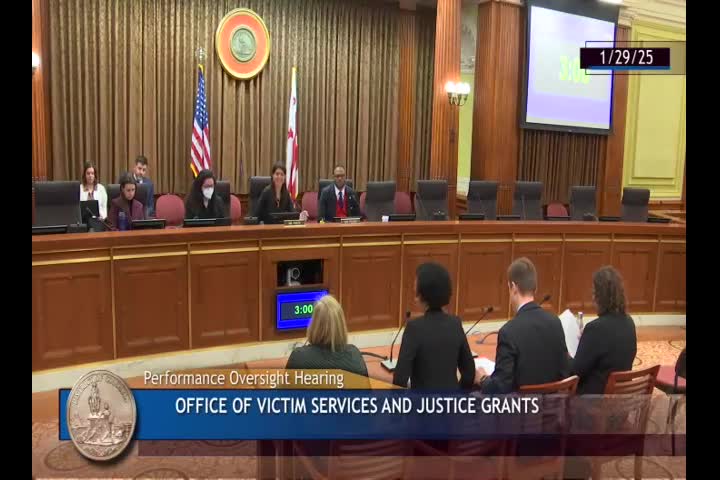
Legal aid organizations, bar associations and language‑access providers told the Jan. 29 oversight hearing that funding from the Access to Justice Initiative (administered through OVSJG and the D.C. Bar Foundation) remains central to preventing evictions, preserving housing and keeping low‑income families stable.
Nancy Drain, executive director of the D.C. Access to Justice Commission, introduced the initiative and its three components: Access to Justice Grants, the Civil Legal Counsel Projects Program and the D.C. Poverty Lawyers Loan Repayment Program. ‘‘This program furthers your holistic view of public safety. It is essential to the district,’’ Drain told the committee.
Araceli Gray, director of programs at the D.C. Bar Foundation, reported grantee results for FY24: Access to Justice grantee partners served more than 19,000 D.C. residents in the first half of FY24 (a 16.4% increase over the same period in FY23), and Civil Legal Counsel Projects closed 2,241 cases in the first half of FY24 — a 30% increase from the same period in 2023. Gray said representation in eviction and voucher‑termination cases helped 76–81% of tenants retain possession and 89–92% retain vouchers when represented.
Speakers from Legal Aid and Legal Counsel for the Elderly described how the Landlord Tenant Legal Assistance Network (LT LAN) and courthouse staffing keep low‑income tenants level with landlord representation and arrange social‑service supports. Legal Counsel for the Elderly said its eviction‑related work produced roughly $289,987 in ERAP benefits for 43 clients in FY24, and that their probate project generated $2.4 million in benefits tied to a $123,000 investment.
Panelists described practical barriers facing clients: rising housing debt now that emergency rent-relief programs have wound down, worsening housing conditions, digital‑access gaps for seniors and people with limited English, and increased demand in family law and probate matters. Witnesses emphasized that language access services are indispensable: Ayuda’s community legal interpreter bank (CLIP) and the Victim Service Interpreter Bank (VISIB) provided hundreds of live and telephonic interpret sessions in dozens of languages in FY24.
Several witnesses urged continued or increased local support to keep firms and nonprofit programs staffed and to expand coordinated intake and referrals. Araceli Gray described a DC Resource Bridge pilot — a coordinated intake and referral system — expected to launch in FY25 to make legal help easier to access.
The committee asked witnesses about shifting needs. Legal providers said housing — eviction defense and habitability repairs — remains the largest share of funding (roughly 52–55% of certain grant lines), followed by family law and probate. Witnesses asked the council to maintain predictable funding levels so legal aid organizations can retain staff and continue courthouse-based assistance.